Australia’s massive Waratah Super Battery starts operations as ‘shock absorber’


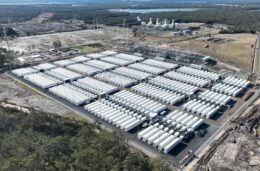
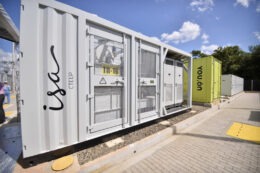
Akaysha Energy has announced that the Waratah Super Battery is now actively bolstering energy security for the New South Wales (NSW) grid in Australia with the first 350 MW / 750 MWh of the battery’s capacity now online in the lead up to full operation, expected later this year.
Commissioned by the NSW government and delivered and operated by Blackrock-owned Akaysha Energy, the Waratah Super Battery will provide 850 MW / 1,680 MWh capacity when fully commissioned, operating as part of a broader System Integrity Protection Scheme (SIPS) that is designed to support the grid by providing reserve transmission capacity and stability in the event of any sudden power surges.
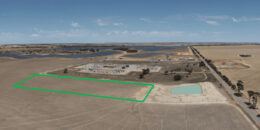
The SIPS includes the battery, built at the site of a shuttered coal-fired power station at Lake Munmorah on the NSW Central Coast, about 100km north of Sydney, control system, arrangements for paired generation services, and upgrades to existing power lines.
With the first 350 MW / 700 MWh of the battery now online, Transgrid has confirmed that the SIPS control system comprising a software system and signalling equipment has also been enabled, helping to unlock the benefits of the battery.
Oregon-based lithium iron-phosphate (LFP) battery supplier Powin supplied the battery hardware and software, a company that filed for bankruptcy in July this year. Powin is also supplying Akaysha’s 150 MM / 300 MWh Ulinda Park battery under construction in northern Australia as well. Fluence will optimize Akaysha Energy’s battery assets.
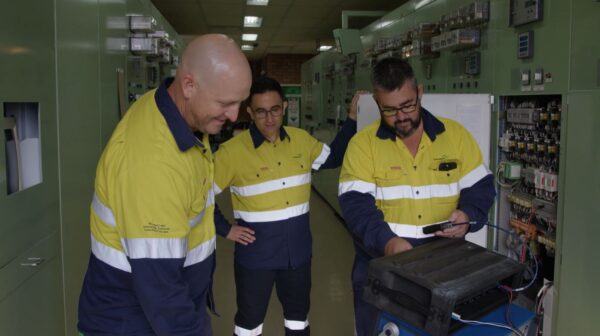
Transgrid’s Simon Wallace, Ahmad Ebadi and Nick Killeen test SIPS equipment at Kemps Creek substation. Image: Transgrid
Transgrid Executive General Manager of Delivery Jennifer Hughes said the control system represents a “true feat in detailed design and innovation.”
“The SIPS control system is the largest automated scheme of its kind in Australia, monitoring 36 transmission lines across NSW in real time, detecting overloading and responding in seconds,” she said.
“In network contingency events such as lightning strikes, the SIPS acts as a shock absorber to return the network to a stable condition and maintain continuity of supply for consumers.”
The scheme, which was designed and installed by Transgrid specialist teams at 19 sites across NSW, helps transfer more power through existing transmission lines in the Sydney, Newcastle and Wollongong regions by temporarily increasing their capacity.
It can automatically detect potential line overloads on transmission lines that connect generation in the northern and southern regions of NSW to the Sydney, Newcastle and Wollongong region and signals the Waratah Super Battery to discharge stored energy into the network. Simultaneously, the SIPS will signal paired solar, hydro, and wind generators to reduce output to balance supply across the grid.
The scheme requires the Waratah battery to provide a guaranteed continuous active power capacity of at least 700 MW, and a guaranteed useable energy storage capacity of at least 1400 MWh.
“It’s like an insurance policy for NSW and the whole system is triggered automatically, making it fast and reliable in responding to a system event or fault,” Hughes said.
Akaysha said at 850 MW, the Waratah Super Battery is currently the world’s most powerful battery in terms of power and energy storage capacity.
When fully operational later this year, the battery will have the capacity to supply 970,000 homes with electricity for one hour.
“The Waratah Super Battery only takes two hours to charge and can discharge its full power capacity into the grid in a matter of seconds, which means during emergencies, the people of NSW will experience minimal disruption to their electricity supply,” Akaysha said.
“This is the first of our projects to go into operation, and there are many more to come,” said Hannah McCaughey, CEO at EnergyCo, the state government body overseeing the project.
From pv magazine Australia.
Written by






Popular Posts