Chinese Ministry of Industry moves to curb irrational competion in battery energy storage industry

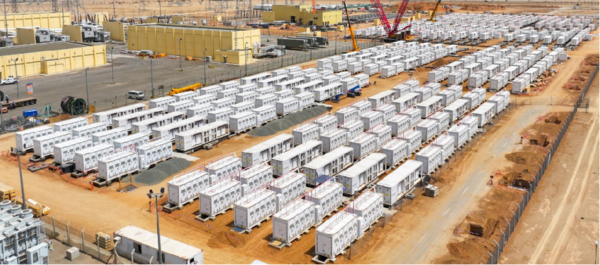
At its meeting on Nov. 28, the Chinese Ministry of Industry and Information Technology (MIIT) pledged to accelerate the implementation of targeted policies and measures to curb “irrational competition” in the power and battery energy storage industry.
Oversupply and aggressive bidding have eroded margins in China’s energy storage market, threatening the viability of numerous players. In response, industry voices in the world’s largest energy storage manufacturing hub have been advocating for price control, higher standards and reforms that would safeguard quality and ensure long-term stability.
In the Friday meeting with executives from a number of battery firms, Minister Li Lecheng emphasized that the Party Central Committee attaches great importance to the development of the power and energy storage battery industry. He stressed the need to comprehensively assess the current situation and implement directives addressing “involutionary” competition.
Rather than engaging in destructive price wars, the ministry is calling for swift action to curb cut-throat competition, while strengthening capacity monitoring, early warning, and regulatory oversight. Supervision of production consistency and product quality must be increased, intellectual property violations cracked down on, and enterprises guided to plan production scientifically and expand overseas in a rational, orderly manner – promoting high-quality, sustainable development, the MIIT said on its WeChat account.
Li also called on enterprises to foster entrepreneurship, resist aggressive competition, and maintain a healthy market environment. Companies are encouraged to drive innovation, boost R&D and competitiveness, and enhance supply chain collaboration. Industry associations are urged to conduct research, promote self-regulation, and build a collaborative, win-win ecosystem.
Recent tenders in China have reflected this pricing frenzy with average lithium-ion battery energy storage system-level bids coming in at around $65/kWh, startling Western markets. Analysts predict prices will continue to declines through 2030.
The industry has also pushed back against cut-throat competition. One recent anti-involution initiative was endorsed at its launch by 150 companies, including lithium-ion, sodium-ion, and flow battery manufacturers, as well as compressed air, thermal storage experts, PCS/BMS suppliers, system integrators, and safety-equipment and installation firms.
Earlier efforts include a December 2024 closed-door seminar by the China Energy Storage Alliance (CNESA) to curb destructive competition, and a July 2024 Political Bureau meeting of the Communist Party of China Central Committee emphasizing industry self-discipline and orderly exit paths for outdated capacity.
While still a few years behind, developments in China’s energy storage sector echo the evolution of its solar industry – shifting from rapid expansion to strategic consolidation, focusing on innovation, sustainability, and quality rather than aggressive pricing.
Written by


Popular Posts