‘Brazilian storage regulation could generate $2bn in five years’

The Joint Technical Note No. 13/2025 published by the Brazilian Electric Energy Agency (ANEEL) on Aug. 5 consolidated the responses generated by a second phase of public consultation exercise (CP) 39/2023, which focused on energy storage regulation.
Some 70 respondents – including associations, companies, and other industry players – submitted 652 suggestions which have been considered by ANEEL’s technical departments.

ANEEL’s technical note represents progress, according to Alexandre Viana, partner at consultancy Envol, but he said regulation is not progressing fast enough.
“It’s better to have some regulation than none at all,” said Viana. “When there are rules, we can set prices, incorporate them into the business model, and assess whether they’re viable with a given investment. Without rules, things get very difficult,”
The first part of ANEEL’s three-stage plan for the development of energy storage regulation is focusing on defining concepts, operating systems, a legal framework, market access, and licensing rules; plus initial guidelines for reversible hydroelectric plants.
Phase two will consider the integration of storage into transmission, distribution, and consumption, as well as addressing new business models and the creation of experimental, regulatory “sandboxes.” The final stage of regulatory development will consider service aggregators, participation in computational models, and the impact of the rules on operations and short-term price formation, according to ANEEL.
That cautious approach adds up to delays, according to Viana, who said, “Chile is already implementing batteries on a large scale. California, Germany, Australia, and the United Kingdom are advancing rapidly. With falling costs, it has become a pressing issue. If the country delays implementation until 2028, we will miss valuable opportunities,”
The recently published technical note does define concepts for electrical energy storage systems, grid access rules, tariff flexibility for batteries, co-location with generating plants, and a legal classification of autonomous storage systems as independent power producers. The document also paves the way for expansion of a demand-response program, rules for hydro energy storage, and regulatory signaling for ancillary services and revenue stacking.
That at least provides enough certainty for investors to build studies and business models, according to Viana.
“Previously, there was uncertainty about how to apply for and initiate storage projects with the agency,” said the Envol partner. “Now, with the initial foundations established, companies have a clear direction to begin work.”
Regulatory uncertainty remains, however, with Viana adding, “Imagine a solar or wind generator: Instead of cutting generation during curtailment, it could store and inject energy later. But since there are no rules governing when and how this can be done, millions of dollars in investments are blocked.”
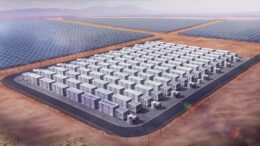
The consultant said a BRL 5.5 million ($1 million), 1 MW battery energy storage system is competitive with some gas-fired thermal plants. Envol estimates Brazil could install at least 2 GW of batteries within five years, generating BRL 11 billion ($2 billion) in investment.
Viana says distributors such as Companhia Paranaense de Energia (COPEL) are already taking action. “COPEL, for example, sees batteries as an energy resource not only in large systems but even in residential applications,” said the executive. “This shows that the technology can have a wide range of applications.”
That would mean a new grid model, said Viana, adding, “With appropriate regulation, we could move toward the DSO [distribution system operator] concept in which distributors manage batteries and distributed generation in an integrated manner, compensating consumers and aggregators.”
Speed is of the essence, however, said Viana.
“The urgency is great,” he said. “If we talk about delaying it until 2028, a lot of investment will go to other countries. At the utility scale, batteries are already competitive today. Ideally, regulations should be issued in 2025, before the capacity auction. Otherwise, it will be necessary to hastily create minimum rules, via ordinance, without the depth that a public consultation guarantees.”
From pv magazine Brasil.
Written by