Flexible interconnection an option to free up Californian grid for more storage, solar

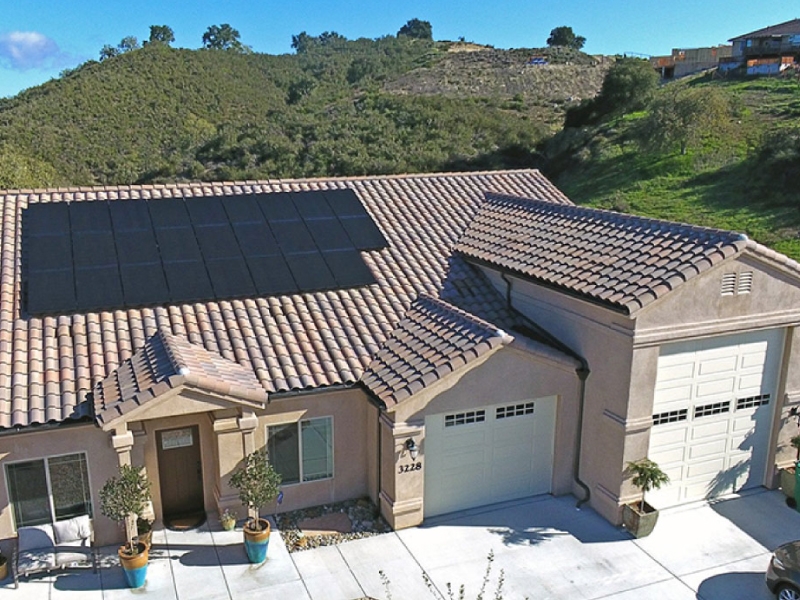
A flexible interconnection option for distributed solar or storage in California, that was long in the works, has taken effect.
The option will enable equipment to interconnect that would otherwise need to await grid upgrades.
A storage or solar owner may now choose to abide by “limited generation profiles,” which specify the maximum amount of electric generation a distributed energy resource system will export to the grid at different times throughout the year.
For those who choose this option, the California Public Utilities Commission (CPUC) ruled that energy exports may be controlled by a power control system that meets the UL [Underwriters Laboratories] 3141 standard for power control systems, with an integrated schedule. Power control systems are composed of a controller, sensors, and inverters.
UL 3141 has included a scheduling function since October 2024, said Brian Lydic, chief regulatory engineer of the Interstate Renewable Energy Council (IREC). The CPUC order took effect nine months later but Lydic said the California Energy Commission’s equipment list does not yet show any power control systems that meet the UL standard.
“Hopefully there’s some market pull to get manufacturers to get equipment listed,” he said, now that the flexible generation option is available in California, “but there could be some lag.”
The CPUC order specifies that a solar or storage developer may choose one of three approaches to limit a system’s generation levels to avoid times of congestion on the distribution circuit, as identified by the utility’s integration capacity analysis for that circuit. The different approaches apply either to different hours of the day, or to a combination of times of the year and hourly blocks. The three approaches are described in table 3 of the order, under the headings “24-hourly,” “Block,” and “18-23-fixed.”
A long road
IREC has traced the work of clean energy stakeholders over 10 years that led to the flexible interconnection option.
The foundation for limited generation profiles was laid when California required utilities to publish detailed, time-varying data on grid conditions on each distribution circuit, IREC noted.
Stakeholders first achieved a CPUC ruling in 2017, requiring the state’s utilities to publish integration capacity analyses, also known as hosting capacity analyses, that are specific to each distribution circuit. Then, after IREC found errors in interconnection capacity analysis (ICA) data, stakeholders achieved a 2021 CPUC ruling requiring utilities to validate the data.
The CPUC then began considering the use of ICA data to allow flexible interconnection and defined the flexible interconnection process in its 2024 order, six years after limited generation profiles were first proposed.
IREC said that the CPUC’s rules for limited generation profiles may be adapted over time as utilities collect data, as ordered by the CPUC, related to facilities using the profile.
From pv magazine USA.
Written by