LEAG teams up with HyperStrong for 1.6 GWh battery in Germany

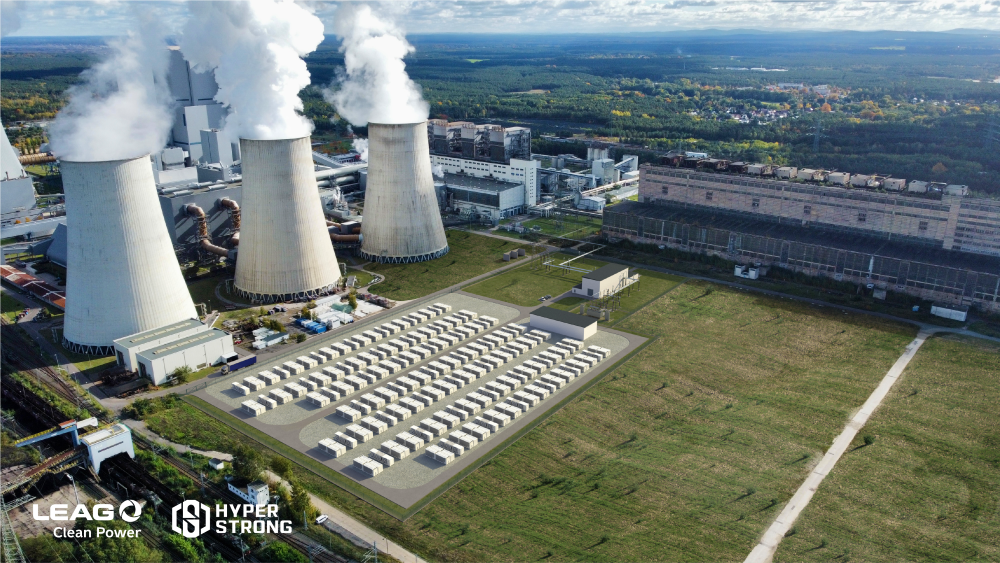
German energy company LEAG has partnered with China’s HyperStrong to deploy a 400 MW/1.6 GWh battery energy storage project in Germany.
Under the engineering, procurement and construction (EPC) contract, HyperStrong will deliver a turnkey, full-station energy storage solution that covers engineering design, equipment supply, system integration, commissioning, grid connection, and long-term operation support.
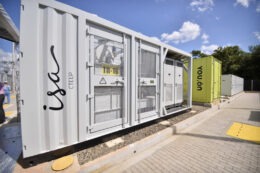
The Chinese battery energy storage system integrator will supply its 20-foot, 5 MWh HyperBlock III battery storage systems to the project, which will provide critical grid services, support renewable integration, and enhance energy security for the region.
Most recently, HyperStrong commissioned a 250 MW / 1000 MWh standalone energy storage station in Jiuquan, Gansu province, using its HyperBlock III technology. Leveraging its end-to-end project management system, the company delivered and installed all 200 energy storage units and auxiliary equipment in just two months. Going forward, HyperStrong will also support this project with its proprietary AI‑optimized power trading platform.
LEAG’s GigawattFactory
The GigaBattery Boxberg 400 project is part of LEAG’s GigawattFactory, a major regional-industrial initiative aimed at developing large-scale renewable energy generation, energy storage, and green hydrogen infrastructure in Germany’s Lausitz region, transforming former coal-mining land into a gigawatt-scale green energy hub.
In 2022, the German brown coal miner and power generator announced plans to bring 7 GW of solar and wind capacity online by 2030. By 2023, these ambitions expanded to include up to 14 GW of renewable energy generation, complemented by 2–3 GWh of battery storage and 2 GW of green hydrogen production. Together, these technologies are expected to form a net-zero baseload energy system.
That same year, the first large-scale project under the GigawattFactory initiative was announced at Intersolar Europe in Munich. LEAG signed an agreement with NYSE-listed, iron-flow battery specialist ESS to build a 50 MW/500 MWh battery system to help replace the 2.5 MW Boxberg coal-fired power station in Saxony, eastern Germany. Since then, limited updates have been provided on this project and ESS has encountered financial difficulties.
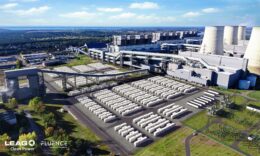
However, earlier this month, LEAG partnered with Fluence Energy GmbH, the German subsidiary of US-based Fluence Energy, on a 1 GW / 4 GWh system in Jänschwalde, marking Germany’s first officially announced multi-gigawatt-scale project and arguably Europe’s largest to date.
With the latest deal with HyperStrong, LEAG is taking a another major step forward toward achieving its renewable energy goals.
“With this project, we continue to accelerate our GigawattFactory strategy and expand the foundation for a carbon-neutral energy system,” said Adi Roesch, CEO of LEAG Group. “Battery energy storage plays a crucial role in balancing renewable fluctuations and ensuring energy remains available when it is needed. Working with a technology-driven partner like HyperStrong enables us to deliver on this vision efficiently and at scale.”
HyperStrong, with the EMEA regional headquarter in Frankfurt, Germany, is a Tier-1 global energy storage solution provider with extensive project experience across utility-scale and commercial & industrial (C&I) applications. The company has deployed over 45 GWh of energy storage systems across more than 400 projects – placing it among the world’s top five system integrators, according to the latest data from Wood Mackenzie.
Last week, HyperStrong announced that it had signed a 10-year long cooperation agreement with CATL, the world’s largest battery maker, that secures at least 200 GWh of energy storage batteries between 2026 and 2028.
Written by

Popular Posts