Energy storage in 2025: Year in review

1. Prices keep falling
Despite an increase in battery metal costs, global average prices for battery storage systems continued to tumble in 2025. Factors driving the decline include cell manufacturing overcapacity, economies of scale, low metal and component prices, adoption of lower-cost lithium-iron-phosphate (LFP) batteries, and a slowdown in electric vehicle sales growth. According to BNEF, battery pack prices for stationary storage fell to $70/kWh in 2025, a 45% decrease from 2024. This represents the steepest decline among all lithium-ion battery use cases and makes stationary storage the cheapest category for the first time.
On a regional basis, average battery pack prices were lowest in China, at $94/kWh. Packs in the US and Europe were 31% and 48% higher, reflecting the relative immaturity of these markets, as well as higher production costs and lower volumes, BNEF finds. A separate research from think-tank Ember assesses the cost of a full battery storage system connected to the grid as only $125/kWh as of October 2025. This is for long-duration (four hours or more) utility-scale battery projects in global markets outside China and the US. Core battery equipment delivered from China now costs around $75/kWh, while installation and grid connection typically add about $50/kWh.
Beyond CAPEX, industry conversations are increasingly focusing on the true cost of battery storage, which goes far beyond $/kWh. In a pv magazine Week Europe 2025 webinar, storage specialists highlighted several key considerations when purchasing battery energy storage systems: clearly communicating your project use case to suppliers, ensuring the usable energy in your warranty aligns with your project requirements, and understanding supply chain ownership – including who provides both AC and DC blocks, which cells are used, and whether components are manufactured in the official factory or quietly at an OEM with typically lower quality standards. Many more insights are discussed in the video here.
2. Big BESS, big tech developments
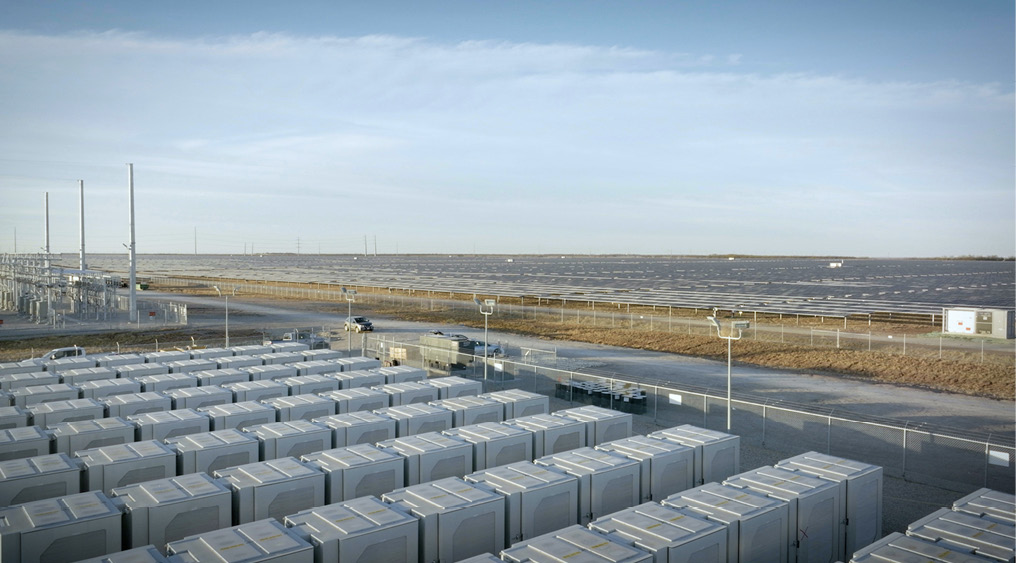
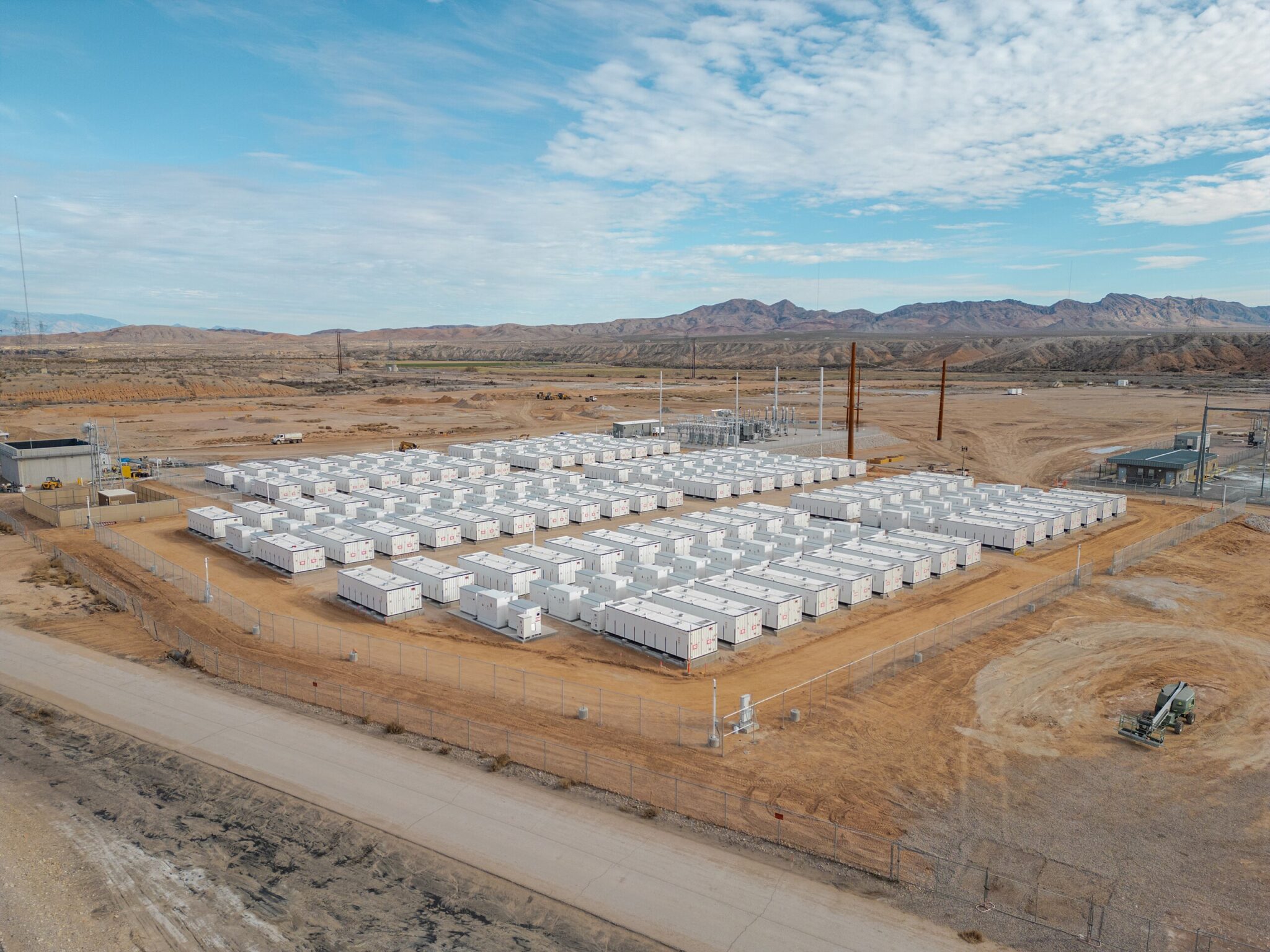
Battery energy storage technology suppliers have continued their relentless R&D efforts, delivering remarkable progress in both energy density and modularity. With energy density being a critical factor for unit economics, utility-scale systems have evolved rapidly. As soon as 5 MWh containers hit the market, 3 MWh systems quickly lost their appeal. In 2025, this trend continued with even larger units being introduced. In the DC space, Gotion launched a 20 MWh container, followed by BYD with a 14.5 MWh system. Innovation in AC block design was not lagging behind – Fluence introduced its 7.5 MWh Smartstack platform, Sungrow followed with PowerTitan 3.0 (up to 12.5 MWh), and even the lesser-known, Bulgaria’s IPS made a mark with its 8.1 MWh Exeron product. Finally, Tesla rolled out its 20 MWh Megablock – a pre-engineered, medium-voltage AC utility-scale solution that combines four Megapack 3 units with an integrated megavolt transformer and switchgear
As energy density rises, so do system weight and logistical challenges – from road weight limits to crane lifting constraints. Even before these limitations began to impact on-the-ground deployments, technology providers were moving full speed to address them. Some turned to 10-foot containers, while others embraced modular, open-frame architectures, allowing each cabinet to function as an independent building block. These designs streamline logistics and on-site installation while maintaining a high degree of layout flexibility, all while preserving the key advantages of high energy density, such as reduced land requirements, lower balance-of-system costs, and decreased civil construction expenses.
3. China policy headwinds/tailwinds
In 2025, China made a couple of major political moves affecting its energy storage sector. In late November, the Ministry of Industry and Information Technology (MIIT) pledged to accelerate the rollout of targeted policies aimed at curbing “irrational competition” in the power and battery energy storage industry.
Recent tenders in China have highlighted the severity of the pricing frenzy, with average lithium-ion battery energy storage system–level bids falling to around $65/kWh, a figure that has startled Western markets. This aggressive pricing environment, driven by oversupply and intense competition, has eroded margins across the sector and threatens the viability of many market participants.
In response, industry voices within the world’s largest energy storage manufacturing hub have increasingly called for price controls, higher technical and safety standards, and structural reforms to safeguard product quality and ensure long-term market stability.
While China is already pursuing consolidation across its photovoltaic supply chain – beginning with efforts to address the so-called “poly glut” – similar dynamics are now emerging in energy storage. Although the sector remains a few years behind PV in this transition, recent developments echo the evolution of China’s solar industry: a shift away from unchecked expansion toward strategic consolidation, with greater emphasis on innovation, sustainability, and quality rather than purely aggressive pricing.
Previously, China made another major policy move by scrapping its energy storage mandate for renewable energy projects. Effective June 1, new renewable energy plants are no longer required to install energy storage systems in order to secure development rights and grid connection.
Introduced in 2022, mandates requiring solar and wind projects to include energy storage played a critical role in accelerating deployment across China – driving up to 75% of the nation’s energy storage demand. More than 20 provinces had implemented such requirements, with some provincial governments increasing mandatory storage ratios to 20%, up from 10% just a few years earlier.
Without a mandate in place, energy storage systems must increasingly rely on revenues earned through electricity markets. However, making energy storage profitable under a market-based model remains challenging in China today. Beijing has set a goal of establishing a unified national electricity market by 2030, with prices determined by supply and demand. At present, however, only a limited number of provinces have launched wholesale power market operations. As a result, key revenue streams for energy storage – such as energy arbitrage – remain unavailable in much of the country.
4. US roller coaster
In 2025, US energy storage sector experienced a turbulent ride as the Trump administration took significant action to roll back and eliminate key clean energy investment incentives and funding for renewables provided by the Biden-era Inflation Reduction Act (IRA). Standalone energy storage remains eligible for the base Investment Tax Credit of up to 30%, preserving a key pillar of market support through to 2032. At the same time, new legislative and regulatory developments, including tighter domestic content and foreign-entity-of-concern (FEOC) requirements, have added complexity and uncertainty around eligibility.
Meanwhile, storage economics are becoming increasingly more attractive on paper than in practice. The combined effect of falling revenues and rising costs has made many battery storage projects financially unviable, particularly in the largest US markets. In Texas, battery revenues fell sharply through 2024 and 2025 and nearly 90% since 2023, while in California net annual revenues per kilowatt of battery capacity declined from $103/kW in 2022 to $78/kW in 2023 and just $53/kW in 2024 as peak-hour power prices softened. At the same time, the cost and complexity of developing battery storage continue to rise. Looking ahead to 2026, the outlook remains highly uncertain: some expect a wave of project cancellations as battery economics deteriorate, while others anticipate a late-year surge in demand for batteries with longer lead times. Cleanview estimates that projects once modeled at $192/kW in revenue with $100/kWh battery costs in 2023 are now facing roughly $55/kW in revenue alongside $130/kWh costs, a shift that contributed to the cancellation of 79 GW of planned US battery storage capacity in 2025.
5. Europe wakes up to the opportunity (not just the UK)
Only a couple of years ago, most battery storage activity in Europe was concentrated in the UK. In 2025, the picture looked entirely different, revealing the true potential of energy storage across a wide range of markets and applications. Germany stole the limelight, with its battery storage grid-connection queue swelling beyond 500 GW. According to industry reports, grid connections for an additional 78 GW have already been approved, making Germany the number-one market to watch in 2026.
Italy marked a major milestone for European energy storage by holding its first Mercato a Termine degli Stoccaggi (MACSE) auction, aimed at securing 50 GWh of capacity by 2030. The inaugural procurement far exceeded expectations, awarding 10 GWh at record-low prices of €37,000 per MWh per year. Meanwhile, following its major blackout, Spain has continued to lay the foundations for large-scale storage deployment as it seeks to reinforce grid resilience and security of supply.
In Central and Eastern Europe, momentum has also accelerated. Poland has now allocated subsidies for 172 energy storage projects scheduled for construction by the end of 2028, together representing around 3.9 GW of power capacity and 14.5 GWh of energy storage – in a big boost to its already rapidly growing storage fleet. Romania is ramping up its utility-scale battery deployments, Hungary is stimulating growth through a residential battery subsidy programme, and recent regulatory changes in the Czech Republic have unlocked significant potential for utility-scale BESS deployment.
Following desynchronisation from the Russian grid earlier this year, battery storage activity across the Baltic region has been particularly vibrant. Taken together, these developments show that energy storage reached every corner of Europe in 2025, setting the stage for an even more dynamic year ahead.
Written by




Popular Posts