Investing in BESS in Europe: From market hurdles to C&I opportunities

Can you give us an overview of your current project portfolio and pipeline?
Absolutely. Our focus is on providing comprehensive energy solutions, particularly in the solar and energy storage space. We strengthened our capabilities by acquiring Belectric from RWE a few years ago. For example, we entered the Spanish market last year and are now developing our first large-scale solar project there, roughly 100 MW.
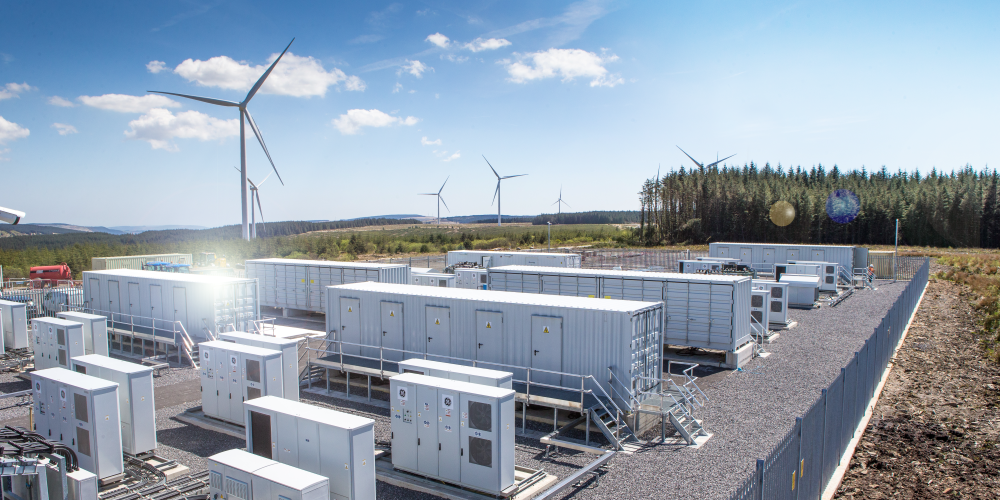
In terms of scale, Belectric has completed construction of approximately 5,300 MWp of utility-scale PV and 950 MWh of utility-scale batteries, either constructed or under construction. For commercial and industrial (C&I) clients, we have completed over 50 battery installations totaling around 30 MWh. Overall, our PV capacity built to date is about 5,400 MWp.
Our pipeline of projects under development is extensive. Including PV and BESS projects, it exceeds 1,000 MW across the UK, the Netherlands, Italy, Spain, and Germany. This demonstrates not only our technical capabilities but also the geographic diversity of our projects. Our approach is a one-stop shop, covering engineering, construction, operation, and investment on our balance sheet. We offer both asset-light services and investment-led models.
What are the key headwinds and tailwinds for BESS in Europe?
The biggest challenge is grid connection. In many European countries, the process is long and cumbersome, with limited clarity on available capacity and timelines. For example, in Germany, it can take nearly a year of discussions with distribution system operators (DSOs) just to confirm whether a project can be connected to the grid, even if technically the capacity exists.
Other factors include regulatory uncertainty and differences between national markets. Some countries, like the UK, have streamlined processes for battery connection, partly because they are islanded systems and grid congestion has long been an issue. Others, like Germany, are interconnected with neighboring grids, complicating prioritization and sequencing of projects.
On the positive side, battery costs have fallen significantly in recent years, and intraday trading mechanisms – such as 15-minute intervals- make storage investments more financially attractive. However, speculative projects occupying grid connection slots without secured financing also create bottlenecks, delaying projects that are ready to build and deliver grid flexibility.
How do you approach investment decisions for battery projects versus other technologies?
Investment decisions depend on market conditions, regulatory frameworks, and project readiness. While several hundred million euros are allocated for energy investments over the next few years – and a significant share is intended for BESS – the exact amount directed to batteries ultimately depends on grid-connection readiness.
We prioritize projects that can move quickly from development to construction. If a project has all approvals but uncertain grid access, it may be delayed in favor of other asset classes offering more immediate financial return. Battery cost trends are favorable, but timing and market readiness remain critical. In Germany, investments only make sense if a project can be operational within a few years; otherwise, capital is better deployed elsewhere.
What kind of battery storage projects would you be most interested in investing in?
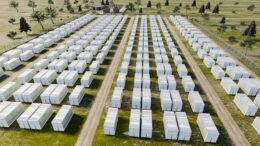
The majority of our investment is intended for utility-scale battery projects – particularly for assets that can participate in the intraday market, with Germany currently the most attractive market.
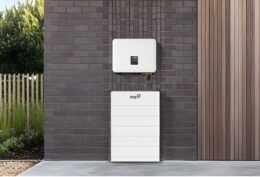
In addition, we also invest in behind-the-meter energy infrastructure for our clients, offering these solutions as a service. A portion of our capital will be allocated to commercial and industrial (C&I) battery installations across Germany, the Netherlands, Austria, Poland, and Italy.
What is your view of the C&I market segment in Europe, and what opportunities do you see emerging there?
There’s increasing interest in C&I batteries. For industry clients, grid congestion and fluctuating energy prices make flexible, behind-the-meter storage increasingly attractive. These systems help clients balance their own consumption and, if designed correctly, interact with the grid to generate revenue through trading.
We invest in larger C&I battery projects, allocating part of the capacity for client use while the remaining capacity is used for grid services such as intraday trading, with profits shared with the client. We are currently discussing three such projects in Germany.
As we expand across Europe, we observe different trends in each market. In the Netherlands, grid capacity issues emerged earlier, prompting earlier deployment of batteries. In Germany, batteries are now being used both for behind-the-meter balancing and for trading or virtual grid capacity expansion. For instance, if a DSO cannot provide enough connection capacity, installing batteries allows clients to operate at full production through peak shaving, which would otherwise be impossible.
Client engagement works in two ways: sometimes they approach us directly, and other times we proactively identify opportunities. Also, we sometimes partner with local optimizers for revenue stacking, though we plan to bring more of this capability in-house over time.
Written by



Popular Posts