Neoen’s battery to pioneer grid-forming services on French transmission network

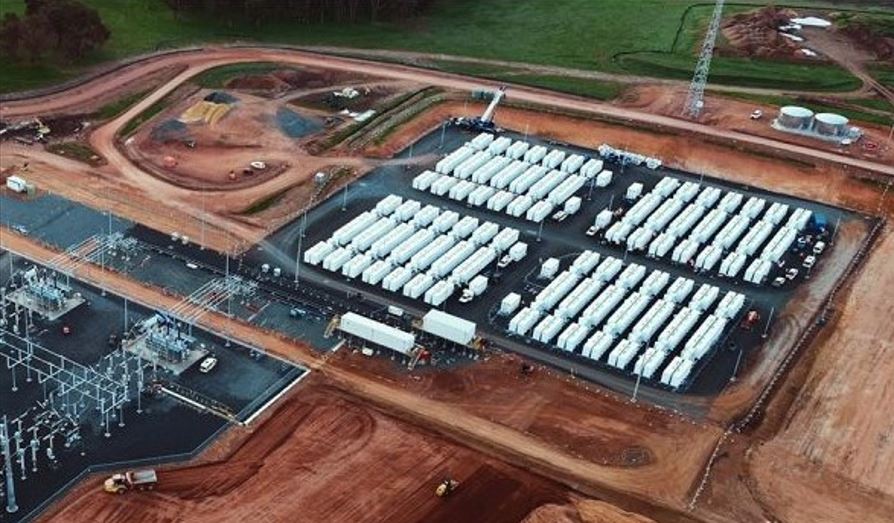
Renewables developer and operator Neoen has signed a contract with French transmission system operator RTE to enhance the stability of the French power grid. Its 92 MW/183 MWh Breizh Big Battery, currently under construction, will provide grid-forming services as part of a trial conducted with Réseau de Transport d’Electricité (RTE) to retrofit inverters.
Grid‑forming technology has progressed beyond experimental stages and is now being deployed to support power systems with high renewable penetration. In France, however, all existing battery storage facilities currently operate in grid-following mode. As “followers” by design, these systems respond more slowly and offer limited support for fluctuations in electricity supply and demand.
Unlike traditional grid‑following inverters that rely on existing grid voltage and frequency references, grid‑forming inverters actively replicate key behaviors of synchronous generators – such as inertia, frequency regulation, and voltage control – using advanced control architectures. This capability allows inverter‑based resources – like batteries and solar plus storage systems – to provide essential stability services to the grid, making them crucial for reliable grid operation, with implementations already proving effective in real‑world projects around the world.
To assess the benefits of this approach, RTE and Neoen have launched an experiment to convert an inverter from grid following to grid forming mode, which will run for at least one year. Once deployed, the Breizh Big Battery will become the first battery in France to offer these enhanced capabilities.
The project located in the village of Pleyber-Christ in Finistère will be one of France’s biggest batteries and the largest in the Brittany region. It is expected to start operating over the summer of 2026.
“I am delighted with this experiment, which aims to test cutting-edge technological advances capable of enhancing grid stability. It marks a first in France and represents the culmination of research in which RTE is at the forefront at the European level. Our ambition is to turn the rise of power electronics into an opportunity for the electricity system’s operation,” said Gabriel Bareux, R&D director from RTE.
Since 2017, Neoen has built a global storage portfolio in operation or under construction which currently sits at 2.8 GW / 8.1 GWh. This includes some of the largest batteries in the world, such as the 270 MW / 540 MWh Western Downs Battery or the 560 MW / 2,240 MWh Collie Battery in Australia, as well as several batteries in Europe, including Isbillen Power Reserve (93.9 MW / 93.9 MWh) in Sweden and Yllikkälä Power Reserve One and Two (86.4 MW / 142.9 MWh together) in Finland.
Written by



Popular Posts