China’s storage scorecard: Six key players split sharply on 2025 profit outlook

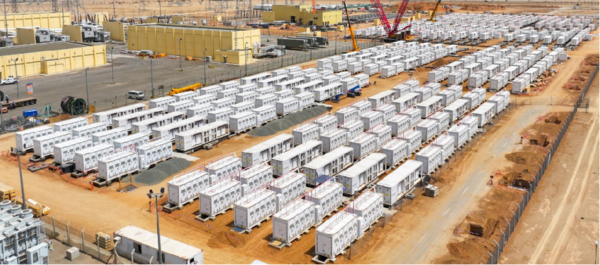
Six major Chinese energy-storage-related companies have issued preliminary 2025 earnings guidance, pointing to a market that is still growing but increasingly uneven in who captures the value. The disclosures span battery manufacturers and a leading cathode-material supplier and show a clear split between firms benefiting from volume growth and overseas exposure, and those still absorbing restructuring and working-capital stress.
Hong Kong-listed REPT BATTERO Energy Co., Ltd. (00666.HK) said on Feb. 2 it expects to swing to its first annual profit since inception, projecting net profit of CNY 630 million to CNY 730 million for 2025, compared with a net loss of about CNY 1.35 billion a year earlier. The company attributed the turnaround primarily to rising shipments across power and energy storage batteries and improved operating efficiency. In its interim report, REPT reported 1H 2025 revenue of CNY 9.49 billion and a narrowed net loss of CNY 63 million, alongside a reported 32.4 GWh of shipments.
Onshore, Gotion High-tech Co., Ltd. (002074.SZ) forecast headline net profit attributable to shareholders of CNY 2.5 billion to CNY 3.0 billion for 2025, more than doubling from 2024, while its guidance implied a much smaller profit of CNY 350 million to CNY 450 million on an adjusted basis excluding non-recurring items. The company linked the outperformance to higher sales of higher-energy-density LFP products, scale effects from capacity ramp-up, and overseas expansion; it also cited a material fair-value gain tied to its equity stake in Chery Automobile Co., Ltd. following Chery’s Hong Kong listing.
Guangzhou Great Power Energy & Technology Co., Ltd. (300438.SZ) guided for a return to profitability, with net profit attributable to shareholders of CNY 170 million to CNY 230 million versus a loss in 2024, and an adjusted profit of CNY 80 million to CNY 110 million. The company’s disclosure framed the rebound as demand-led, pointing to stronger order intake and sales momentum.
Residential storage specialist Shanghai Pylon Technologies Co., Ltd. (688063.SH) guided for a 2025 net profit increase to CNY 62 million to CNY 86 million, with a year-on-year increase of 50.82% to 109.21%. The company linked performance to a rebound in international storage demand, growth in overseas C&I and residential channels, and progress in sodium-ion and light-mobility segments.
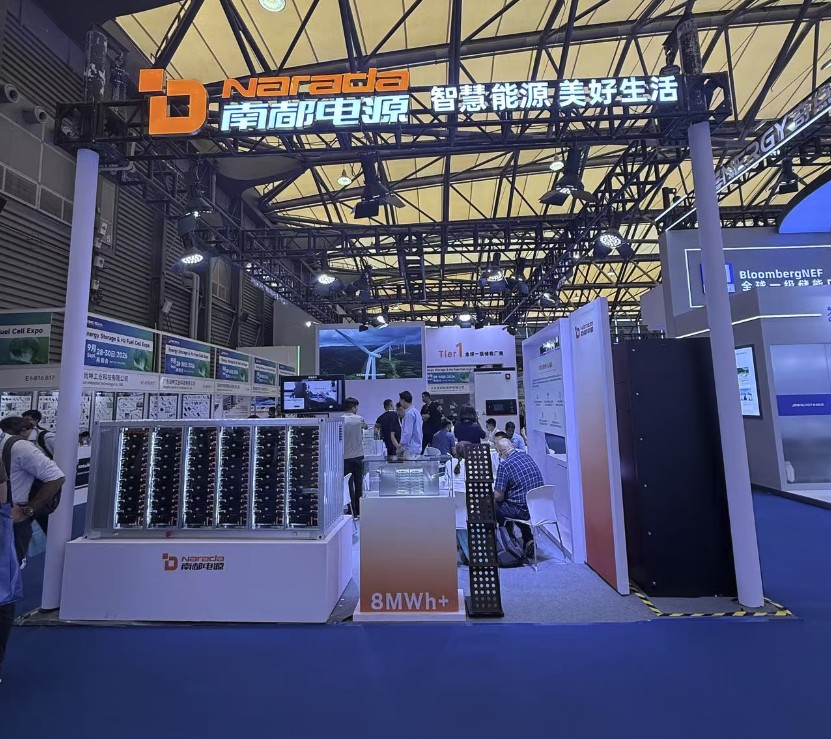
By contrast, Zhejiang Narada Power Source Co., Ltd. (300068.SZ) remained lost in its preliminary guidance, expecting a 2025 net loss of CNY 890 million to CNY 1.25 billion, though narrower than 2024. It said revenue was pressured by an intentional shift away from recycled-lead operations and by delivery delays linked to near-term funding constraints, alongside higher provisions and impairments; it nonetheless highlighted a larger share of revenue coming from lithium-based storage, especially data-center-related demand.
Upstream, cathode-material supplier Hunan Yuneng New Energy Battery Material Co., Ltd. (301358.SZ) projected net profit of CNY 1.15 billion to CNY 1.40 billion for 2025, roughly doubling year-on-year, and cited stronger demand from EVs and energy storage, “structural tightness” in some product segments, and improved profitability in the second half as lithium carbonate prices rebounded and its integration efforts took effect.
Taken together, the filings point to a storage supply chain that is still expanding but distributing profits less evenly than volumes. Several companies are guiding to sharp improvements or a swing to profitability, yet the quality of earnings differs, with some results meaningfully influenced by non-recurring items and fair-value changes rather than core operations. The disclosures also suggest that positioning matters: companies highlighting overseas traction and a storage-heavy product mix generally describe stronger demand and scale benefits, while firms still navigating delivery bottlenecks, provisions, and short-term funding pressure can remain loss-making even as the broader market grows.
Written by



Popular Posts