World’s largest AI-powered 12.8 GWh battery storage cluster comes online in China

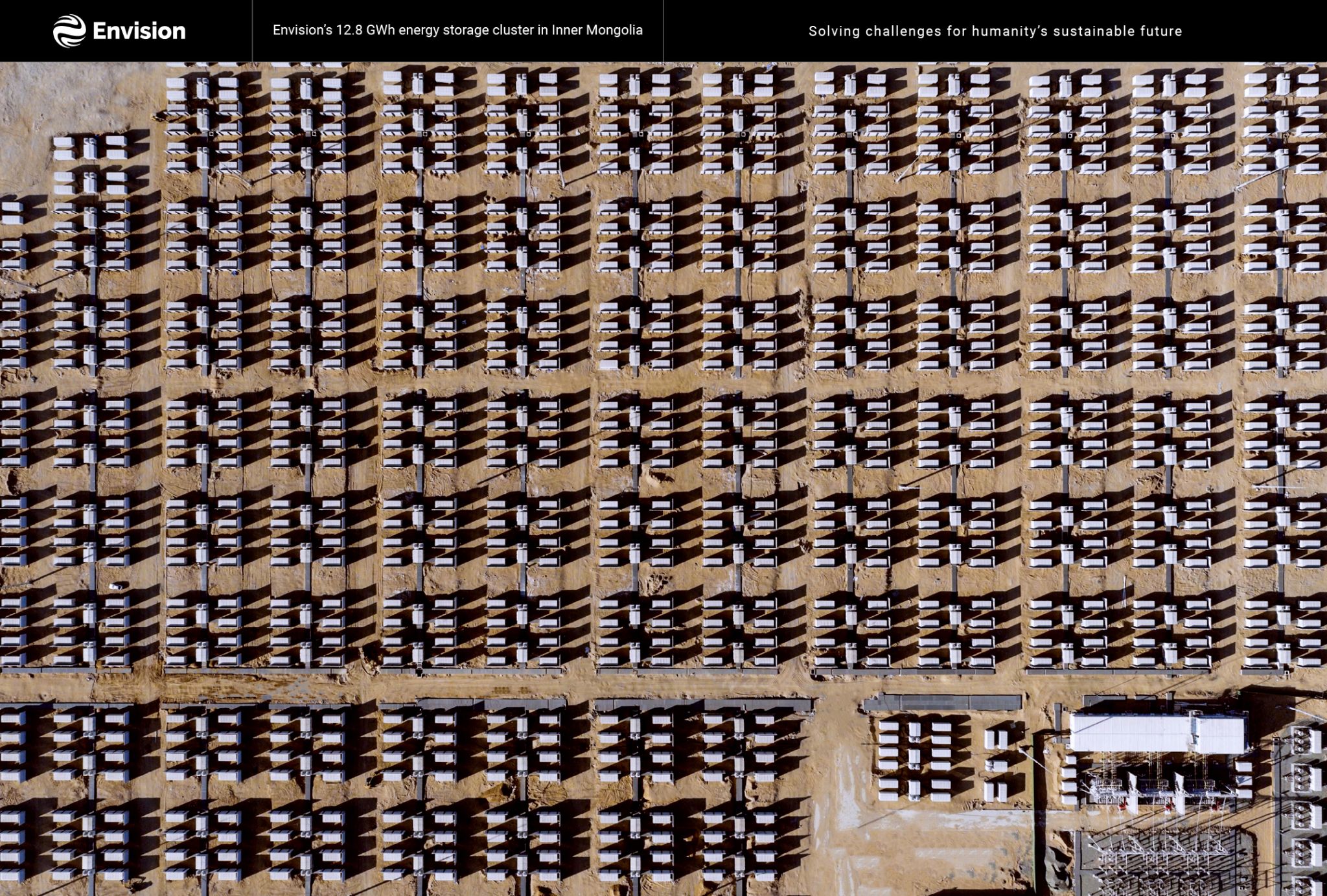
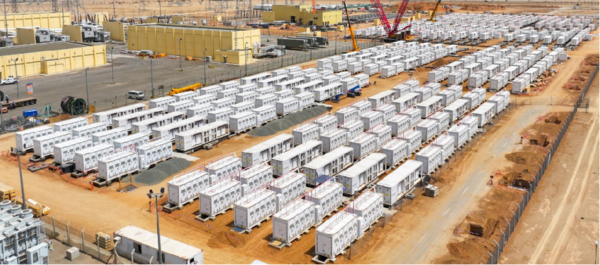
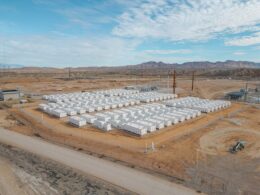
In the final days of December 2025, the world’s largest single-site electrochemical energy storage power station – the 4 GWh Envision Jingyi Chagan Hada Energy Storage Power Station – was successfully connected to the grid. This milestone marked the completion and grid connection of Envision’s 12.8 GWh energy storage cluster in Inner Mongolia.
In addition to the flagship site, the other projects are located in Bayannur, Ordos, Hohhot, Ulanqab, Xilingol League, and Alxa League, bringing Envision-led energy storage projects in Inner Mongolia to more than 14 GWh in total capacity. To facilitate local deyploment, the manufactuer has established a full industrial chain in Inner Mongolia, from battery cells and system integration to project delivery and intelligent operation.
Envision reported in early January that the 4 GWh flagship project passed grid verification at rated power through “three charge and three discharge” tests and a 72-hour continuous trial operation on the first attempt, making it the largest energy storage project in China to complete such testing.
This achievement not only sets new global records for energy storage cluster scale and grid-connection speed, but also demonstrates Envision’s capabilities in ultra-large-scale system integration, extreme-environment adaptability, deep grid interaction, and large-scale project delivery.
New grid development guidelines
Notably, the project’s grid connection coincided with the release of China’s Guidelines on Promoting High-Quality Power Grid Development by the National Development and Reform Commission (NDRC) and the National Energy Administration (NEA), highlighting strong alignment between national policy direction and industrial practice.
The Guidelines emphasize enhancing power system regulation toward greater diversity and large-scale coordination, boosting capabilities for new grid-connected resources such as renewables and new-type energy storage, supporting R&D in critical grid technologies for extreme environments, and piloting long-distance transmission from large-scale renewable energy bases and the accelerate deployment of grid-forming solutions.
Envision’s AI-powered energy storage systems in Inner Mongolia combine advanced grid-following and grid-forming capabilities, supported by a full-scale simulation platform and a three-layer architecture across equipment, system, and site levels. This enables GW-scale stations to connect instantly upon energization, cutting commissioning time, reducing oscillation risks, and boosting grid support.
The Guidelines also emphasize deep integration between market mechanisms and dispatch systems, encouraging exploration of new pricing models. This creates clear and predictable revenue pathways for AI-powered energy storage through participation in electricity spot markets, provision of ancillary services such as frequency and peak regulation, and access to capacity compensation and price arbitrage.
The 12.8 GWh energy storage cluster will be fully integrated into the electricity spot market. Leveraging Envision’s AI system – where trading agents and grid-forming agents operate in coordination – the project enables a closed-loop lifecycle operation covering prediction, scheduling, trading, and self-learning. In a recent interview with pv magazine, Envision detailed on its “Physical AI” platform, embeding intelligence across cells, systems, and operations and enabling predictive maintenance and real-time market participation.
This approach enhances the intelligence, efficiency, and execution of power trading decisions, while providing a replicable and scalable model for large-scale participation of new-type energy storage in electricity markets. It also significantly improves regional renewable energy consumption and strengthens the operational resilience of the power grid.
In previous deployments, Envision’s AI energy storage system has ranked first in trading forecast accuracy at several Inner Mongolia sites for consecutive months, according to the manufacturer. Based on measured operational data, the project is expected to increase total lifecycle returns by more than 20%.
The Guidelines emphasize smart microgrids as a key element of new power systems, creating opportunities for AI energy storage in industrial, zero-carbon, and remote areas. Acting as a local energy brain, AI storage optimizes generation, grid, load, and storage, boosting renewable self-consumption, reliability, and grid integration, thus making it essential in high-renewable scenarios.
Written by
Comments



Popular Posts