Troubled Waratah Super Battery gets timeline for replacement transformer and full operational date: End of 2026

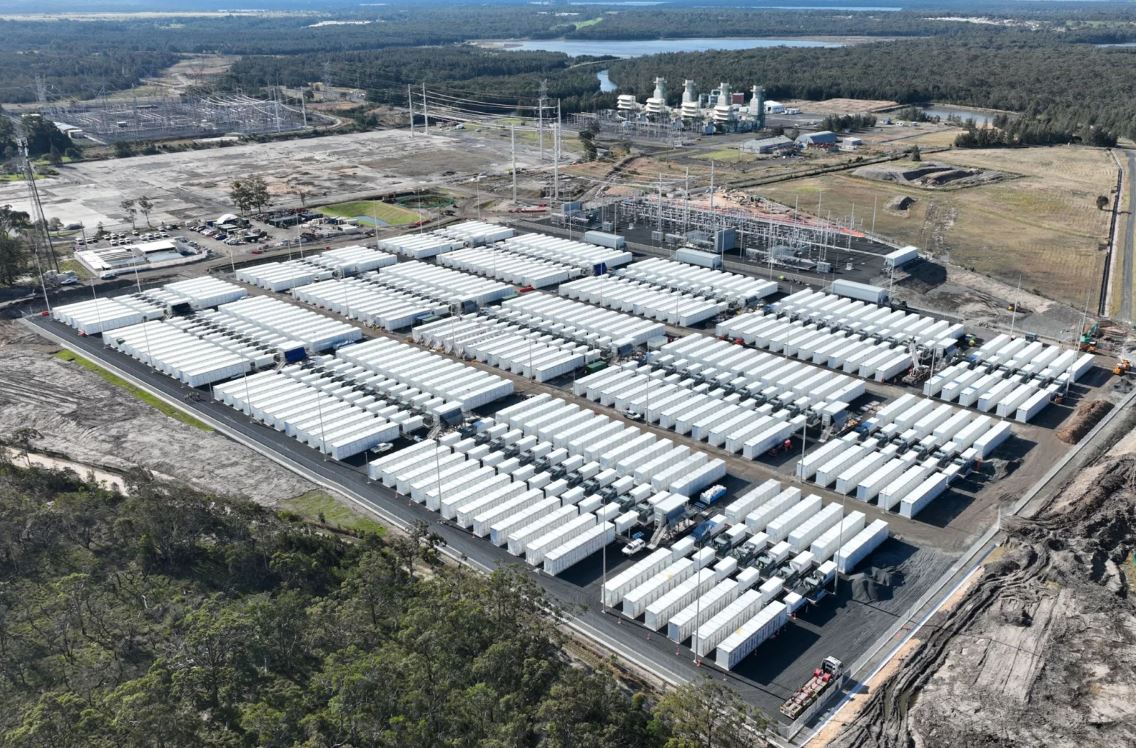
Some three months after the major transformer failure at the 850 MW / 1,680 MWh Waratah Super Battery in Australia, owner Akaysha Energy has revealed both more about its transformer failure, and the timeline for its replacement.
In addition, the company said of its three transformers, where the 350 MVA High Voltage Transformer 3 failed (HVT3), HVT1 remains in operation, HVT2 remains offline without details as to why, the company saying “with its remediation incorporated into a defined program of work.” No further details of HVT2 were provided.
The company said that while investigations are ongoing, presumably as part of the Root Cause Analysis it said it was undertaking in December, the transformer experienced “a significant internal fault” resulting in damage:
The original HVT3 transformer experienced a significant internal fault, resulting in damage to the windings and an overpressure event. This overpressure led to the rupture of the tank wall near the base, causing the transformer to self-drain into the surrounding (bunded) area. Investigations into the cause of this fault are ongoing.
Further details of the timeline for the full replacement, commissioning, and operation of one of the world’s biggest batteries provide a look at how plant assets and procurements handle failures.
Wilson Transformer Company, the Australian-based original manufacturer of HVT3, has begun production of the replacement transformer, having secured “the necessary long lead items required for the build.” Delivery of the replacement transformer to the site is scheduled for the third quarter of 2026.
The implication of the rapid supply of a high-voltage transformer, which can face lead times of two years or more, and are a major bottleneck for new energy projects in both Australia and globally, suggest Wilson Transformer Company provided Akaysha Energy with a bump up the waiting list; possibly due to performance guarantees or warranties.
The company gave backing to the local transformer manufacturer, which has responded by fast-tracking its investigation, site works, and replacement programs.
“This approach has facilitated immediate engineering engagement, a strong on-site presence, and rapid mobilisation of manufacturing resources,” Akaysha said.
The Waratah Super Battery was originally contracted with NSW grid owner Transgrid, to deliver a guaranteed capacity of 700 MW and 1400 MWh in early 2026 as part of its role in the grid’s System Integrity Protection Scheme (SIPS). With reduced capacity, Akaysha misses valuable payments – with half of the battery currently meeting its SIPS obligations at 350MW, Akaysha is likely netting half of its expected revenues.
Industry observers will be keen to review the full Root Cause Analysis report on the HVT3 failure and the surrounding questions regarding HVT2 to better understand processes and risks, ranging from factory acceptance testing to commissioning.
Written by




Popular Posts