Energy China consortium wins 1 GWh Benban battery project in Egypt

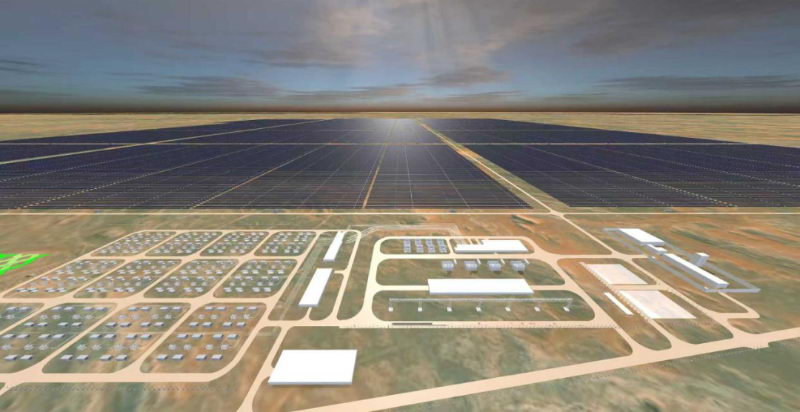
A consortium led by China Energy International Group Co., Ltd., a level-one subsidiary of China Energy Engineering Cooperation (CEEC), has won the EPC contract for the Nefertiti 500 MW/1,000 MWh standalone battery energy storage project in Benban, Aswan, Egypt, according to announcements published in late February. The consortium also includes Zhejiang Thermal Power Construction Co., Ltd. and China Power Engineering Consulting Group Southwest Electric Power Design Institute Co., Ltd.
Chinese project disclosures describe the scheme as the largest standalone energy storage project yet awarded in Africa. The contract covers design, procurement, construction and commissioning of the storage plant, a new 220 kV substation, and upgrades to the opposite-side substation under an EPC structure. The whole project is expected to finish within 18 months and connected to Egyptian grid by end of 2027.
The project is located in Benban Solar Park, one of Africa’s largest solar clusters. Benban’s installed solar capacity has been widely cited at around 1.8 GW, making it a logical location for large-scale storage aimed at smoothing PV output and strengthening grid flexibility.
The award is significant for Egypt because the country only began formalizing its first standalone BESS pipeline in 2025. At that time, the Egyptian government and developer AMEA Power announced capacity purchase agreements for two storage projects totaling 1,500 MWh, including a 1,000 MWh Benban project and a 500 MWh Zafarana project, described as Egypt’s first standalone battery storage stations.
According to the Chinese-side project briefing, the Benban Nefertiti plant is being tailored for high-temperature, dusty desert conditions and for the characteristics of Egypt’s grid. The proposed design includes a grid-forming storage configuration, intended to provide fast voltage and frequency support in addition to more conventional roles such as peak shaving, frequency response, reserve capacity and black-start support. The project materials also point to a liquid-cooled lithium iron phosphate (LFP) system architecture aimed at maintaining stable operation in harsh summer conditions.
That combination matters because the project is not merely a co-located storage add-on to a single solar plant. It is positioned as a grid-side, independently dispatched asset, reflecting a broader shift in the Middle East and North Africa from small, PV-attached battery systems toward utility-scale storage built as a standalone grid resource.
For the Chinese consortium, the project also deepens an existing Egypt portfolio. China Energy Engineering says it has been active in the Egyptian market since 2010, with a growing role in generation and grid infrastructure. For Egypt, the Benban award reinforces storage’s role in supporting renewable integration as the country works toward higher solar and wind penetration. For the regional market, it sets a new benchmark: 1 GWh-scale standalone storage is no longer a pilot concept in Africa, but an executable grid project.
Written by




Popular Posts