Australia’s big batteries become controversial: Trina Solar withdraws application as state governments intervene

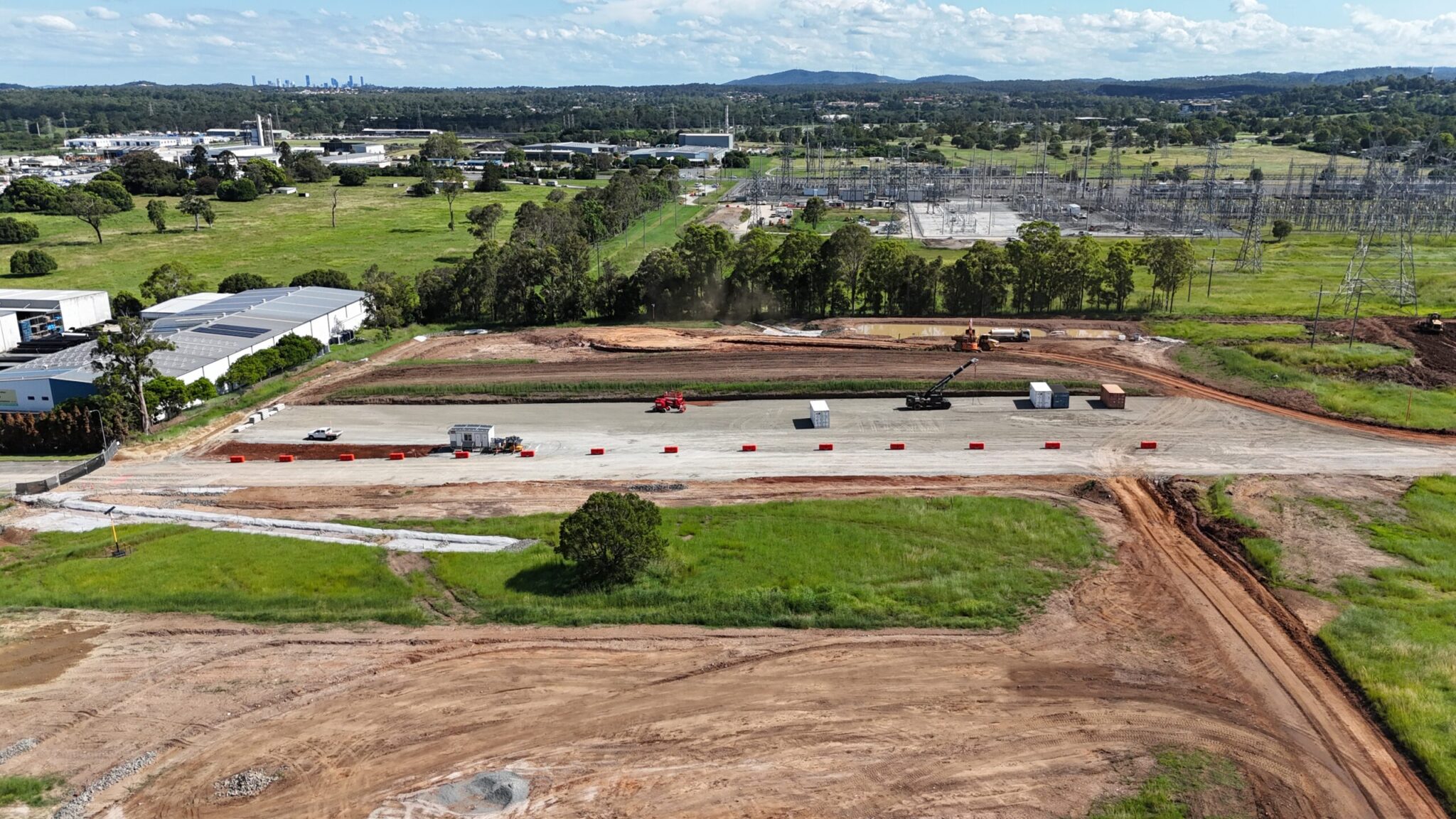
As the energy storage industry grows, so too does attention and contention. In the state of Queensland in Australia’s north-east, the state’s Energy Roadmap 2025 targets 4.3 GW of short-duration battery storage by 2030. At the same time, three major battery projects in Queensland are facing government minister attention, as planning fights go from adjusting plans based on relatively standard commmunity and local government concerns to larger-scale fights, in what appears to be a series of setbacks.
The latest is a complete withdrawal by Trina Solar at its planned 200 MW / 800 MWh Pleystowe BESS near Mackay. The Australian Financial Review first reported that it was withdrawn after the Queensland government moved to “call in” the project. In Queensland, the “call-in” is a function that allows the state government planning minister to take over a development application from the usual local council and court process, and make the final decision directly. The ministerial intervention also cuts across the normal Planning and Environment Court pathway that developers had turned to after councils failed to determine applications or moved against them.
The Pleystowe battery project was originally called in on March 3, with the project facing more than 700 public submissions against it, and just three in support. Trina Solar had initially appealed the Mackay Regional Council’s “deemed refusal” of its application late last year, as time elapsed on the application.
As mentioned, there are two other projects facing the ministerial call-in. Potentia Energy’s Capricorn BESS near Rockhampton, proposed at 300 MW / 1,200 MWh, has also been called in by the state, along with Iberdrola Australia’s Bundaberg Regional Battery near Gin Gin, planned at up to 500 MW. Iberdrola’s project material describes two to four hours of storage, or between 1,000 MWh to 2,000 MWh depending on final design.
Like Pleystowe, the two projects had already run into local opposition and planning disputes before the state stepped in.
In the case of Iberdrola Australia, chairman Ross Rolfe said at the time, “We believe we have taken all necessary steps, consulted widely with the community, and we believe the project will deliver jobs, support local businesses and community investment,” he said.
The Queensland disputes are not along both in Australia or globally. In the UK, more than 1,000 people objected to plans by energy company NatPower to build two battery energy storage systems in North Yorkshire. To find support, NatPower pledged up to £40 million in community funding, or roughly £1 million annually, for 40 years if the projects proceed. Significant objects and moratoriums have been placed across the US as well, including 97 moratoriums in place within the state of New York, according Carina Energy, a provider of services such as becoming the Owner’s Representative for energy storage for projects.
Australia’s leading position in home solar and storage, makes life harder for big BESS
The Trina Solar withdrawal gives Australia’s roaring battery sector a little bit of pause. Governments and market operators continue to both support and rely on large scale storage to firm renewables and support reliability, and yet, while approvals and politics are always factors for major projects, revenues are becoming much more complicated as factors change.
Industry participants are increasingly weighing the rise of household batteries and growing virtual power plants (VPPs), as the federal government’s self-explanatory scheme called the Cheaper Home Batteries Program funded more than 12 GWh of storage, and remains open for participation.
This means that utility-batteries are increasingly competing against these distributed energy resources (DER). In the worst-case outcome that has been discussed in webinars and in analyst meetings, this may mean a kind of price war between fleets of home batteries and rooftop solar, where grid export revenues are a pure bonus for those who initially just wanted to offset power costs. That may mean an effective availability of surplus power at a large-scale and lower-cost for the VPP operator. Longer-duration storage and solar-plus-storage hybrid projects are currently modelling better revenues for longer.
Written by
Comments





Popular Posts