Scientists demonstrate quantum battery prototype with rapid charging

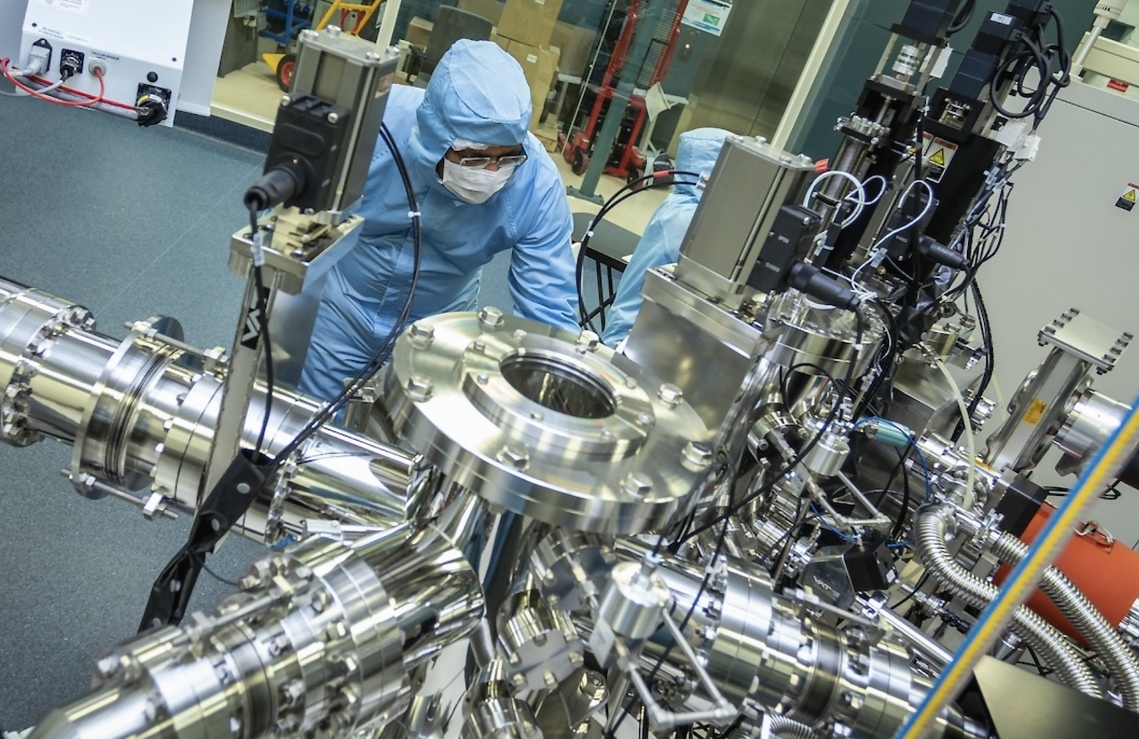
Scientists from CSIRO – Australia’s national science agency – in cooperation with RMIT University and the University of Melbourne, have developed the first proof-of-concept quantum battery, that demonstrates the potential for rapid, scalable charging and energy storage based on the principle of collective quantum effects.
Similar to conventional batteries, the quantum version charges, stores and discharges energy – and is the first to do so. Though far from commercial grade, it could one day transform how energy is stored and used.
Research lead, CSIRO quantum science and technical science head Dr James Quach said his ultimate ambition is a future where electric cars charge much faster than fuel petrol cars, or charge devices over long distances wirelessly.
“Our findings confirm a fundamental quantum effect that’s completely counterintuitive: quantum batteries charge faster as they get larger. Today’s batteries don’t function like that,” Quach said. “The research validates the exciting potential of quantum batteries for unprecedented efficient and rapid energy storage.”
The CSIRO describes the prototype as the world’s first fully functioning proof-of-concept quantum battery engineered by CSIRO and collaborators, The University of Melbourne and RMIT.
Unique properties
CSIRO said quantum batteries leverage unique properties of quantum mechanics such as superposition and entanglement, while contemporary batteries typically rely on chemical reactions.
“The battery the researchers engineered has a multi-layered organic microcavity and is wirelessly charged with a laser,” CSIRO said. “The team used advanced spectroscopy techniques to confirm the prototype’s charging behaviour, which showed it retained stored energy for six orders of magnitude longer than it took to charge.”
In an article authored by Quach in The Conversation, he explained a counterintuitive twist to quantum battery storage unit behavior, where the units charge faster together than if they were charging alone.
“Let’s say your quantum battery has N storage units, and each unit takes one second to charge. Collective effects mean that if all units are charged at once, each unit will take only 1∕√N seconds to charge,” Quach wrote.
The research also demonstrates rapid, scalable charging and energy storage at room temperature, laying the groundwork for next-generation energy solutions.
“While there’s still much work to be done in quantum battery research, we’ve made an important move towards realising the possibilities,” Quach said. “The next step for quantum batteries right now is extending their energy storage time. If we can overcome that hurdle, we’d be that bit closer to commercially viable quantum batteries.”
The research findings are published in the Light: Science and Applications journal, titled “Superextensive electrical power from a quantum battery.”
CSIRO is seeking interest from potential development partners.

Dr James Quach, CSIRO’s quantum battery research lead
Image: CSIRO
Written by
Comments






Popular Posts