Zambia launches its largest solar-plus-storage project with 600 MWh battery

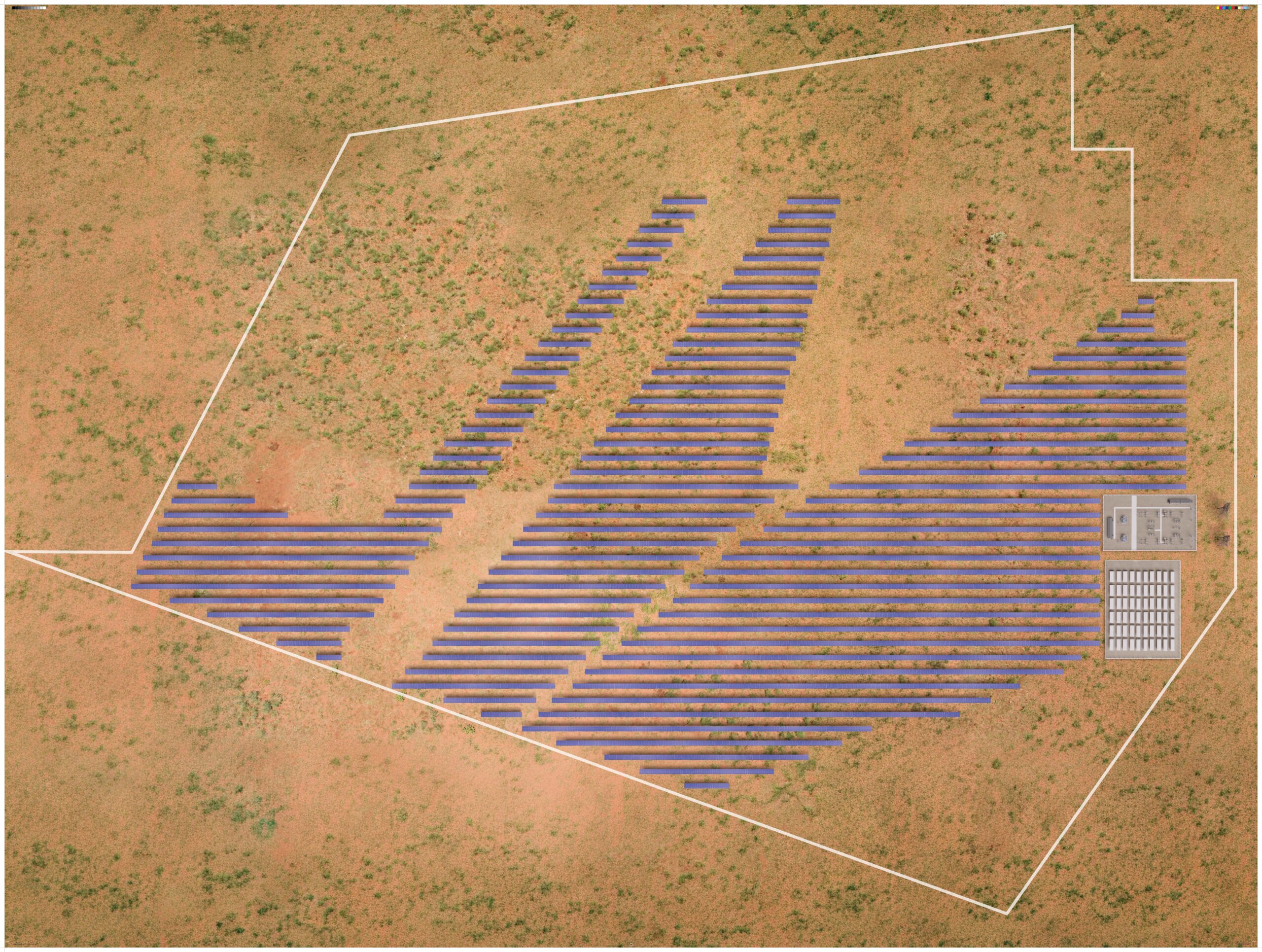
Independent power producer Globeleq has launched construction on Zambia’s largest hybrid renewable energy development, the Leoprads Hill Solar and Battery Project. The project combines a 250 MWp solar plant with a 150 MW/600 MWh battery energy storage system (BESS) and will make a major contribution to Zambia’s efforts to diversify its energy mix and strengthen national grid stability.
By integrating large-scale solar generation with a four-hour battery storage system, the Leopards Hill project will help meet peak electricity demand and enhance grid voltage and frequency stability. These benefits are supported by a grid connection agreement signed between Globeleq and the national utility ZESCO on the sidelines of the project launch.
The launch ceremony was officiated by President Hakainde Hichilema, who described the approximately $350 million project as a testament to Zambia’s strong partnerships with international investors and its importance in improving power generation capacity and stabilising electricity supply. He noted that the project supports Zambia’s ambition to reach 10,000 MW of installed generation capacity, emphasising the need to diversify away from hydropower, which currently accounts for more than 80% of national electricity generation.
According to Globeleq, the Leopards Hill project not only strengthens Zambia’s energy system but also expands opportunities for private-sector participation in a rapidly growing power market. The independent power producer – owned by the UK’s British International Investment and Norway’s Norfund – opened its Lusaka office in 2025 and is actively developing a growing portfolio in Zambia. This includes a 51% stake in the Lunsemfwa Hydro Power Company, providing access to the Southern African Power Pool (SAPP), as well as the 56 MWp Kafue Solar project, which is nearing financial close under the GET FiT Zambia programme. The company identifies Zambia as its key growth market as it expands its presence across Southern Africa.
Located approximately 25 km southeast of Lusaka, the project is being developed in partnership with Leopard Investment Company, a Zambian agricultural business that owns the Leopards Hill Substation. The partnership emphasises responsible land use and local economic participation. The project is expected to create around 200–250 jobs during peak construction, with additional long-term employment opportunities once operational. Financial close is targeted for the end of 2026.
“As Zambians, we are proud to play a role in bringing a world-class renewable energy project to our country. Having farmed this land for generations, we are now privileged to harvest the power of the sun, contributing to clean energy and supporting Zambia’s economic growth,” said Carl Irwin, Chairman of Leopard Investment Company.
Zambia’s first significant solar-plus-storage plant is the Choma Solar Project, which features a 60 MW photovoltaic plant paired with a 20 MWh lithium-ion BESS in Southern Province. It is being developed through a joint venture between Zambia’s GEI Power and Turkey’s YEO Technology, with ZESCO acting as the off-taker under a long-term power purchase agreement. Other notable developments include a hybrid microgrid at the Ruida Mine, comprising a 13 MWp solar system with a 39 MWh battery storage system, supported by a diesel generator as backup power.
Overall, the Leoprads Hill project is expected to become one of the most significant hybrid renewable energy installations in Africa. However, the continent already hosts several large-scale benchmark projects. In South Africa, Scatec’s Kenhardt 1-2-3 complex represents the largest single installation, combining 1,140 MWh of batteries with large-scale solar to provide dispatchable power under a long-term contract. In Egypt, the Abydos 1 BESS at 300 MWh, developed by AMEA Power, provides 300 MWH of storage as an extention of an existing 500 MW solar PV plant, commissioned in December 2024.
While starting from a low base, the African continent is increasingly waking up to the energy storage opportunity. According to the Africa Solar Industry Association (AFSIA) Africa Solar Outlook 2025, the sector has experienced remarkable growth in battery energy storage systems (BESS), with 2024 recording a 1,045% increase compared to 2023. AFSIA data shows that annual installed storage capacity had remained largely stagnant at around 50 MWh up to 2022, before tripling in 2023 to over 150 MWh. This growth then accelerated sharply in 2024, with an estimated 1,500 MWh of new storage capacity installed across African countries, marking a clear inflection point as utility-scale projects began to move from planning into deployment.
Written by



Popular Posts