EVE Energy outlines 230 GWh manufacturing capacity expansion within weeks

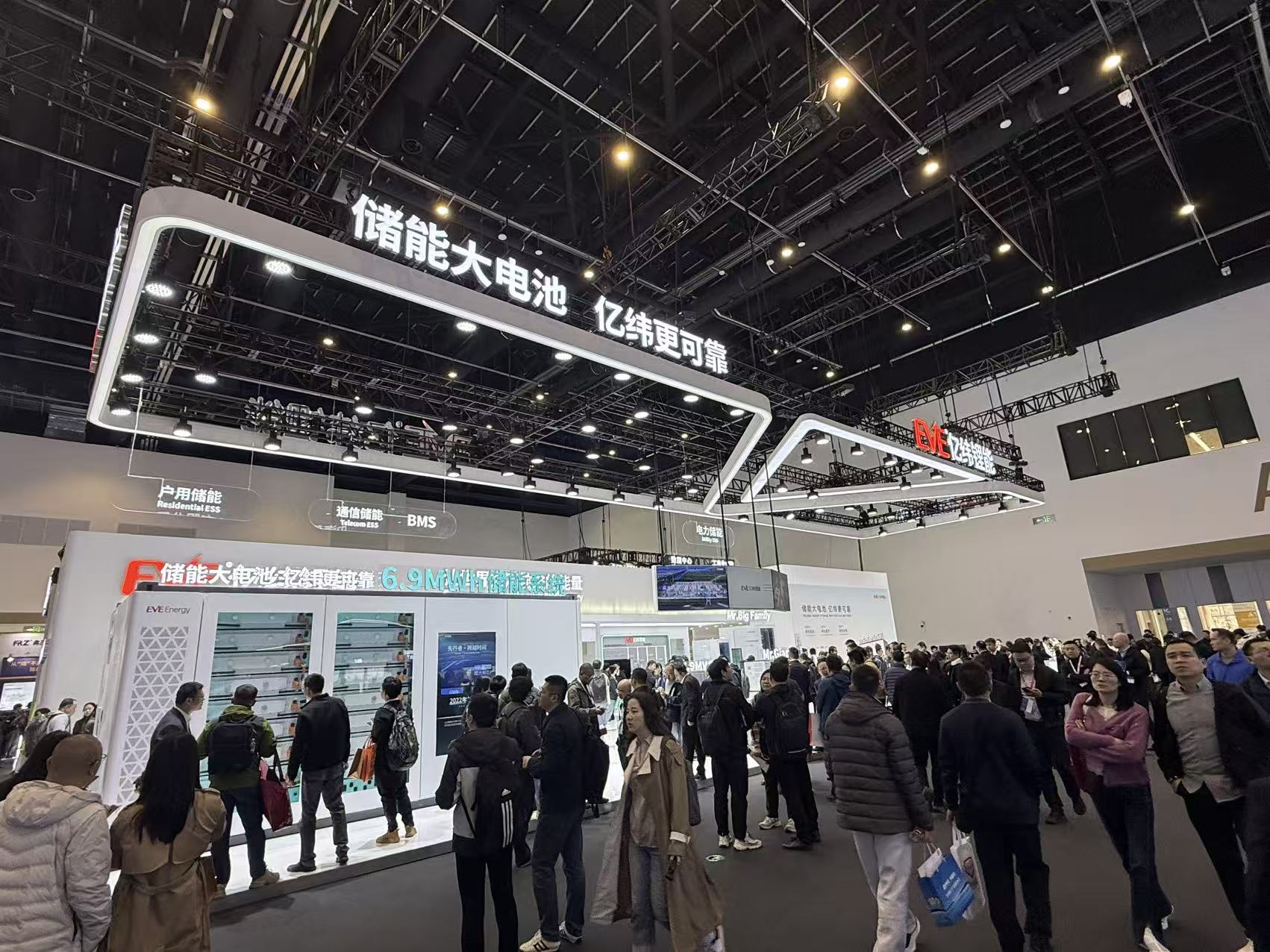
EVE Energy has unveiled an ambitious new phase of capacity expansion, announcing plans to build a combined 230 GWh of energy storage and power battery production across China, representing a total investment of approximately CNY 23 billion ($3.2 billion). The projects, disclosed in rapid succession in late March and early April, span four key locations: Jingmen in Hubei province, Huizhou in Guangdong, Qidong in Jiangsu, and Shanghang in Fujian.
The scale of the expansion is striking when set against the company’s current output, signaling its intent to move more aggressively into the top tier of global battery manufacturers. EVE Energy’s total lithium battery shipments are projected to reach around 121 GWh in 2025, with energy storage accounting for around 71 GWh, highlighting the growing weight of the segment in its overall business mix.
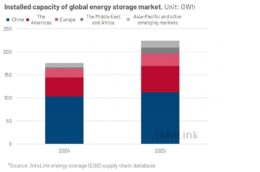
According to Benchmark Mineral Intelligence, EVE Energy ranked as the fifth-largest battery cell manufacturer in 2025, climbing year-on-year, while CATL, BYD, LG Energy Solution, and CALB retained the top four positions as global battery deployments surpassed 1.6 TWh.
However, EVE Energy’s accelerated push – particularly into energy storage – is not a spur-of-the-moment decision. In its 2025 annual report, the company said it plans to add approximately 260 GWh of large-capacity lithium iron phosphate (LFP) production capacity, with sites across Guangdong, Hubei, Jiangsu, Fujian, and Zhejiang provinces.
Since the second half of 2025, the energy storage sector has seen a sustained rise in activity and robust demand. Battery cells for storage applications have shifted from oversupply to relative shortage, with prices on an upward trajectory. Leading manufacturers are now racing to expand capacity, though concerns persist that the industry could slide into destructive competition, echoing cycles previously seen in the solar PV sector.
Policymakers have taken note. On April 9, the Ministry of Industry and Information Technology and the National Development and Reform Commission, together with four other government bodies, convened a symposium with power and energy storage battery companies. The meeting focused on curbing “involution” in the lithium battery industry, calling for stronger capacity planning, tighter oversight of price competition, and measures to prevent the spillover of excessive competition into overseas markets.
Meanwhile, EVE Energy has continued to advance its energy storage portfolio. In early April, the company launched a next-generation 6.9 MWh large-format battery energy storage system (BESS), held a certification ceremony for its 628 Ah large-format cell after passing a large-scale fire test, and signed strategic cooperation agreements totaling more than 50 GWh with five domestic partners, including Jinko Storage.
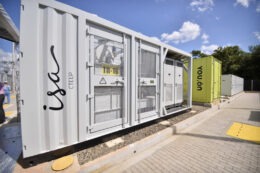
The newly launched 6.9 MWh BESS – part of EVE Energy’s “Mr. Big” product family – is built on the company’s established battery platform and housed in a standard 20-foot container. It delivers a 10% increase in energy density compared with previous generations, with cell-level volumetric energy density exceeding 430 Wh/L. The system is rated for 10,000 cycles at 70% state of health (SOH), with temperature differentials kept within 5°C through active balancing and precision thermal management.
Written by
Comments



Popular Posts