New electrolyte tech enables stable operation of high-voltage sodium-ion batteries

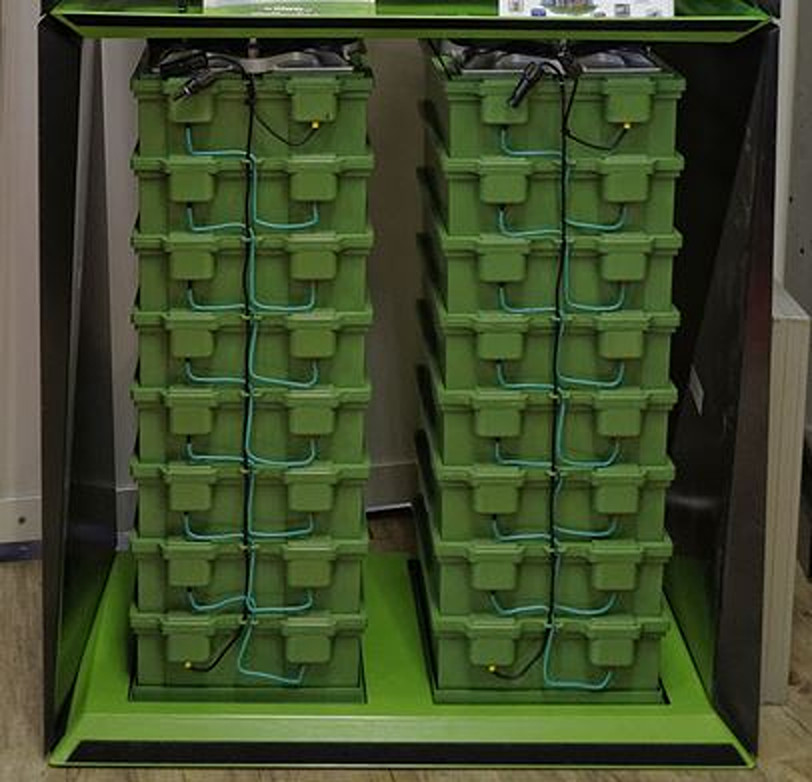
Researchers from the U.S. Department of Energy’s Pacific Northwest National Laboratory (PNNL) have developed a meta-weakly solvating electrolyte that can reportedly enable stable operation of high-voltage sodium-ion (Na-ion) batteries.
“The new electrolyte represents a new strategy to regulate Na solvation structure that can facilitate favorable reactions and suppress unwanted ones,” the research’s lead author, An L. Phan, told ESS News. “This results in reduced irreversible loss and degradation of cell materials under practical conditions.”
Most conventional battery electrolytes are designed to strongly solvate the metal ions, which helps ions move through the liquid. This, however, also tends to create a very stable “ion–solvent shell” that is hard to break apart at the electrode surface. When that happens, the electrolyte molecules themselves often get dragged into unwanted side reactions, forming unstable layers, consuming electrolyte, and degrading the battery over time.
The proposed electrolyte type, in contrast, is engineered so that sodium ions are less tightly bound to solvent molecules and are instead guided into a more controlled, intermediate solvation structure. This changes how the ions behave at the electrode interface and prevents overly stable ion-solvent shells that typically trigger harmful side reactions and battery degradation.
To build the battery cell the scientists used battery-grade sodium hexafluorophosphate (NaPF₆) and sodium bis(fluorosulfonyl)imide (NaFSI) salts, along with high-purity solvents such as ethylene carbonate (EC), diethyl carbonate (DEC), triethyl phosphate (TEP), tris(2,2,2-trifluoroethyl) phosphate (TFP), and 1,1,2,2-tetrafluoroethyl 2,2,3,3-tetrafluoropropyl ether (TTE).
Sodium nickel manganese iron oxide (NFM424) cathodes were paired with hard carbon (HC) anodes, both fabricated by slurry casting onto aluminum (Al) foil using binders such as polyvinylidene fluoride (PVDF), sodium carboxymethyl cellulose (CMC), and styrene-butadiene rubber (SBR), along with conductive carbon (Super P carbon, C45). Electrodes were dried under vacuum before assembly.
Full cells consisting of NFM424 cathodes and HC anodes were assembled in an Argon-filled glovebox using standard coin-cell components and tested, with all electrochemical testing being performed at 30 C using battery cyclers. Leakage current tests evaluated interfacial stability against benchmark aluminum (Al) and NFM424 electrodes. Electrolyte solvation structures were analyzed using nuclear magnetic resonance (NMR) spectroscopy.
In addition, the scientists conducted post-cycling analysis on electrodes after 50 cycles, including scanning electron microscopy (SEM) with energy-dispersive X-ray spectroscopy (EDS), transmission electron microscopy (TEM), scanning transmission electron microscopy (STEM), and X-ray photoelectron spectroscopy (XPS).
The testing showed that the proposed battery cell design achieves improved sodium mobility, outperforming the conventional counterparts, which exhibited earlier degradation and instability. Moveover, leakage current tests confirmed that the battery cell using the meta-weakly solvating electrolyte achieves the best high-voltage interfacial stability, consistent with reduced free-solvent reactivity and improved cathode–electrolyte interphase (CEI) formation.
The cell was also found to retain 80% of its capacity after 500 cycles, which compares to 100-300 cycles for the benchmark devices. Electrochemical impedance spectroscopy showed that this improvement arises from lower charge-transfer resistance linked to faster sodium desolvation and more efficient interfacial transport.
“These features effectively enhance the cell’s electrochemical stability and mitigate the degradation of active materials during extended cycling,” Phan stressed.
The new battery cell design was presented in “Meta-weakly solvating electrolyte for high-voltage sodium-ion batteries,” published in Nano Energy.
Written by



Popular Posts