Fortum seeks permits for 864 MW of pumped hydro storage in Sweden
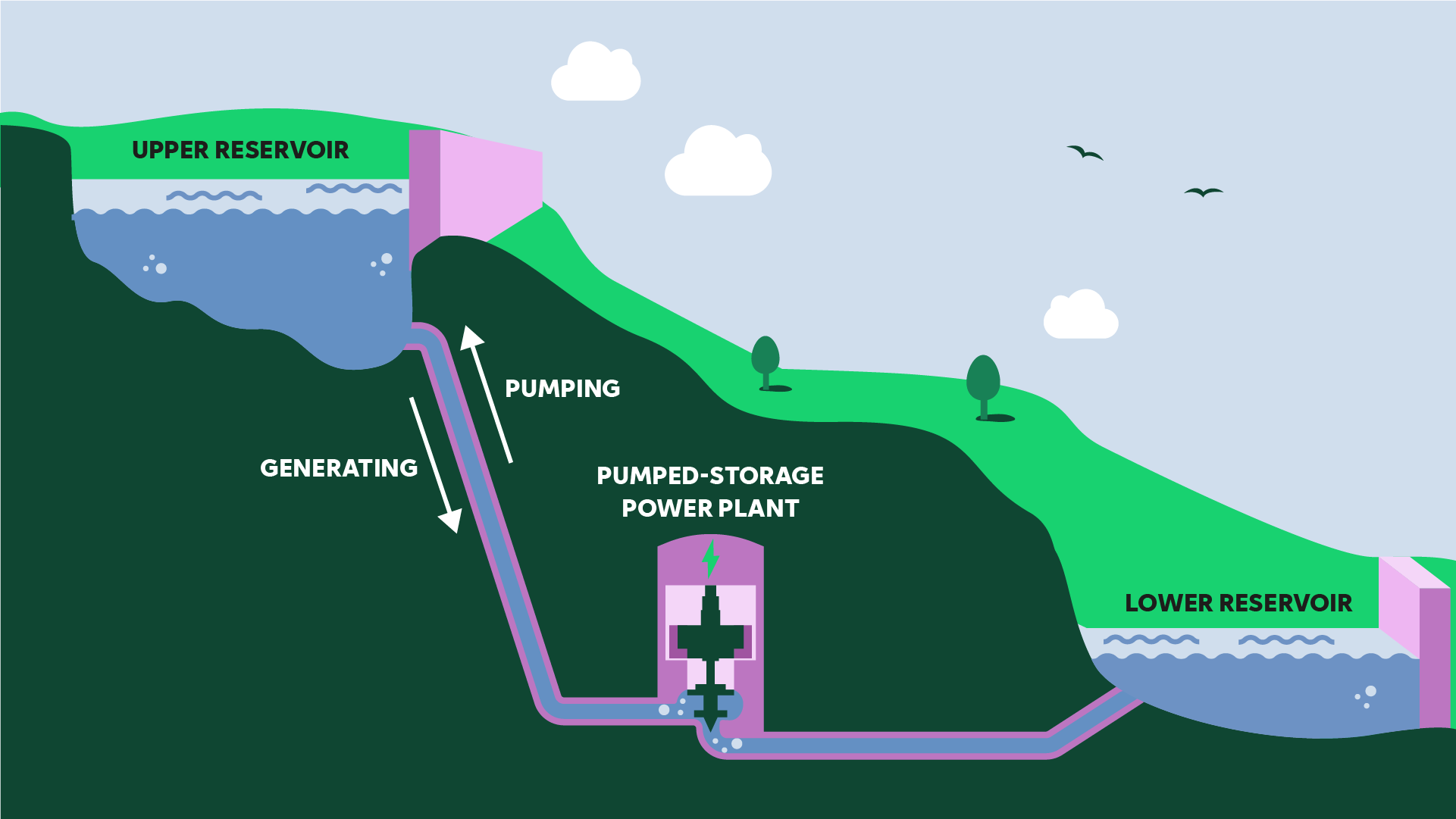
Finland-headquartered energy company Fortum has submitted permit applications for two pumped hydro storage projects in Sweden with a combined installed capacity of around 864 MW (514 MW and 350 MW respectively).
The two project sites are located in Bastvålen in Värmland County in west central Sweden and Lekstjärnen in Dalarna County in central Sweden. They are part of Fortum’s ongoing feasibility study exploring new pumped hydro storage ventures in the country. The study is examining commercial, technical, environmental and regulatory conditions. As of Feb. 2025, Fortum had around 90 MW of installed pumped hydro storage in Sweden.
“Pumped hydro storage provides large‑scale, long‑duration flexibility that is essential for a resilient and reliable power system,” said Mikael Lemström, Head of Hydro Power at Fortum. He added that submitting these permit applications marked “an important milestone in assessing the feasibility of projects with clear system value.”
The two facilities are now subject to approval from the Swedish Land and Environment Court and permission to proceed with development and investment depends on the court’s say so. As of now, no investment decisions have been made, Fortum said.
As well as pumped hydro, Fortum is active in nuclear services, heating and cooling, power trading, and battery recycling. It operates what it claims is Europe’s largest closed-loop hydrometallurgical battery recycling facility in Finland. The facility provides end-of-life services for lithium-ion batteries from electric vehicles and standalone energy storage systems. It also recycles materials used by battery manufacturers.
Although its core business is in the Nordics, the company also has operations in Ireland, the UK, the Netherlands, Germany, Poland and India. It has a battery recycling facility in Kirchardt in Germany. Its Swedish business is mostly focused on hydropower and it has 111 hydropower plants across the country. It is also very active in Swedish nuclear, wind, and solar.
More about
Comments

Popular Posts