EU opens fiscal flexibility for grids, storage, renewables

The European Commission has proposed easing its fiscal rules to give member states more room to invest in energy transition projects in response to rising energy prices linked to the Middle East crisis. Eligible investments could include power grids, energy storage, solar installations, heat pumps, and electric vehicles.
The measure, announced as part of the European Semester, would extend existing exemptions under the EU fiscal framework to certain projects aimed at strengthening energy security and reducing dependence on fossil fuels.
The move follows a sharp increase in energy prices amid the conflict in the Middle East and disruptions to shipping through the Strait of Hormuz, a key route for global oil and gas supplies. Several member states have recently called for greater flexibility in EU fiscal rules to address rising energy costs.
Unlike previous crisis measures such as fuel subsidies and broad support for fossil energy consumption, the proposed approach focuses on investments intended to improve the resilience of Europe’s energy system and accelerate the shift away from fossil fuels.
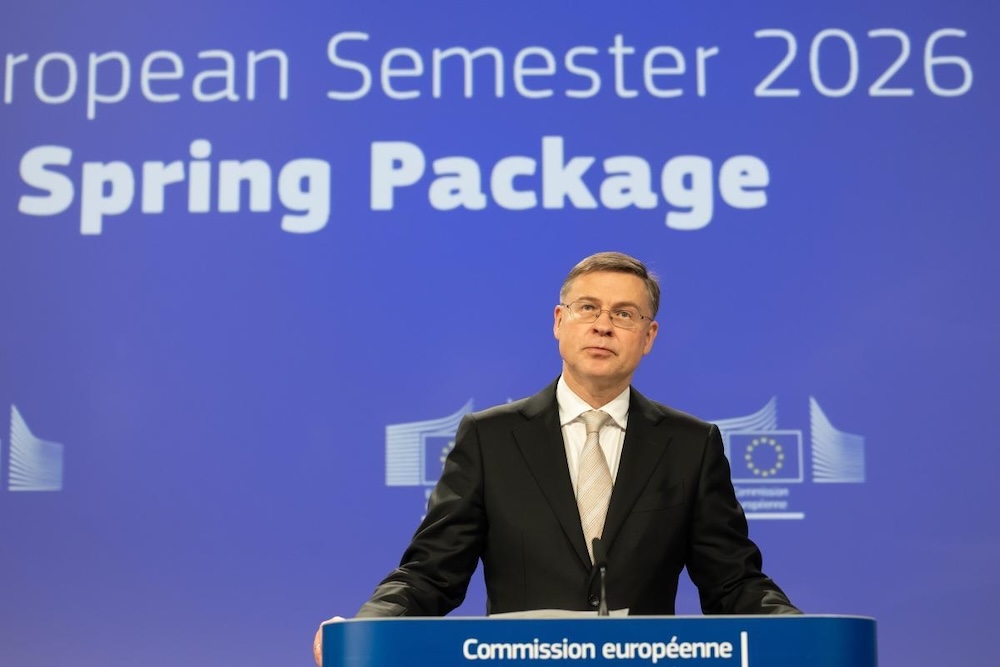
European Commissioner for Economy Valdis Dombrovskis said the commission had decided that measures to strengthen Europe’s energy system and accelerate the transition away from fossil fuels could benefit from existing fiscal-rule flexibilities.
Under the proposal, member states could apply the existing National Escape Clause, previously used primarily to accommodate higher defense spending, to selected energy-related investments. The mechanism would provide additional fiscal space of up to 0.3% of gross domestic product (GDP) annually between 2026 and 2028, capped at 0.6% of GDP over the full period.
The commission said it will clarify eligible measures in the coming weeks. Dombrovskis identified grid expansion and energy storage as key priorities for improving energy security and maintaining affordable energy supplies.
Support programs for solar systems, heat pumps, and electric vehicles could also qualify. Dombrovskis said subsidies for the purchase of heat pumps, PV systems, and electric cars may be considered under the exemption framework.
More about
Written by


Popular Posts