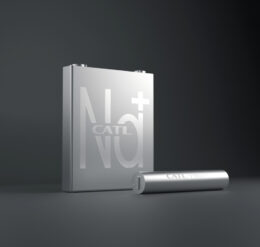
New US coalition seeks to accelerate sodium-ion battery industry

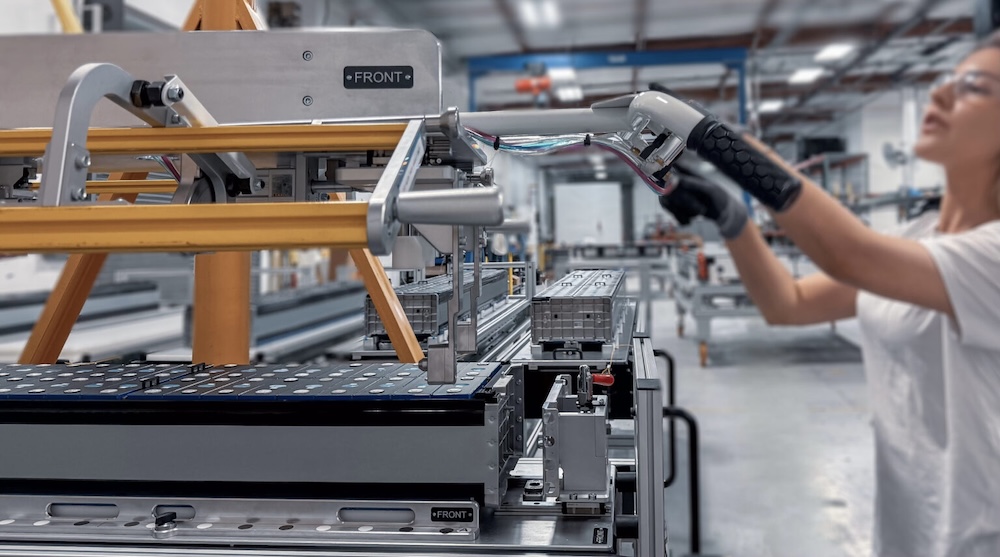
The ABLC is a newly formed industry group that seeks to establish sodium-ion (Na) batteries as an essential technology for US energy storage, manufacturing competitiveness and national security strategy
Sodium ion batteries differ from more common lithium batteries in several ways including materials, cost and safety.
They rely on abundant sodium instead of lithium and contain no cobalt or nickel and, therefore, when produced at scale, sodium ion cells cost less than lithium nickel-manganese-cobalt (NMC). Sodium-ion solutions are also considered safer than lithium-ion, which risk thermal runaway, known to cause fires due to the volatility of liquid lithium electrolytes.
[Also read Sodium-ion batteries–A viable alternative to lithium?]
The ABLC’s mission is to push for federal policies that support deployment of sodium-ion technology as a scalable, non-lithium alternative to meeting the country’s rising energy storage demands. The need for storage is rising as power generators struggle to keep up with the rising electricity demands of data centers. For example, US data centers consumed 183 TWh of electricity in 2024, according to International Energy Agency (IEA) estimates, which Pew Research Center reported is projected to grow by 133% by 2030.
The coalition is chaired by Graeme Grant, chief operating officer of Massachusetts-based Alsym Energy. Edward McGlone, vice president of Denver-based Peak Energy, serves as vice chair. The coalition is made up of cell developers, materials suppliers, manufacturing companies, and energy storage system providers all based in the United States.
Founding members of the ABLC:
- Alsym Energy develops sodium-ion batteries for large-scale energy storage applications such as AI data centers, utilities, commercial real estate, and critical infrastructure. Alsym is establishing commercial-scale battery cell manufacturing in the U.S. through a strategic partnership with Re:Build Manufacturing.
- Peak Energy develops sodium-ion battery energy storage systems for grid-scale applications, manufacturing in California.
- Batri develops sodium-ion anode materials (hard carbon) and cells for a range of applications, including transportation and next-generation power systems. A UK company, Batri is establishing manufacturing operations in West Virginia to support commercial-scale production in the United States.
- ESS Tech is a long-duration energy storage company and manufacturing partner with a primary production facility in Wilsonville, Oregon.
- Ingevity produces specialty chemicals and carbon materials used in battery applications, manufactured across the United States
- Mana manufactures fire-extinguishing sodium-ion electrolytes and battery cells in Boulder, Colorado.
- Microporous manufactures battery separators and related components in several US locations.
- NAION focuses on cell development and commercialization and is building a dedicated gigafactory in North America.
- Re:Build Manufacturing is a Massachusetts company that supports domestic industrial production and scaling.
The United States has an opportunity to take a leadership position in energy storage “supported by a domestic resource base and American innovation,” the coalition said in a statement. “The battery supply chain is heavily dependent on lithium-ion technologies and concentrated foreign supply chains, particularly in China.”
The coalition intends to expand membership across the sodium-ion value chain.
“The focus is on bringing in companies operating across the sodium-ion value chain in the United States to advocate for federal policies that support the rapid commercialization and deployment of sodium-ion battery technology,” Grant told pv magazine USA.
ABLC provides member companies with a coordinated platform to advocate for federal policies that support sodium-ion commercialization and deployment, Grant noted. “The coalition works to ensure sodium-ion technology is included in battery, energy, manufacturing, and broader industrial policy discussions while promoting domestic supply chain development and US manufacturing competitiveness.”
Membership offers opportunities to collaborate with stakeholders across the sodium-ion value chain to educate policymakers on the technology’s role in grid reliability, AI-driven power demand and energy security, Grant said, emphasizing that the coalition’s goal is “ultimately to provide a stronger collective voice than any individual company could achieve.”
The domestic sodium-ion industry is already making inroads. According to Grant, developers, utilities, data center operators, system integrators and other end users have announced plans to procure more than 15 GWh of sodium-ion energy storage capacity.
From pv magazine USA
More about
Written by
Popular Posts