Australian silicon-carbon anode tech moves to commercial scale

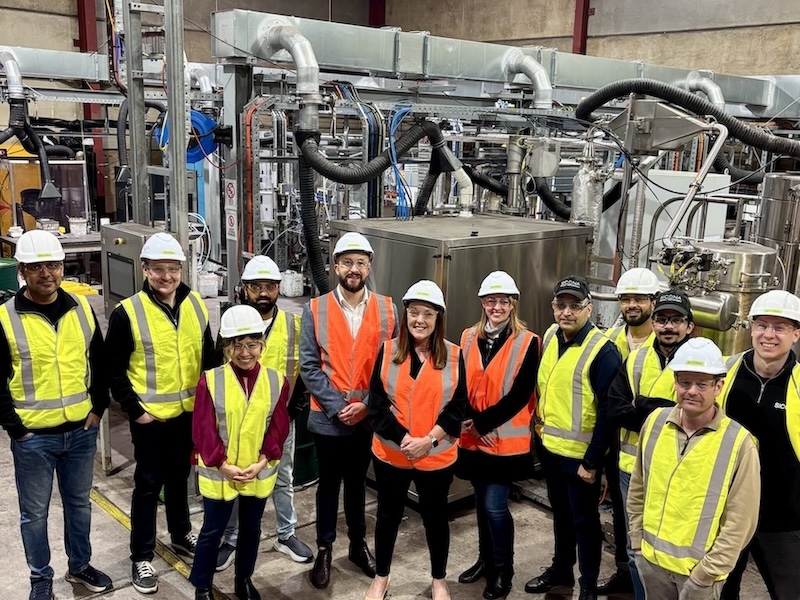
Sicona Battery Technologies has landed a AUD 45 million ($31 million) grant from ARENA to build and operate its first commercial-scale silicon-carbon battery anode material production facility in the New South Wales (NSW) Illawarra region.
The company, which has its headquarters and pilot plant based in Wollongong, is commercialising its SiCx silicon-carbon battery anode material that has been flagged as a possible gamechanger for lithium-ion (li-ion) batteries that dominate the electric vehicle (EV) and energy storage market.
When blended with standard graphite in lithium-ion batteries, Sicona said SiCx can deliver a 20%-plus increase in energy density over conventional graphite-only li-ion cells and reduce charge times by more than 40%. The company also said the technology is compatible with existing lithium-ion battery production lines, providing a clearer pathway to commercial-scale supply with global battery and original equipment manufacturers.
The ARENA grant, delivered through the Australian government’s Battery Breakthrough Initiative, will enable Sicona to develop a new manufacturing facility capable of producing up to 230 tonnes of the SiCx material a year in the first phase.
Sicona Battery Technologies CEO Christiaan Jordaan said the backing is a major endorsement of the company’s technology as it moves from development into commercial scale-up.
“Battery-powered industries need higher performance at lower cost,” he said. “Our silicon-carbon anode technology is designed to deliver faster charging, greater energy density and a scalable pathway into existing lithium-ion battery supply chains. While EVs remain a major opportunity, some of the fastest-growing demand is coming from AI data centers, robotics, drones and power tools. These applications need high energy and power density today, and SiCx is designed to help meet that demand.”
Jordaan said the Wollongong facility will allow Sicona to validate its process at commercial scale, deliver SiCx to customers, and accelerate its entry to multiple markets.
“It also shows Australia can do more than export unprocessed critical minerals,” he said. “We can manufacture advanced materials, create skilled jobs, and compete in the high-value battery supply chains that will power the global energy transition.”
Sicona will now work with steel manufacturer BlueScope to assess the potential development of the new manufacturing facility within BlueScope’s Port Kembla precinct.
In the first stage, the facility is expected to be capable of producing up to 230 tonnes of SiCx a year. Sicona is then planning to scale up to 6,500 tonnes the material a year with longer-term expansion potential to 26,500 tonnes per annum.
ARENA Chief Executive Darren Miller said Sicona is developing the kind of next-generation battery technology that can help Australia move further up the global battery supply chain.
“Sicona’s technology has the potential to deliver faster charging, longer driving range and lower-cost batteries,” he said. “The technology has undergone independent testing and is already being evaluated by global battery and electric vehicle manufacturers, highlighting its strong commercial potential.”
Miller said the project also supports “the development of domestic capability in advanced battery materials, reducing reliance on imported components and strengthening Australia’s position in the global battery supply chain.”
The ARENA grant comes after Sicona last year signed a AUD 15 million licensing and strategic partnership with Indian chemical conglomerate Himadri.
More about
Written by

Popular Posts