Nickel-zinc battery maker ZincFive targets IPO, eyes AI data center growth

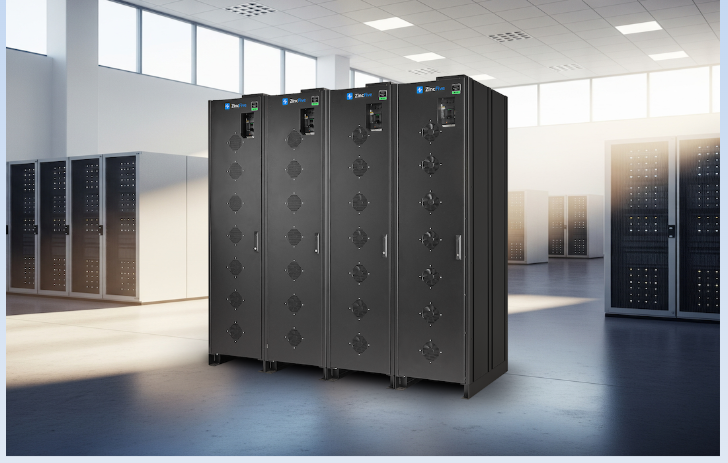
ZincFive co-founder Tim Hysell first encountered nickel-zinc chemistry while building battery backup systems for traffic lights – now his company is using the same chemistry to build uninterrupted power supply (UPS) battery cabinets.
“We started this journey in 2009,” Hysell said. “By 2012, we delivered our first full-scale UPS commercial product to the Department of Transportation in Sacramento. That’s where the journey began.”
Hysell explained that he began exploring nickel-zinc chemistry as an alternative to lead-acid batteries. Given the suitability of nickel-zinc chemistry for delivering large amounts of power in short bursts, Hysell now sees opportunities in a more lucrative market.
Power focus
AI data center demand is a pillar of ZincFive’s growth strategy. The company has deployed close to 2 GW of battery backup cabinets globally and is now preparing to go public. ZincFive is targeting an IPO in September or October 2026 backed by a $100 million committed private investment in public equity (PIPE). The company’s pitch to investors – and data center developers – is centered on a battery chemistry that has different characteristics to lithium-ion battery storage.
Lithium-ion batteries are more energy dense than nickel-zinc and their increasing affordability has spurred rapid growth in grid-scale deployment. Todd Higinbotham, who was appointed CEO of ZincFive in September 2025, argued that comparing lithium-ion and nickel-zinc batteries on a per kilowatt-hour basis misses the point. The ZincFive pitch is based on power output, not total capacity.
“We sell power, measured in kilowatts and megawatts, because that’s the problem our customers are solving,” Higinbotham said. “In the data center, the question isn’t how many megawatt-hours of energy you can store. It’s how much power you can deliver, and how quickly, when demand changes.”
ZincFive’s nickel-zinc chemistry has energy density within 10% of comparable lithium iron phosphate cells according to Higinbotham, but the company’s UPS product can discharge up to 50C to 60C – meaning the battery is capable of fully discharging in in less than two minutes.
Fast discharge and high power output are critical in a data center environment, according to ZincFive, as uninterrupted power supply is essential but major shifts in electricity load can occur rapidly. For a five-minute backup window, ZincFive claims its chemistry results in a much smaller physical footprint than lithium-ion battery storage would need to deliver the same peak power.
There is a tradeoff, however, and Higinbotham acknowledged that a nickel-zinc system sized for grid-scale energy would require roughly double the physical space and triple the cost of leading lithium options. “That’s not the game we’re playing,” he said.
AI demands
ZincFive is preparing its first public offering as the data center industry pursues more ambitious system architectures that will put major demands on energy supply. The GPU servers that are needed for AI development consume more power than CPU servers found in conventional data centers, and they do so in a more volatile way. During synchronized processing operations, compute racks can pulse up to 50% above their nominal load every second= “That’s the peak of the data processing cycle,” Higinbotham said. “When those pulses occur, they’re a feature, not a bug.”
Managing these volatile loads becomes even trickier as GPU rack densities increase – and some AI industry leaders are already targeting 1 MW racks and 800 V DC architectures, which they hope to deploy in the next few years.
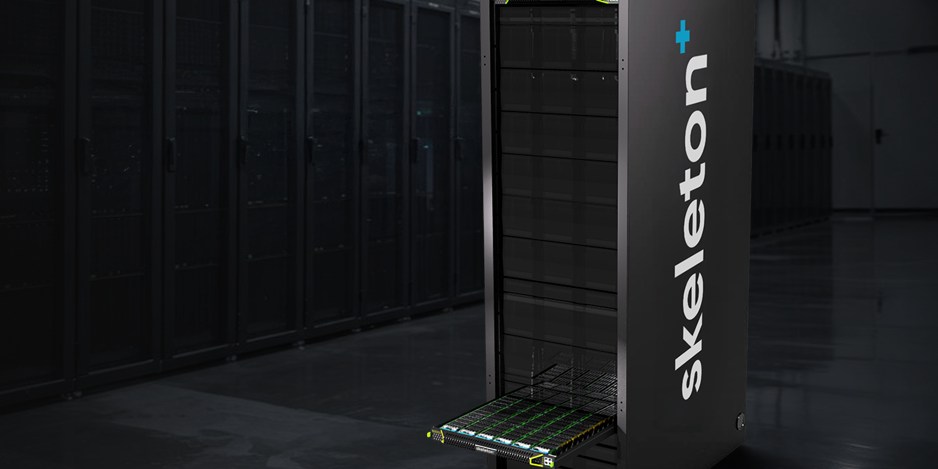
ZincFive launched a battery storage battery cabinet for AI and traditional IT loads in fall 2025 – the BC 2 AI, which is fitted with the company’s 90 Ah nickel-zinc battery – and is already developing a successor, in anticipation of increased power demands coming to data centers in the future.
“When the next two generations of GPUs come out from Nvidia and others, that product won’t be enough,” said Higinbotham. ZincFive is designing its next product around 1 MW racks in an 800 V DC architecture, and Higinbotham reckons an industry consensus is forming around medium-voltage power distribution for the next generation of GPU racks.
Meanwhile, solar inverter manufacturers who are already building 800 V platforms have been visiting ZincFive’s Oregon headquarters, Higinbotham said, as they investigate potential partners.
“The data center industry hasn’t yet transitioned to 800 V platforms,” Higinbotham said. “That’s a challenge we’re actively preparing to help solve.” The CEO predicted that 800 V cabinets would be a reality in AI data centers in two to three years, and he estimated the next generation of GPU racks could be four to five times more power dense than today’s.
Factory floor
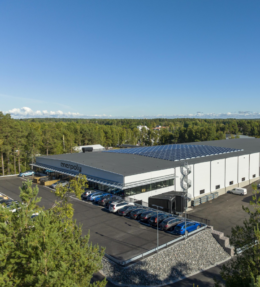
ZincFive manufactures across two sites in China – with one wholly owned operation plus a contract manufacturer. The company also has a 60,000 square foot battery cabinet assembly facility in Tualatin, Oregon which has been operational since May 2025 and a US battery factory is planned using IPO proceeds, with site selection and equipment specification already underway.
The goal is to onshore fundamental battery component manufacturing within roughly one year, reducing tariff exposure for the business and qualifying for US manufacturing tax credits.
Near-term targets for ZincFive include reducing its current UPS footprint from three or four cabinets per megawatt to two, and completing market testing of a dedicated pulsing product that can be sold as a standalone solution.
The company also launched a retrofit kit in April – extracting batteries and battery management system from a standard cabinet and packaging it for brownfield replacement of ageing lead-acid systems – opening up the large installed base of data center UPS infrastructure. It’s a strategy that’s already bearing fruit, according to Higginbotham.
“A significant portion of our orders are now reorders,” he said. “The data center industry, much like solar, is big companies doing business with big companies. It’s difficult to break into conservative supply chains with a new technology. But we’ve already deployed 2 GW and we’re becoming well-known.”
More about
Written by


Popular Posts