Australia home battery installs fall as market shifts to smaller systems

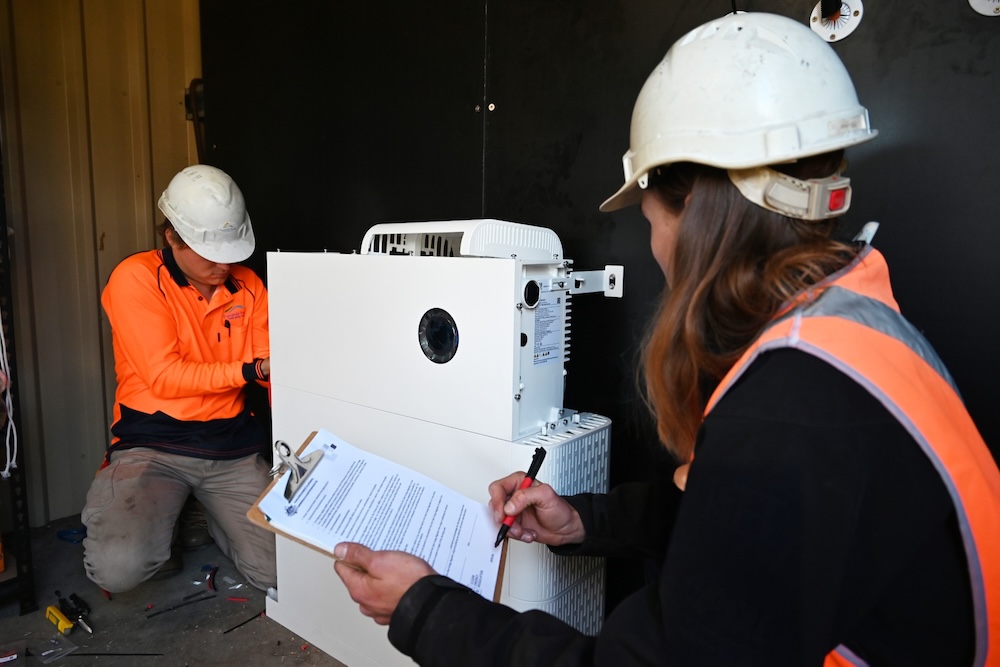
SunWiz said a combined 1.07 GWh of small-scale battery energy storage was registered across Australia in June 2026, down 28.3% on the 1.51 GWh of capacity installed in May, as the market recalibrates following changes introduced to the federal government’s cheaper home battery rebate scheme.
The latest tally – well down on the record 2.43 GWh registered in April 2026 – is the second consecutive monthly decline but SunWiz Managing Director Warwick Johnston said installation volumes are still tracking above historical averages.
At 1.07 GWh, the June tally dipped just below the rising 12-month trendline but Johnston said it is well above where the year began, describing the result as “a controlled reset rather than a structural decline.”
“National energy storage system registrations eased in June as the demand pulled forward ahead of the rebate change continued to unwind,” he said. “Yet volumes remain roughly triple their year-ago level, and beneath the headline, the market is right-sizing, rotating out of oversized systems into mid-scale 20 kWh to 30 kWh storage.”
Johnston said the latest data marks a “healthy reset” after a rebate-driven surge driven by changes made to Australia’s AUD 7.2 billion ($4.99 billion) Cheaper Home Batteries scheme that provides discounts of up to 30% on the upfront cost of installing small-scale battery systems alongside new or existing rooftop solar.
Government figures show the scheme has supported the installation of more than 466,000 residential battery systems with a combined capacity in excess of 12 GWh since it was launched in July 2025 with many of the early installations tending towards oversized rebate-driven batteries.
To ensure the financial sustainability of the program, the government ushered in changes on May 1, 2026, with incentives now tiered and adjusted according to the size of the battery and SunWiz said demand is gradually consolidating toward right-sized systems.

The national average battery capacity decreased in June, easing to 26.16 kWh from May’s 38 kWh and April’s 44 kWh peak as demand for larger systems declined.
SunWiz said the 40-50 kWh band had unwound sharply in June, down about 46% month-on-month, and the 10-20 kWh band eased about 42%.
The 20-30 kWh band was the only segment to grow, surging 114% to cement its role as the market’s new centre of gravity, even as 40-50 kWh systems still lead on absolute volume.

The decline in registrations was spread across all states with Western Australia and Queensland down 12% on the previous month, while New South Wales posted the steepest decline, easing 37%. The Victorian and South Australian volumes eased by 31%.
More about
Written by



Popular Posts