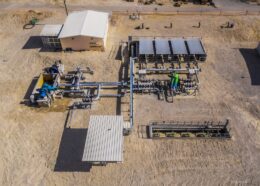
Israel’s Airengy aims to develop 2.5 GWh compressed air battery at Danish salt mine

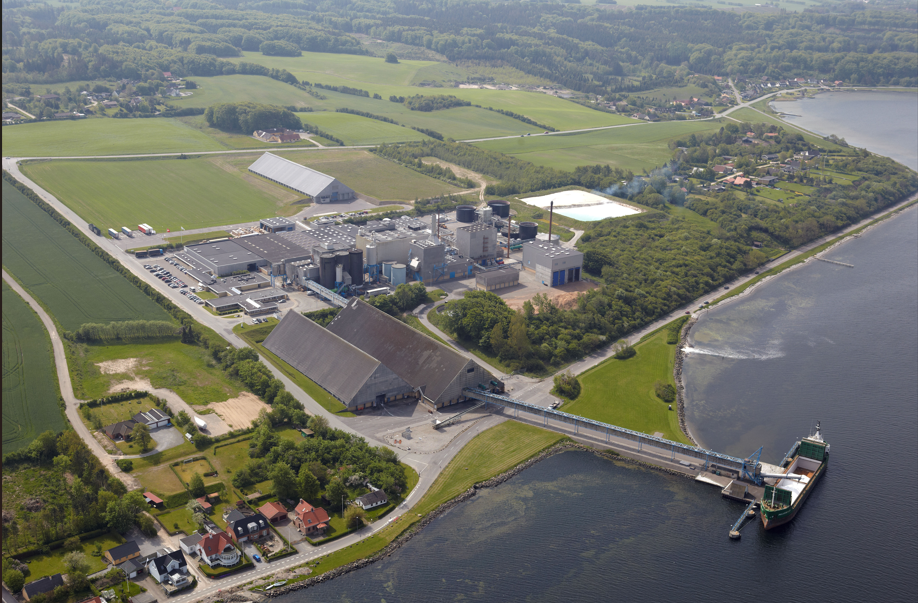
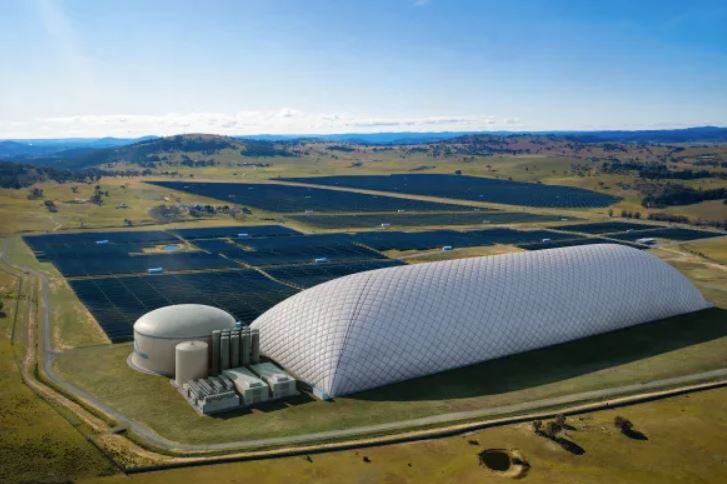
Israeli battery company Airengy is teaming up with European salt and chemicals producer Nobian, which will evaluate Airengy’s technology for the development of a 2.5 GWh compressed air energy power plant (CAPP). The plant would be connected to Nobian’s existing salt cavern in Hvornum, Denmark. The Hvornum region is known for its salt dome and underground salt caverns.
Tal Raz, CEO, Airengy, told ESS News the company is very pleased to be working with a major European salt cavern owner-operator like Nobian. “This is a very big story for us,” he said, adding that while the 2.5 GWh storage capacity for the planned CAPP might be smaller than some of Airengy’s other projects under development – such as its 5 GWh facility in Romania – Nobian is one of the biggest companies it has worked with. “The potential is massive,” said Raz.
Nobian works as a balancer for the grid, and has been focusing on decarbonizing its energy consumption over the past few years. It recently opened a fully electrified salt production plant in Mariager, a couple of kilometers away from the Hvornum salt cavern where Airengy’s CAPP would be located. Currently, the salt is delivered from the cavern to the production plant in Mariager. There is a possibility that Nobian may connect the CAPP to the Danish grid, but Airengy couldn’t comment further on that decision at this stage.
Raz expects the project evaluation to take several months and then the project will be subject to regulatory, stakeholder, and planning approval – all of which will be overseen by Nobian. Airengy will be responsible for the design of its AirBattery system, including air compression and generating energy using the technology after it has been developed.
The battery will have a power output of between three and 10 megawatts and a long-duration energy storage capacity. Tzvi Joshua, Head of Business Development, Airengy, told ESS News that the decision to keep the system lower capacity is deliberate. “There is a well in the center of the salt cavern, and the limiting factor in this case is the well diameter. There is a certain amount of compressed air that you can deliver through a certain diameter,” he explained.
Comparing the AirBattery’s system to conventional lithium-ion batteries which have higher power outputs, Tzvi said the biggest advantage is the technology can go for hundreds of hours without charging. “This allows us to charge at very low prices, very lucrative prices, to support periods like the Dunkelflaute which is extremely important for the Danish market as it relies heavily on the German power supply through interconnection and now that the Germans have reduced their power output from coal and eliminated nuclear power plants it is important to have more resiliency in Denmark.”
This is Airengy’s fourth CAPP partnership in Europe, following a UK project (with KISTOS), Romania (with Hagag Europe), and Germany (with SEFE).
CAPP’s data centers and agrivoltaics potential
Raz said long-duration energy storage and the CAPP technology Airengy has developed has a promising future in a number of different markets, including data centers.
“We believe the coming decade will be defined by the construction of new energy infrastructure for electricity grids, industry, and data centers,” he said. “Our goal is to position Airengy as one of Europe’s leading companies in long-duration energy solutions for these markets.”
Airengy is exploring the prospect of bringing its CAPP technology to data center developers and is in the process of adding a new executive to lead its data center business. Shelly Landsman, former CEO of Microsoft Israel, is in discussions to join the company to oversee its data center expansion. Her appointment has yet to be finalized, but the team is confident it will go ahead.“This shows the intention and the weight that we put on this segment of business,” said Raz.
In Israel, meanwhile, Airengy is working on agrivoltaics projects as part of a bid to increase the region’s renewable energy production. “There is not enough electricity in Israel produced from renewable sources,” Raz said. “So, we have a lot of engineering experience in this field and we know how to develop, structure, and operate projects and we are looking at a lot of opportunities in the center of Israel where we are positioning ourselves as a developer, an EPC, an operations and maintenance provider. We are striving to be one of the major players in Israel.”
The Airengy CEO did not provide further details on specific projects but did tell ESS News that the company has a few in the early stages. Besides Israel, Raz said Italy is another big agrivoltaics market it wants to crack.
Written by
Comments

Popular Posts