Tesla unveils zero-down Powerwall lease program with retail electric plan in Texas, touts global VPP potential

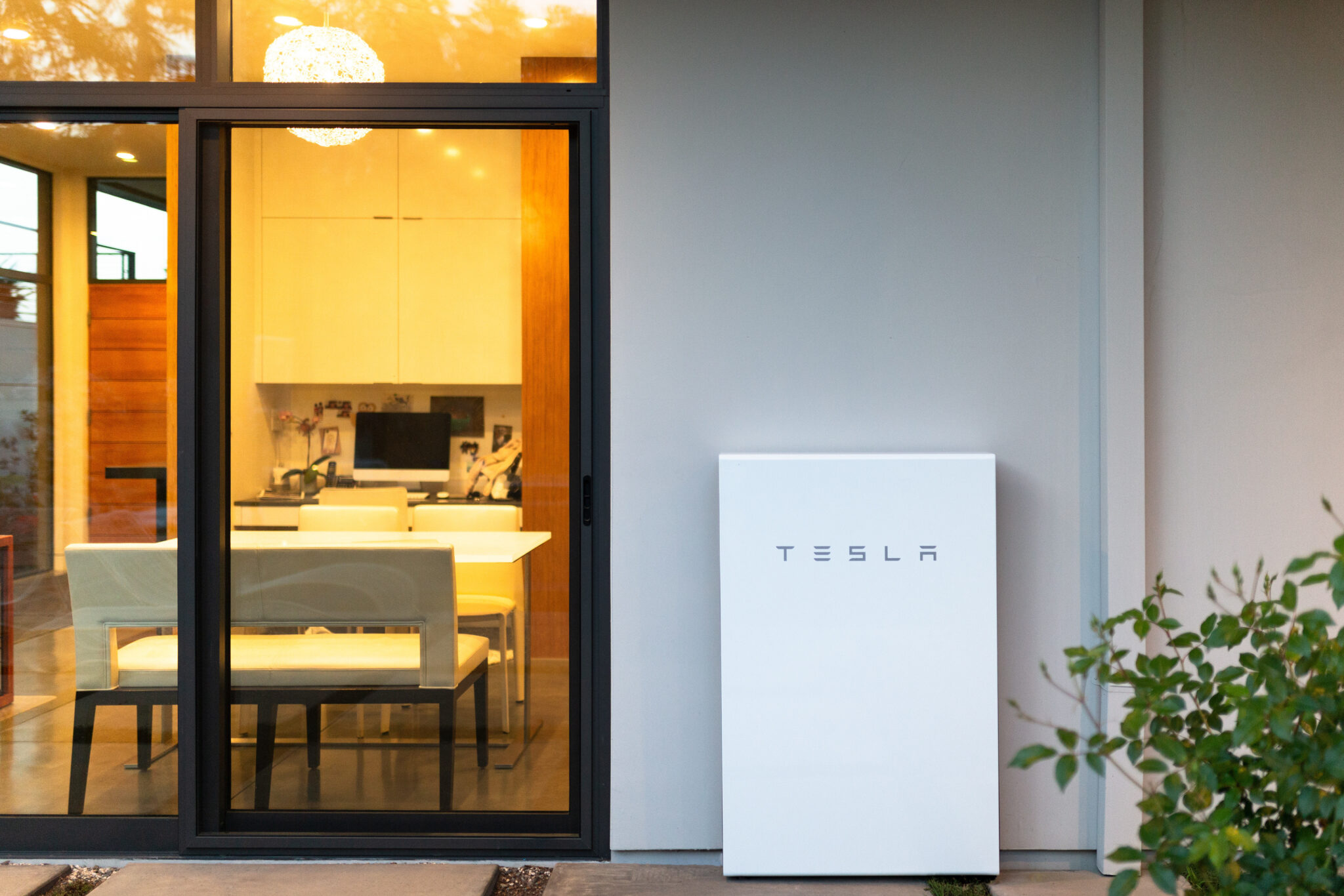
Tesla has announced a new Powerwall Lease program bundled with its Tesla Electric retail service plan, allowing homeowners in areas of the deregulated Texas energy market to choose an electricity plan and whole-home backup directly from the company.
The plan includes two Powerwall 3 batteries installed at a customer’s home, for which they will pay an ongoing lease payment of $35 per month in addition to a fixed rate for electricity. There are no installation costs required.
Tesla says the cost of the lease payments reflects an $87 monthly bill credit applied to the standard $122 per month lease for a similar Powerwall system. That monthly bill credit is enabled by what Tesla does behind the scenes.
The company’s software operates the batteries in conjunction with the needs of the grid. As part of Tesla’s Texas virtual power plant (VPP), the batteries will charge and discharge based on real-time pricing of wholesale electricity on the grid and the need for power capacity during times of high demand.
At all times, Tesla guarantees a minimum of 20% of battery capacity will be available in case of unexpected outages — enough to carry the average home through a few hours of blackout. In case of inclement weather, however, Tesla will activate the Powerwall’s storm watch mode, which charges the batteries to 100% to help survive an extended outage.
Everything under the program is handled by Tesla, from manufacturing to installation to operations and maintenance. Kevin Joyce, the company’s lead for VPP and electricity retail, says that depth of integration is a major benefit to the grid and consumers.
“The big enabler of what we’re doing with Tesla Electric is the fact that it’s all coming from one established player,” Joyce told pv magazine USA. “There’s the hardware component of it, there’s the retail component of it, but we’re also doing the installation. We’re also doing software management. We’re also doing market integration. That’s what enables an offer like this for customers, but it’s also a great demonstration of what’s possible anywhere when it comes to VPP deployments… It’s really an exciting forerunner for the kinds of things that we can do for grids globally.”
With this offering, Tesla joins companies like Base Power, Solrite Energy, and Octopus/Lunar Energy in offering battery-backed retail electric plans in Texas. Details about the Tesla offering can be found on the company’s page about the Powerwall Lease.
Tesla’s VPP capacity
With over 10 years in the VPP market, Tesla now boasts a total fleet capacity of well over 2 GW. The company says the performance of its fleet of aggregated distributed assets is on par with centralized generation and can provide services ranging from capacity to peak shaving to frequency response.
The company recently launched an interactive website displaying the real-time performance of some of its largest VPP deployments, showing data about its fleets of coordinated batteries in Australia, California, Puerto Rico, New England and Texas. In just these 5 markets, the Tesla VPPs represent 2.38 GW of dispatchable capacity.
Puerto Rico is a particularly dynamic market for the company. “Our Puerto Rico VPP is often the marginal resource on the island—without it, the utility would have to shed load to keep the grid balanced,” said Colby Hastings, senior director of residential energy at Tesla, in comments to pv magazine USA. “Powerwall customers consistently deliver 80 MW for four hours when the island needs it most. Since June, it has been called on 25 times to support dangerously low reserve levels caused by insufficient reliable generation.”
The VPP maps are accompanied by charts with daily load forecasts, showing the real-time response to the grid as the batteries charge during daytime hours and discharge in the evening hours.

In California, the company’s largest coordinated VPP dispatch ever occurred in the summer of 2025, delivering over 500 MW of peak capacity and 1 GWh of energy to the CAISO grid. Since that event, Hastings said the company has increased the available capacity in California by 60%, with greater than 1 MW of nameplate capacity now enrolled in the program.
For the future, Tesla is planning to include its Powershare vehicle-to-grid (V2G) system in its VPP offerings. This system, in which the Tesla Cybertruck can be used to power a home or send power to the grid, has the potential to make a huge impact; The 123 kWh battery in a Cybertruck holds more than nine times the capacity of a Powerwall 3.
Hastings said the company is now enrolling V2G customers in California and Texas, and is planning its first events in Texas for later this year.
Written by