Agricultural issues behind recent rejection of Canadian CAES project, says official


Farmland and land-use concerns were the primary reasons Bluewater, a municipality in Huron County, Ontario, rejected the Bayfield and Stanley CAES project in mid-August, according to draft meeting minutes and comments by local councillors.
The rejection comes even as compressed air storage projects continue to advance globally, with a wave of new plants coming online in China and growing deployment across Europe, North America and Australia.
Council voted 9-0 against the project on Aug. 13. Bedrock Energy and Capstone Infrastructure had proposed using two depleted natural gas reservoirs in the area to store compressed air for grid-scale power delivery. The resolution states council “has determined that it does not support the project.”
Councillor Bill Whetstone told pv magazine the decision came down to four factors, including a food-security issue and an economic concern. Whetstone said the vote reflected land-use and agricultural priorities specific to the municipality, and was not a comment on Ontario’s broader energy storage procurement process.
Local reporting on the meeting has cited additional councillors and residents raising similar farmland-protection concerns, along with questions about repeatedly injecting compressed air into depleted reservoirs and the presence of residual hydrocarbons. A petition opposing the project circulated ahead of the vote.
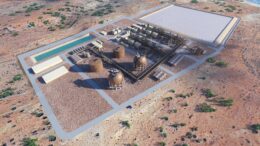
Bedrock and Capstone had proposed bidding the project into Ontario’s Independent Electricity System Operator’s (IESO) Long Lead-Time (LLT) request for proposals, a procurement program for long-duration energy storage resources, at 382 MW/3,056 MWh, using approximately 130 acres for a topside facility plus additional acreage for well pads.
The companies’ presentation to council estimated the project would generate a minimum CAD 1.5 million ($1.08 million) in annual municipal revenue through property taxes and community benefit payments, totaling roughly CAD 90.6 million over a proposed 40-year operating life.
Neither Bedrock Energy nor Capstone Infrastructure has issued a public statement addressing the rejection. Capstone’s most recent public filing, its Aug. 12 second-quarter earnings announcement, makes no reference to the Bluewater project.
Bedrock and Capstone’s presentation to council stated the project would have no other opportunity to bid into Ontario’s storage market without a municipal support resolution, a mandatory municipal endorsement the IESO requires before a project can be submitted. The LLT RFP’s proposal submission deadline is Nov. 26, the only current procurement window for long-duration energy storage in the province.
Available public records suggest Bluewater’s vote is one of the few publicly documented municipal rejections of a long-duration storage or CAES municipal support resolution in Ontario this year. Separate municipal and court records show that Greater Napanee council voted in May to support Hydrostor’s 500 MW Quinte advanced-CAES project for the same LLT RFP despite conservation-authority concerns.
Those records also show that Ottawa’s divisional court upheld a battery storage project’s support resolution and zoning amendment earlier this year, after community groups sought to have them quashed.
Bedrock’s Bluewater rejection is one example of farmland and land-use concerns affecting a CAES project bid into a provincial long-duration storage procurement. Other CAES projects have faced similar siting and permitting challenges, though there is no public evidence yet that other LLT bidders have encountered comparable municipal opposition. Proposal submissions for the procurement are due Nov. 26.
More about
Written by
Comments



Popular Posts