Why Fidra Energy is building the UK’s biggest BESS project

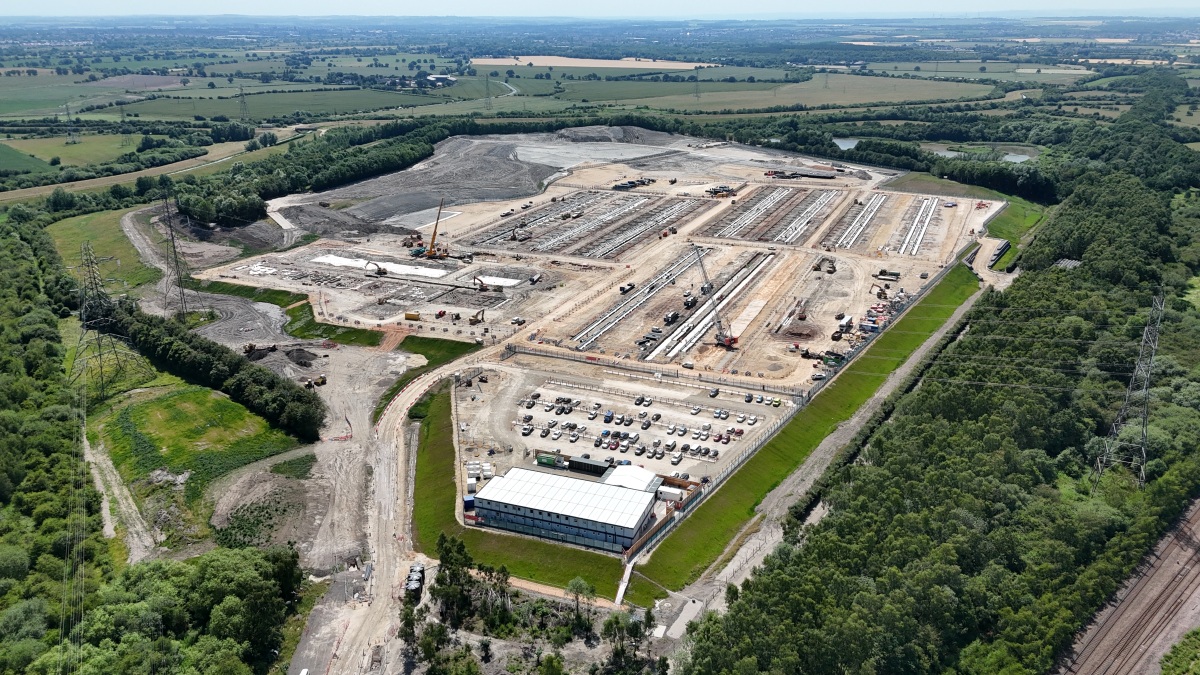
From a trading perspective, Fidra Energy’s under construction Thorpe Marsh BESS project can be thought of as five gas peaker plants rolled into one.
The 1.45 GW/2.9 GWh project is split into five 290 MW units with separate offtake contracts: one on a tolling agreement with Octopus, three floor contracts – two with EDF, one with Statkraft – and one uncontracted unit.
“Whether you’re trading a gas plant or a battery, you know, in some ways there’s a very similar skill set involved in that,” said Fidra Energy CEO Chris Elder. The battery developer boss told ESS News that the Fidra Energy team does not come from a solar or wind development background, but instead has experience building and operating large flexible assets. This partly explains why Fidra Energy decided one of its first BESS projects should also be the United Kingdom’s largest.
Elder himself worked for 16 years at gas plant developer InterGen, including four years as managing director. It was during his time at InterGen that the Fidra CEO first began exploring large-scale battery storage as a possible option for repowering combined cycle gas turbine (CCGT) plants.
Biggest BESS: Thorpe Marsh
Thorpe Marsh is on course to be Great Britain’s biggest battery when commissioned and the project, which can be seen as a way to reduce reliance on gas, owes at least some of its origin to the gas industry.
The project was initially developed by EIG-owned subsidiary West Burton Energy, a company created when EIG bought the West Burton B gas plant and battery storage project from EDF in 2021. Elder joined West Burton Energy that year as CEO, re-consenting West Burton C as a 500 MW battery project, acquiring and progressing Thorpe Marsh as a development project. In August 2024, the West Burton gas plant and 50 MW BESS were sold to TotalEnergies with EIG retaining the two development assets – Thorpe Marsh and West Burton C. Fidra Energy was born.
Now scheduled for commissioning in 2027, Thorpe Marsh BESS reached financial close in September 2025 by securing GBP 445 million ($606 million), with major backers including the UK government’s National Wealth Fund. Fidra’s pipeline also includes the 500 MW/1 GWh West Burton C BESS, and the 1,025 MW Enderby BESS project – which it acquired for an undisclosed sum from UK developer Innova.
Big investors, diverse funding
Large BESS assets are clearly the model for Fidra Energy, and Elder said this strategy was driven by a combination of the economies of scale that are accessible to larger BESS projects, and the internal capabilities of the Fidra team.
To build projects of this size means sourcing significant financing from institutional investors, and Fidra Energy has managed to bring major state and private sector bacon boardboard. The Edinburgh-based developer is backed by institutional investor EIG as well as the National Wealth Fund. Elder said a combination of the scale of Fidra Energy’s projects and some fortunate timing were key to raising the capital needed,
“Number one, we had a differentiated strategy,” Elder explained. “Nobody else was doing anything of the scale of Thorpe Marsh.” The CEO added that discussions with the National Wealth Fund began two or three years before the investment, and were focused largely around debt financing as opposed to equity financing – but then things changed.
“At the time we were looking to raise equity, and we were looking to bring in a minority anchor alongside EIG, the National Wealth Fund were really keen to do that for projects that could make a difference to the storage targets in the UK.”
Thorpe Marsh was almost a perfect project for the state investment vehicle, according to Elder, given it will make a major contribution to government flexibility targets and is significantly de-risked by having roughly 50% of its offtake contracted.
The pipeline
Fidra Energy’s large-scale BESS pipeline is growing, and Elder said the developer has two acquisitions in progress that would bring the total to 4 GW to 4.5 GW in power terms. The ambition is to have 5 GW of deployed UK BESS by 2030.
West Burton C BESS is the next project in line, consisting of two 250 MW phases, one tolled to Drax and one to be traded by an optimizer – with oversight from the developer.
Fidra Energy also retains a long-term option on land for the proposed 1.2 GW Bicker Fen 1&2 project, however the site has only secured a Gate 1 offer in Great Britain’s recently reformed grid connections queue, pushing any prospect of connecting well into the 2030s.
Fidra Energy has not been immune to the headaches that UK connections reform has caused developers. Elder described the process as a “necessary pain” for the whole industry.
“Were mistakes made along the way? Absolutely. It took too long. Administratively, it wasn’t run particularly well. But I think we’re now past the worst of it. I think we’re making decent progress,” he said.
Elder added that Fidra Energy received connection offers for Thorpe Marsh and West Burton, and accepted them almost immediately. Now the developer wants to see delivery of these connection dates as promised, which will be a question for the transmission system owner – National Grid, in the case of Thorpe Marsh and West Burton.
“Have we got the right engineering skills? How do we upgrade and maintain the grid at the same time? I think that’s a massive challenge for this country in the next three to five years,” Elder said.
What’s next?
The market may be getting more competitive but Fidra Energy is still on the hunt for new viable projects, according to Elder. Despite being headquartered in Edinburgh, and significant investment in local BESS projects, the developer is generally looking at opportunities outside of Scotland.
“We’re not yet convinced on the economics, and this sounds a little bit contrarian, but we’re not convinced on the economics of batteries in Scotland,” Elder explained.
“We think people will make money out of them for the next few years, but beyond that, we think there’s a huge risk of overbuild, high transmission charges, and we’re not convinced on the case for that – but we’re certainly looking at other bits of England.
“I wouldn’t say location is our top factor. Top factors are size and grid connection. I think anything from 400 MW up we would look at in terms of a site size in the UK.”
Elder said Fidra Energy is starting to look at European markets, too, and would possibly even consider smaller projects than its UK assets – although the developers broader strategy means larger markets on the continent will be the focus.
“Given what we do, which is really looking at big, large standalone batteries, we’re not going to buy a battery in Ireland because it’s just too small a market. So realistically, it’s going to be one of the big European markets, or one or two of the big European markets, Germany, Italy, Spain, Poland.”
More about
Written by
Comments



Popular Posts