France’s CRE sets out parameters for first long-term capacity auction


France’s Energy Regulatory Commission (CRE) has proposed an initial framework for the country’s new capacity mechanism ahead of its first long-term auction, covering winter 2030–2031.
The mechanism aims to reduce the risk of electricity supply shortfalls during periods of system stress, particularly peak demand. It pays generation, storage and demand-response operators for committing to make capacity available during these critical periods. Demand response contributes by reducing electricity consumption when the system is under pressure.
Once fully implemented, the new framework will comprise two complementary auctions: a long-term auction held approximately four years before the delivery period and a short-term auction held around one year ahead. The first short-term auction took place on July 6, 2026, for winter 2026–2027.
Drawing on a report submitted by France’s transmission system operator, RTE, following extensive consultation with market participants, CRE has proposed a methodology to the energy minister for setting the auction’s demand curve and technical and economic parameters. The demand curve determines how much capacity the auction seeks to procure at different prices.
New capacity requirement estimated at up to 2.5 GW
The auction comes during the transition from the old capacity mechanism to the new framework. Under the chosen timetable, participants must commit capacity for winter 2030–2031 before securing contracts for the three preceding winters, from 2027–2028 to 2029–2030. This creates a challenge for investment planning and contracting strategies.
RTE’s analysis indicates that risks to security of supply remain moderate. It estimates that between zero and 2.5 GW of new capacity will be needed, depending on the scenarios considered.
Against this backdrop, CRE favors cautious economic parameters to limit costs borne by consumers. Its approach could evolve in subsequent auctions as participants become familiar with the framework and RTE and CRE assess how the auctions perform.
Target volume of 82 GW, including 3 GW eligible for multiyear contracts
For the first long-term auction, CRE proposes a target volume of 82 GW, of which 3 GW would be eligible for multiyear contracts. The 82 GW target covers overall capacity procurement, rather than new capacity alone. According to the regulator, the proposed volume is consistent with security-of-supply requirements, electrification needs and anticipated growth in electricity demand.
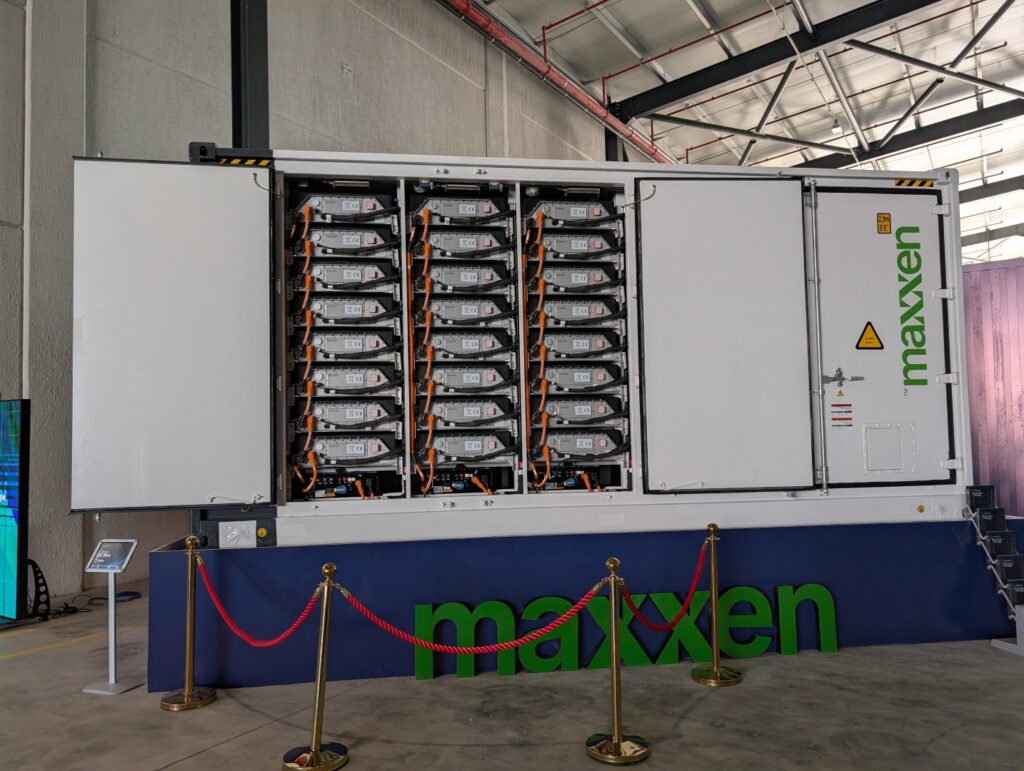
CRE also proposes certification parameters intended to accommodate the development of different technologies. Particular attention has been given to batteries, which are expected to play an increasingly significant role in electricity system flexibility and balancing.
On pricing, CRE proposes retaining the mechanism’s two price caps, known as PPG and PPI, at €72/kW and €15/kW, respectively. The aim is to contain consumer costs while allowing participating capacity providers to cover their costs.
The regulator will continue refining the methodology for subsequent auctions, drawing on the initial results and participants’ experience as the framework is implemented.
Written by
Comments




Popular Posts