New sodium-ion energy storage solution for data centers from California’s Proper Voltage and Unigrid

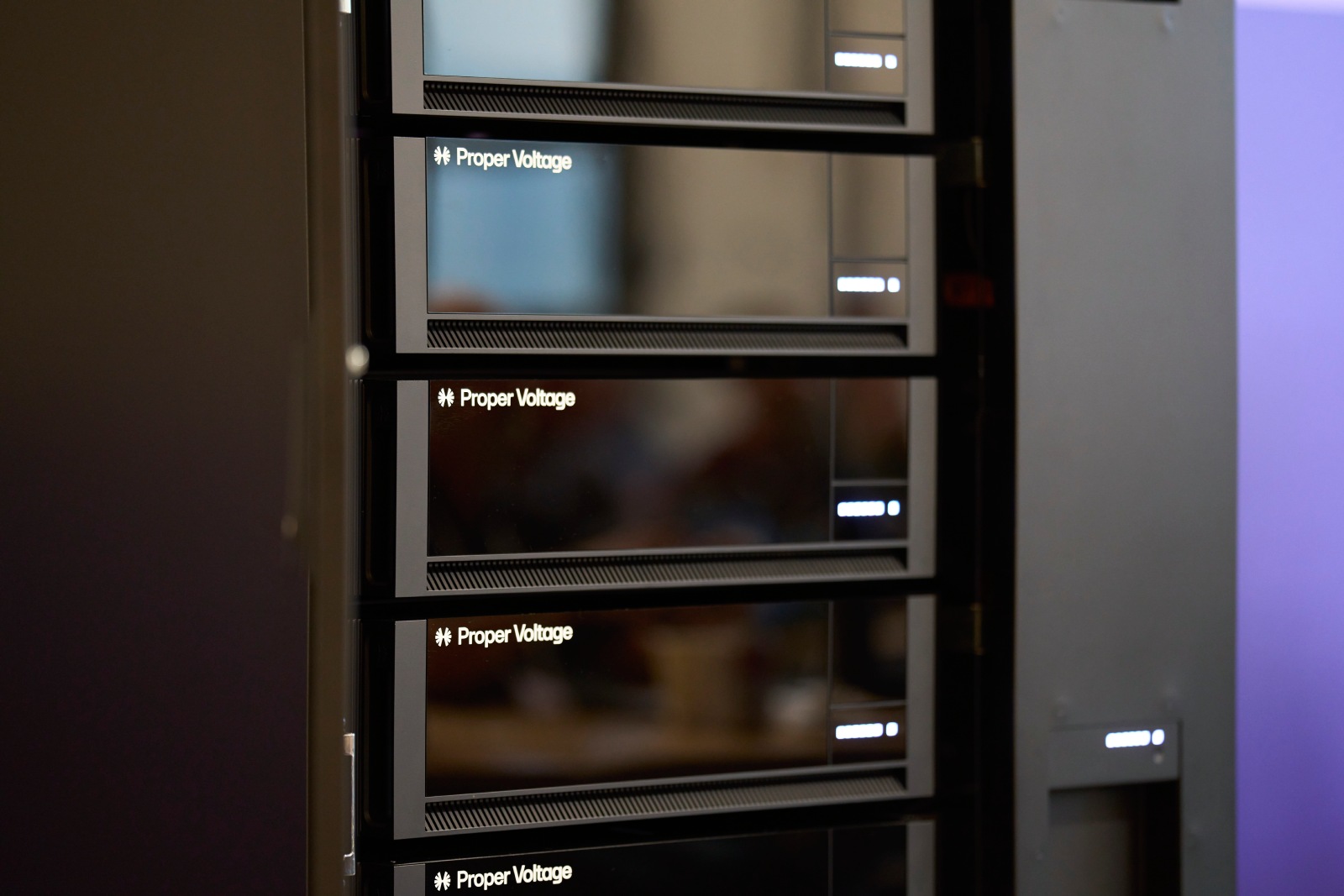
California-based duo Proper Voltage and Unigrid have teamed up to pair voltage-control electronics with sodium-chromium oxide cells to create a 73.1 kWh backup cabinet aimed at delivering power to data centers.
Battery integration firm Proper Voltage announced that it has launched Salt Vault, an uninterruptible power supply (UPS) battery cabinet built around sodium-ion cells from San Diego-based Unigrid. Commercial deliveries to unnamed early-adopter data center and critical infrastructure operators are scheduled to begin in April 2027.
The system combines Proper Voltage’s software that it calls its battery operating system (bOS) with Unigrid’s sodium-chromium oxide (NCO) chemistry.
According to Proper Voltage’s product specifications, the Salt Vault High Power cabinet delivers 73.1 kWh of capacity and 333 kW of power output at a nominal 522 VDC, rated for 10,000 cycles. It operates across a discharge temperature range of -20°C to 40°C and a charge range of 0°C to 40°C. A single module in the cabinet is 6.1 kWh.
The two companies are targeting a specific operational problem in AI data centers, where training and inference clusters swing from idle to peak load in milliseconds. Those repeated power transients may accelerate degradation in conventional lead-acid and lithium iron phosphate (LFP) backup batteries.
Proper Voltage says its software-defined voltage control as part of its bOS regulates output across the full state of charge, allowing the sodium-ion cabinet to drop into existing UPS architectures without inverter redesigns. It can also adapt to 800 V racks, as the industry scales towards that voltage level.
No independent performance data or pricing has been disclosed.
“Performance is what drives the best models, and the battery behind them must be resilient and adaptive across every one of those demands,” said Charlie Welch, CEO of Proper Voltage. Unigrid CEO Darren Tan said the NCO chemistry is built for high-rate pulse power and thermal stability under heavy cycling.
The launch adds to a growing push by sodium-ion developers into AI infrastructure, where fire safety and high-rate discharge may matter more than energy density.
Earlier this year, Energy Vault locked in 1.5 GWh of Peak Energy’s sodium-ion systems for its AI data center portfolio.
And, less happily, ESS Tech introduced a modular sodium-ion platform for the same market in July, before it went out of business in November.
The hill to climb towards supplying hyperscalers is steep. Nvidia’s BESS qualification program only Tesla, LG, and Hitachi, underscoing how hard supply deals are for tier-one data center contracts.
Written by
Comments