Huawei completes transformer fire test for Luterra ESS

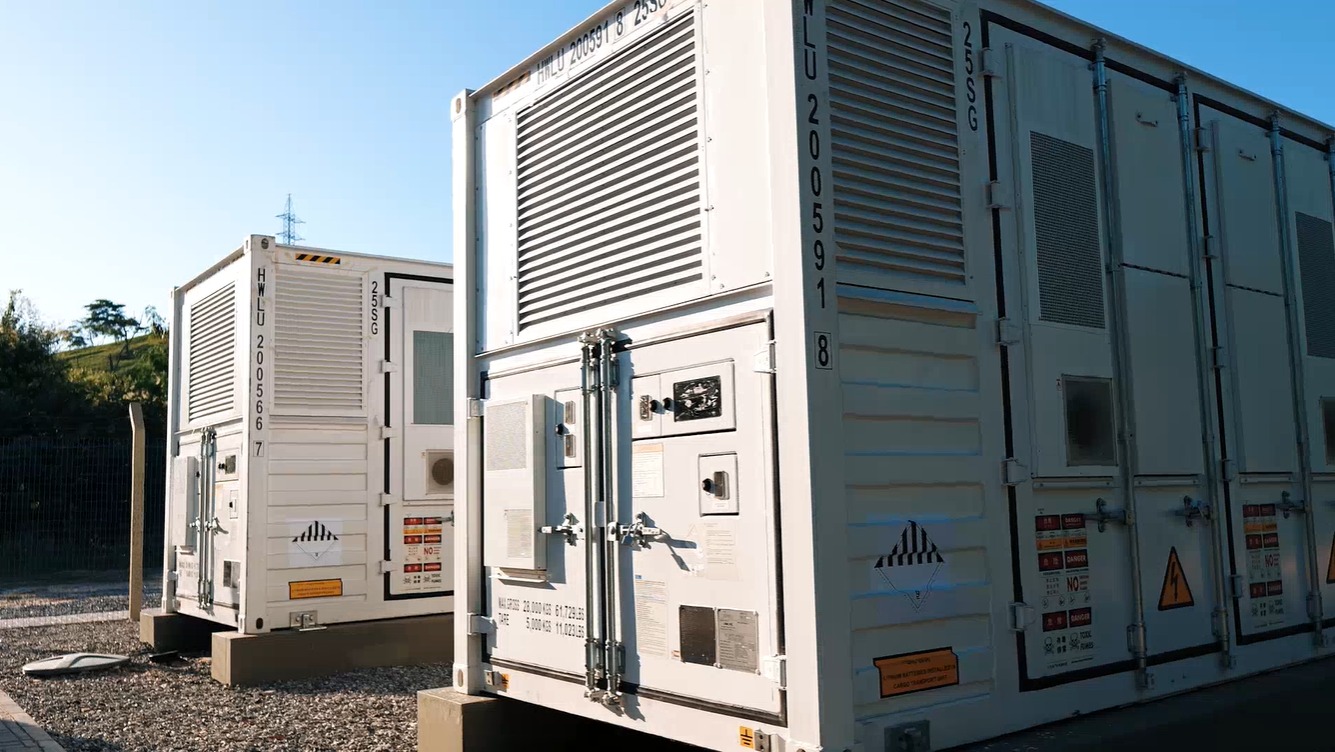
Huawei has completed a sub-array-level large-scale fire test for its Luterra ESS, which included igniting a transformer station in close proximity to energy storage containers. The Chinese manufacturer described the test as an industry first.
Organized and executed by third-party certification organization Société Générale de Surveillance S.A (SGS), the test involved construction of a sub-array with 0.6 m enclosure spacing to replicate typical real-world projects. The containers were connected by through-busbars. The test externally ignited the sub-array’s transformer station – under full-oil condition, containing five tons of oil – to simulate a thermal runaway scenario.
Large-scale fire tests in the energy storage industry typically focus on verifying that fire does not spread between containers. The latest Huawei fire test was designed to cover a complete array, including the transformer station, in a bid to more closely replicate real-world operating conditions.
The test verified the Luterra ESS’s suppression and protection capabilities, according to Huawei, and was successfully run without manual intervention. No fire spread from the burning transformer station during the test.
Results showed that after 80 hours of intense burning, Huawei’s grid-forming Luterra ESS platform had been able to maintain cell temperature throughout. The fire reached a peak temperature of almost 1,000 C, according to Huawei, however the cell temperature of the ESS containers in the sub-array stayed below 26 C and the oil temperature in the adjacent transformer station remained below 28 C. After the test, the transformer station’s main structure remained intact and could be hoisted and removed.
Huawei’s large-scale fire test was witnessed by domestic and international authorities including INERIS (French National Institute for Industrial Environment and Risks), Bureau Veritas of France, BCFI (French Fire Protection and Explosion Risk Engineering consultancy), and the Tianjin Fire Research Institute of the Ministry of Emergency Management of China.
INERIS contributed to defining the abuse test conditions in alignment with the forthcoming French mandatory technical specification for outdoor stationary energy storage systems (AMPG 2925-2), and validated the test results against these criteria. Corsica Sole, a leading French PV and energy storage developer, participated in and witnessed the entire test, according to Huawei.
Written by
Comments
Popular Posts