Brazilian court rejects bid to suspend battery capacity auctions

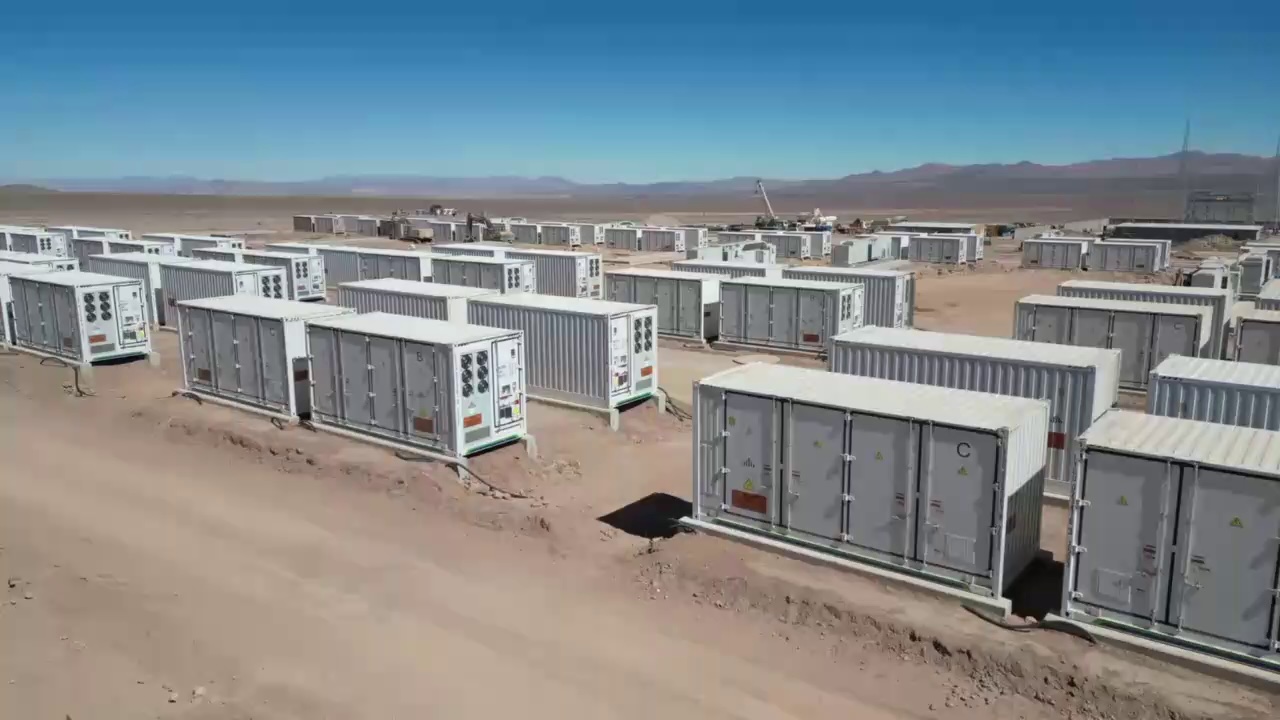
A federal court in Brazil’s Federal District has rejected an injunction request by the Brazilian Wind Energy Association (Abeeólica) to suspend two Capacity Reserve Auctions in the Form of Power (LRCAP) for battery storage, scheduled for Dec. 2 and Dec. 4.
Judge Diego Câmara Alves of the 17th Federal Civil Court ruled on Nov. 25 that uncertainty over the methodology for allocating costs among generators does not prevent the auctions from proceeding. He also found that suspending the tenders could jeopardize electricity supply security.
In a public civil action against the federal government and the Brazilian Electricity Regulatory Agency (Aneel), Abeeólica is challenging the constitutionality of a provision in Law No. 15,269/2025 that assigns the cost of battery procurement exclusively to generators.
The association estimates that the charge could reach BRL 17 ($2.92)/MWh, equivalent to about 10% of the reference revenue of a generator operating in Brazil’s free electricity market.
The judge found no risk of imminent harm to generators because collection of the charge is not due to begin until August 2028. He also said that a potential ruling declaring the cost-allocation provision unconstitutional would change the parties responsible for paying the charge without invalidating the auctions or resulting contracts.
Winning projects will receive payments from the Capacity Reserve Account (Concap), administered by the Electric Energy Trading Chamber (CCEE), regardless of which parties ultimately bear the charge.
Cost allocation
The ruling supports Aneel’s position that regulations governing the Capacity Reserve Charge (Ercap) do not need to be finalized before the auctions. However, the rules must be operational before the first settlement cycle of the supply period, which begins on Aug. 1, 2028.
In Public Consultation No. 37/2026, Aneel proposed cost-allocation coefficients ranging from 25% to 100%, depending on the flexibility of generation sources. The regulator told the court that it is also assessing an alternative proposal submitted by the National Electric System Operator (ONS).
As the methodology has not yet been approved, the judge said any potential legal challenges could be raised before collection begins without halting the procurement process.
The decision cites as a precedent Brazil’s first capacity reserve auction in the form of power, held in December 2021, almost three years before regulations governing its associated charge were introduced.
Supply shortfall
In its submission to the court, the Ministry of Mines and Energy (MME) said power adequacy criteria would be breached from 2027, even after capacity procured in the reserve auctions held in March 2026.
The assessment is included in the 2036 Ten-Year Energy Expansion Plan (PDE 2036) and the 2026 Energy Operation Plan.
The ministry also warned that postponing the battery auctions could affect projects’ eligibility for transmission system access windows and delay battery commissioning beyond the timeframe required by the electricity system.
The court also considered the number of registered projects – 5,296 in the National Storage product and 5,734 in the Storage product – and the bid guarantees submitted by participants.
Abeeólica also filed Direct Action of Unconstitutionality No. 8,050 (ADI 8.050) with Brazil’s Supreme Federal Court (STF) on Nov. 19, seeking to suspend the cost-allocation rule before the auctions take place.
The case was assigned to Justice Cristiano Zanin, who requested information before considering the preliminary injunction. The request was still pending on the morning of Nov. 25, according to the federal court ruling.
Battery cost allocation is also addressed in Bill No. 3,716/2026, which is being considered by Brazil’s Congress.
The federal court’s decision does not conclude the public civil action. The federal government and Aneel must submit their defenses before the court considers the merits of the case.
From pv magazine Brazil
More about
Written by
Comments


Popular Posts