Author

Lennard Wilkening
Advertisement
Articles written by Lennard Wilkening
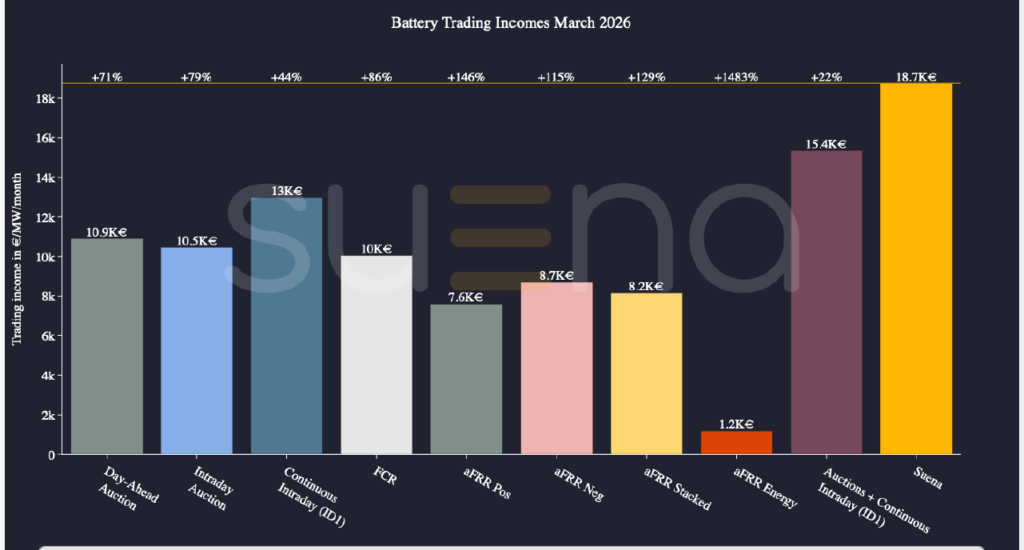
Volatility returns: Battery revenues in March 2026
March saw a sharp rebound in battery revenues in Germany. While average price levels increased only moderately, shifting dynamics between solar-driven price troughs and fossil-driven peaks created a more favourable trading environment. Lennard Wilkening, CEO and co-founder of suena energy, analyses what defined the month and why cross-market strategies proved particularly effective.
Apr 27, 2026
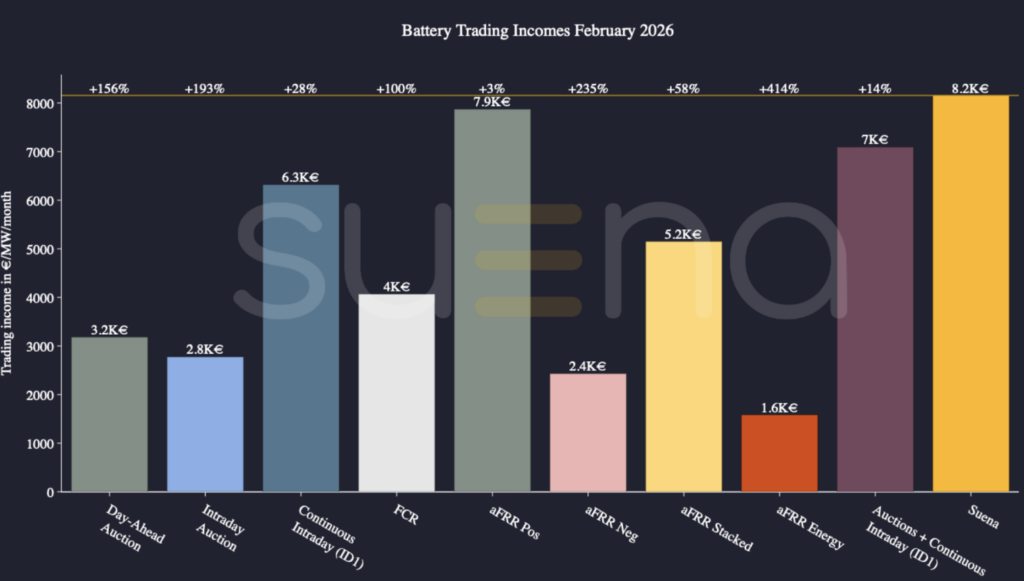
The return of negative prices: Battery revenues in February 2026
February began with familiar winter stability, but ended with the return of negative prices driven by solar feed-in. As market dynamics started to shift, battery revenues reflected both compression and emerging new opportunities. Lennard Wilkening, CEO and Co-Founder of suena energy, explores what defined the month and what it signals for spring.
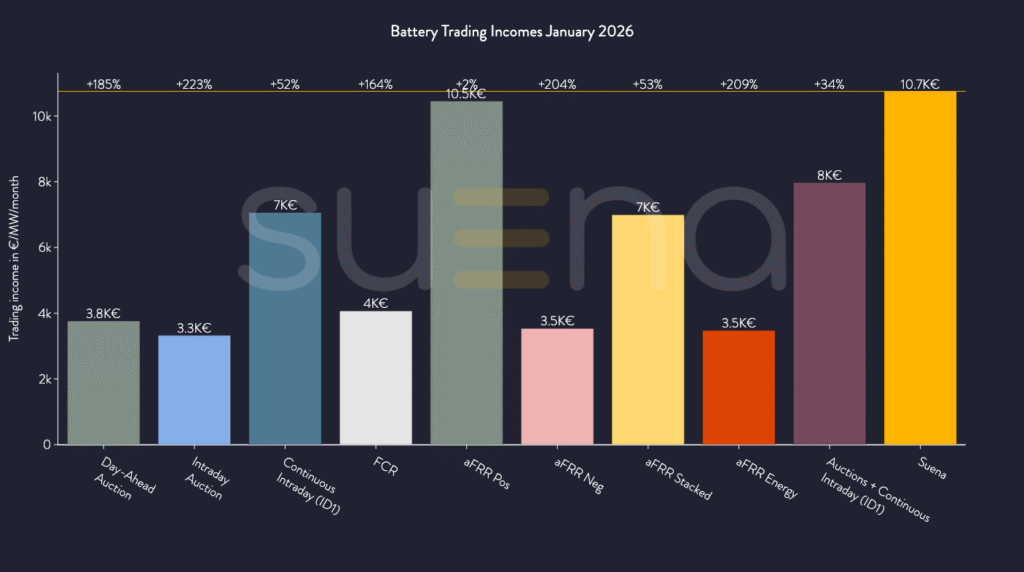
Steady but not static: Battery revenues in January 2026
January brought a largely balanced power system to Germany, with firm winter demand, scarce negative prices, and contained volatility. Yet beneath stable price levels, revenue opportunities shifted across wholesale and balancing markets. Lennard Wilkening, CEO and Co-Founder of suena energy, breaks down how battery optimization performed in this compressed yet still actionable market environment.
Advertisement
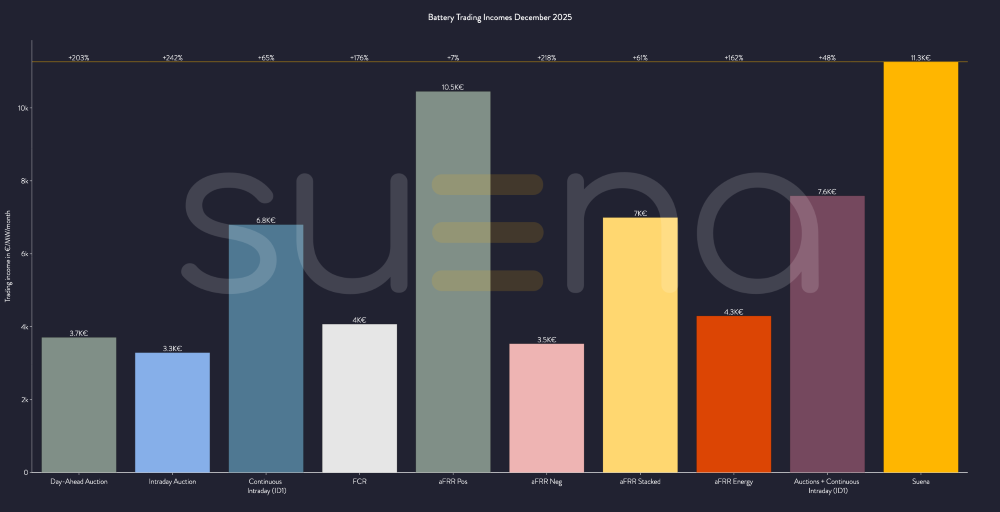
A calm end to 2025, with flexibility still paying off
December closed out 2025 in Germany with a well-balanced power system, and the lowest battery revenues of the year. Fewer price signals, flatter load curves, and softening reserve prices tested the limits of single-market strategies. Lennard Wilkening, CEO and co-founder of suena energy, breaks down what defined the month and what it means heading into 2026.
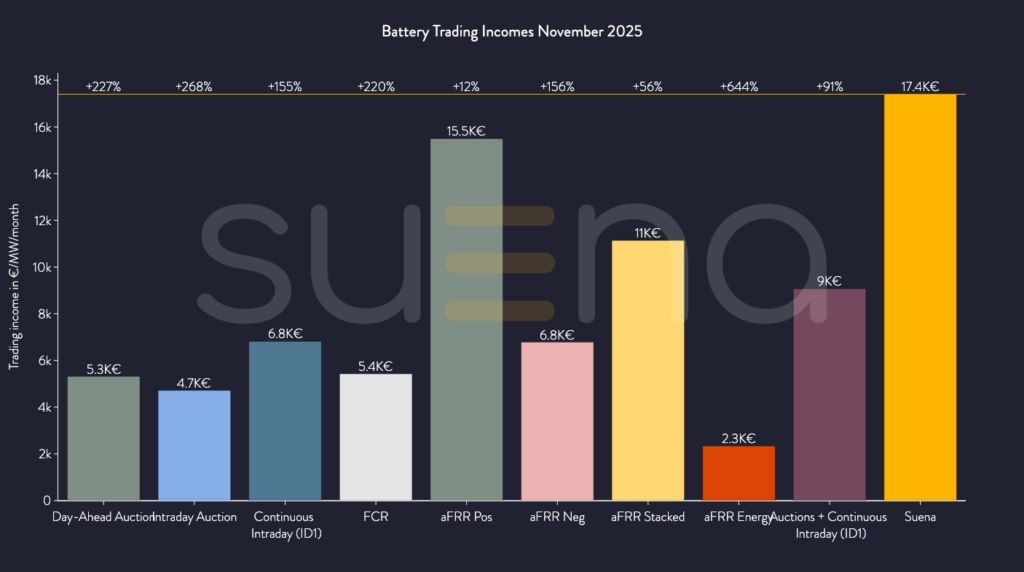
No extremes, except one: Battery trading in a surprisingly steady November
November brought calm to Germany’s power market. As volatility dropped and price spreads narrowed in a well-supplied system, battery revenues became harder to capture. Lennard Wilkening, CEO and co-founder of suena energy, unpacks what this meant for BESS operators and why multi-market coordination proved essential once again.
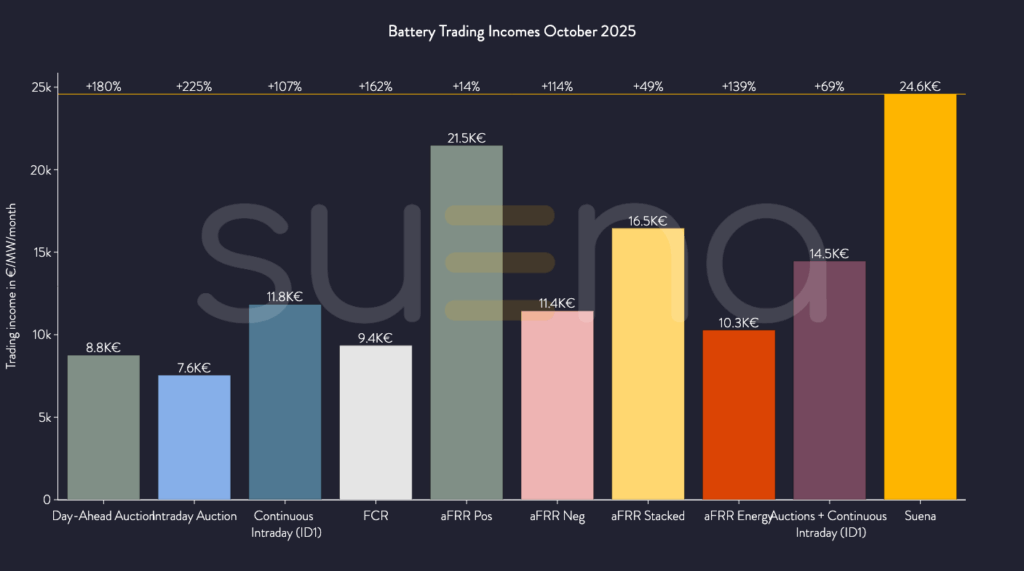
Stacking value in a changing market: BESS revenue in October
October brought a fundamental shift to battery trading dynamics In Germany as the day-ahead market switched from hourly to 15-minute intervals. Lennard Wilkening, CEO and Co-Founder of suena energy, breaks down how this structural change, combined with shifting weather patterns, reshaped revenue opportunities – and why tactical responsiveness across markets will only grow in importance as winter volatility sets in.
Advertisement
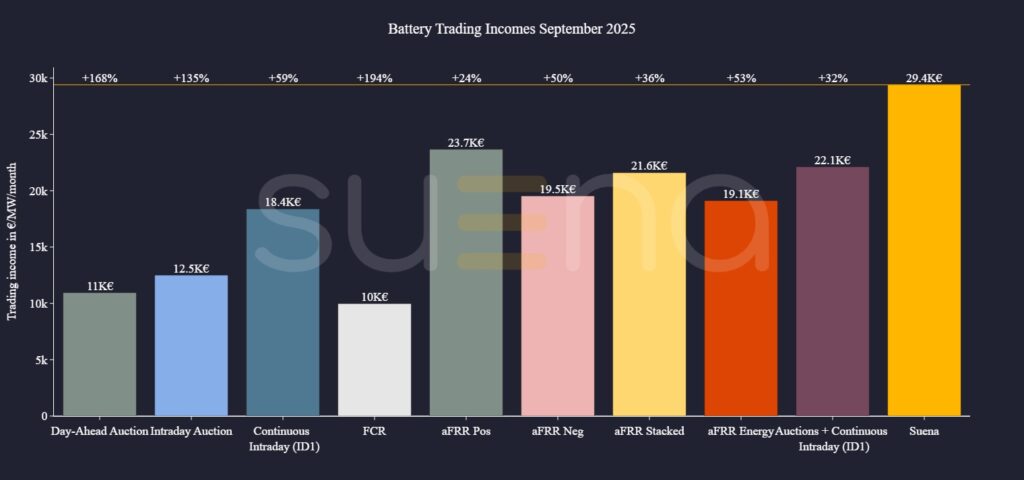
Back in motion: Battery revenues surge as volatility returns
After a relatively slow couple of months, September brought back a more favorable trading environment for battery operators in Germany. Lennard Wilkening, CEO and Co-Founder of suena energy, unpacks what drove the rebound and why precision and the right strategy are set to matter even more as day-ahead trading transitions to 15-minute granularity.
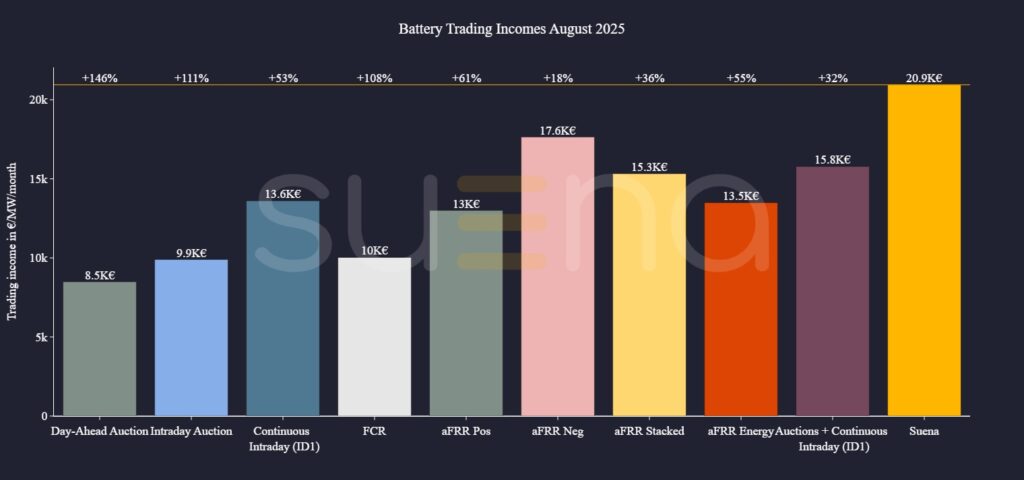
Between the peaks: Battery strategy in a moderate August
After a dip in July, battery storage revenues in Germany posted a modest recovery in August. Drawing on his company’s August revenue benchmark, Lennard Wilkening, CEO and co-founder of suena energy, explores what drove the recovery – and why adaptive, multi-market strategies continue to outperform static approaches even when market conditions are neither volatile nor flat, but somewhere in between.
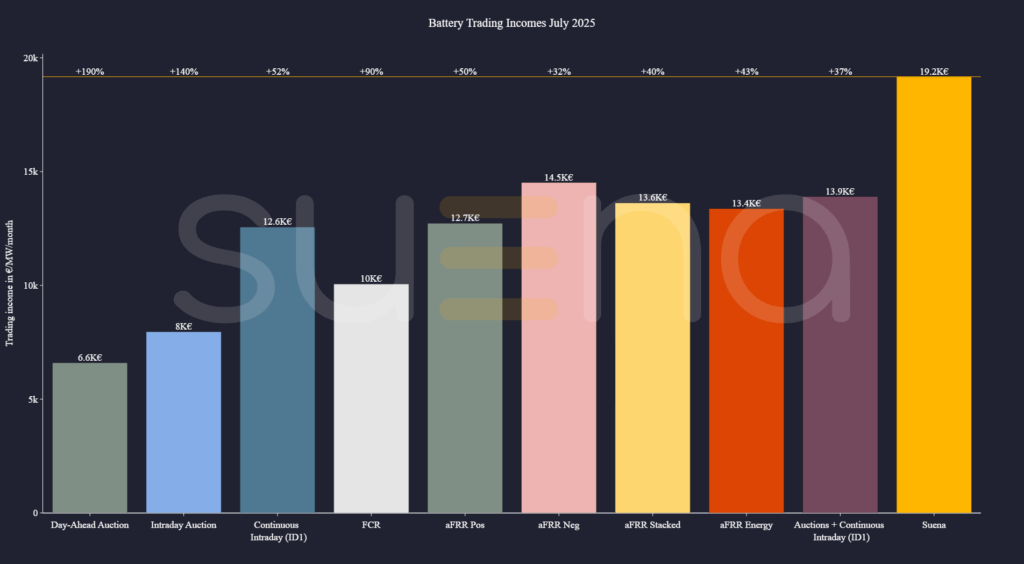
Profitability in quieter markets: what July revealed about battery strategy
After two record-breaking months for battery storage revenue in Germany, July brought a sharp shift: fewer price spikes, softer ancillary markets, and a steep drop in arbitrage opportunities. Drawing on Suena Energy’s latest monthly benchmark, the company's CEO and co-founder, Lennard Wilkening, unpacks the July revenue dip, what it signals about shifting market regimes, and why dynamic, multi-market optimization remains essential – especially when volatility fades.
Advertisement