US electricity body: Deploy grid-forming batteries now to avoid costly infrastructure later
In most large power systems, transmission grid operators are “still able to maintain grid reliability using synchronous generators present in their systems at this time,” an ESIG report has noted.
But with “ever-increasing levels” of inverter-based solar, wind, and battery storage, “early, proactive deployment” of grid-forming (GFM) resources “can mitigate reliability challenges that could otherwise require significant transmission infrastructure investment,” stated the report, prepared by ESIG’s GFM testing project team.
GFM capabilities, which “can be enabled relatively easily through software changes,” would be especially valuable for the hundreds of gigawatts of battery storage capacity in interconnection queues, the report’s authors stated.
ESIG previously published a study showing large-scale batteries with GFM inverters can increase renewables hosting capacity.
Proactive
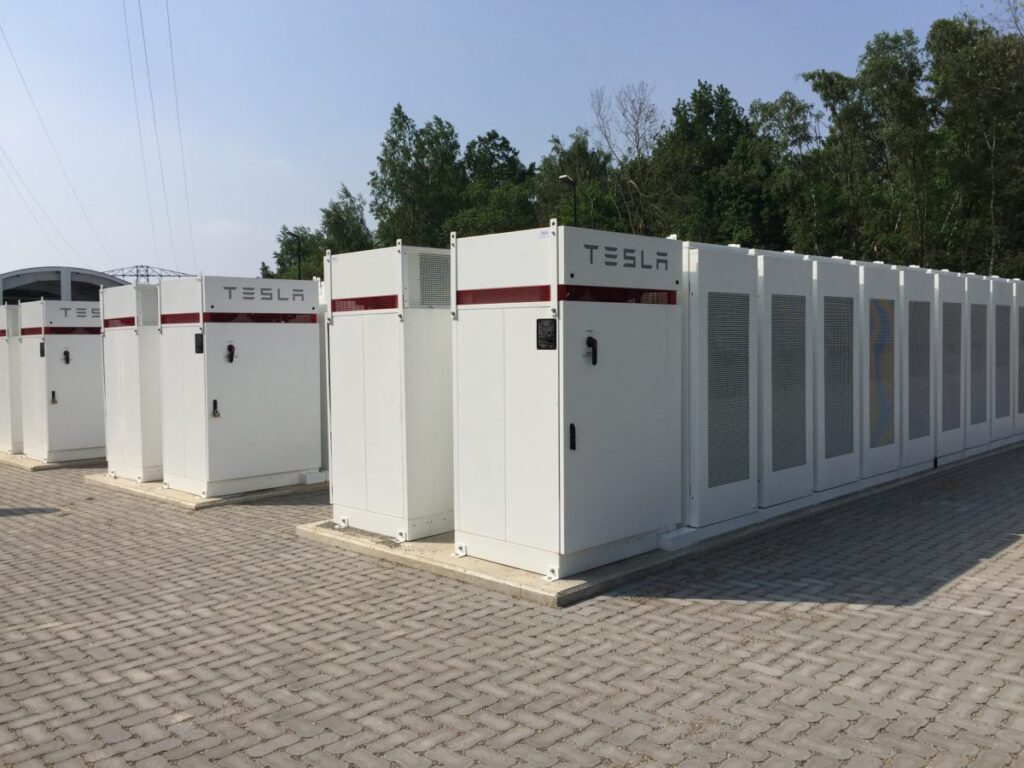
Grid company the Midcontinent Independent System Operator has developed GFM specifications that will apply to all future transmission-connected battery energy storage systems (BESS), the study noted.
And peer the Electric Reliability Council of Texas has a proposal undergoing stakeholder review that would require GFM for transmission-connected BESS with interconnection agreements signed after April 1, 2026.
Testing
The ESIG report, titled “Testing the Performance of Grid-Forming Resources,” focuses on test methods and performance metrics for evaluating voltage source behavior, which it terms “the essence of a GFM resource.”
In other words, “the unique characteristics of a GFM resource are the fast voltage- and frequency-stabilizing response during the short time frame following a grid disturbance, and the ability to act as a near-ideal voltage source with an internal impedance in these fast timescales.”
The report presents test methods that “could be used in specifications that are being developed for GFM resources,” such as specifications from the Universal Interoperability for Grid-Forming Inverters consortium.
The test methods for evaluating the core capabilities of GFM resources focus on performance metrics and pass/fail transient tests.
The performance metrics are defined as time-domain or frequency-domain specifications. The pass/fail transient tests focus on certain abnormal grid conditions such as the operation of a GFM resource during the loss of the last synchronous generator on the system or under extremely weak grid conditions.
The report suggests several sets of performance metrics but advises that the metrics should be adapted based on the system characteristics where a GFM resource is going to be installed and on quantifiable objectives for improving system strength and stability.
ESIG describes itself as a nonprofit organization that “marshals the expertise of the electricity industry’s technical community to support grid transformation and energy systems integration and operation.”
From pv magazine USA.
Written by