Rongke Power debuts 2 MW/8 MWh vanadium flow battery storage system

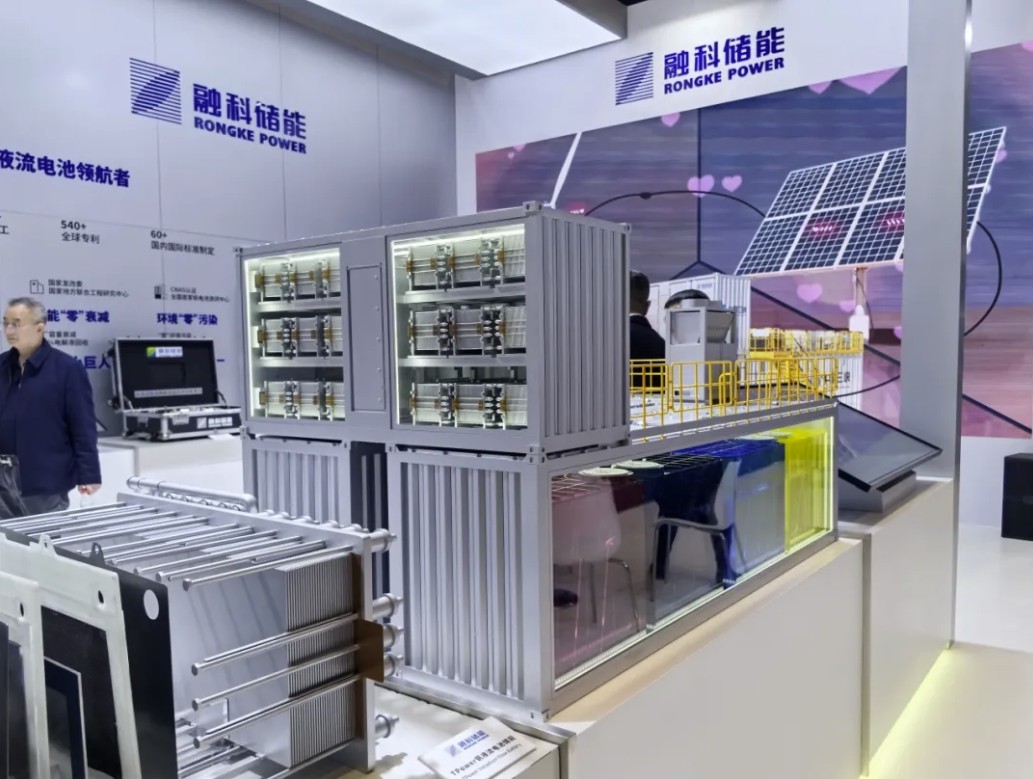
Dalian Rongke Power introduced what it described as the world’s highest-power single vanadium flow battery storage system in Beijing, positioning the new product for long-duration storage projects tied to renewable energy bases, grid-side peak shaving, and microgrids. According to a statement by the company that the new product is named TPower2000, rated at 2 MW/8 MWh, and Rongke to see it as a step toward more standardized, GWh-scale delivery of vanadium flow systems.
Rongke said the system is built around 62.5 kW stacks, with single-unit power several times higher than the previous generation. The product maintains DC-side efficiency above 81% even at high current density, while supporting modular expansion from 2 MW to more than 10 MW. The company also said the system footprint has been reduced to about 35 square meters per MWh, around 28% below the industry average cited in the report.
The design focus appears to be clear: lower the barriers that have limited broader deployment of vanadium flow batteries, including high upfront cost, large footprint, operational complexity, and limited flexibility in project sizing. Rongke said the new platform uses a more standardized architecture to simplify engineering and accelerate project delivery, while also targeting stronger lifecycle economics for long-duration applications.
In respect of application, the product is aimed primarily at large renewable energy bases and shared long-duration storage plants, but it is also being pitched for grid-side peak shaving and frequency regulation, industrial microgrids, and other scenarios where long life, safety, and deep cycling matter more than compactness. Flow batteries remain attractive in those scenarios because they use aqueous electrolytes and avoid the thermal runaway risks associated with conventional lithium-ion chemistry, thus with higher safety. Rongke also said the system is intended to help the sector move into what it called a new phase of GWh-scale project delivery.
On cost, the gap with lithium-ion remains meaningful at the initial investment stage. According to Rongke’s calculation, the new vanadium flow system at roughly CNY 1.80-CNY 1.95/Wh, while current Chinese tender data and industry reporting suggest mainstream LFP battery storage systems are still far lower on an upfront basis, often around CNY 0.5-CNY 1.0/Wh depending on duration, scope, and whether EPC is included. That means vanadium flow batteries are still typically about two to three times more expensive upfront. But Rongke said the economics can narrow in longer-duration use cases, as flow batteries offer very long cycle life and may reduce replacement, fire protection, and insurance-related costs over time.
That distinction is becoming more important as China’s storage market expands beyond two-hour lithium systems and toward longer-duration applications tied to renewable integration and grid resilience.
Written by


Popular Posts