Australian government cuts funding for domestic battery manufacturing, retains subsidy for home batteries

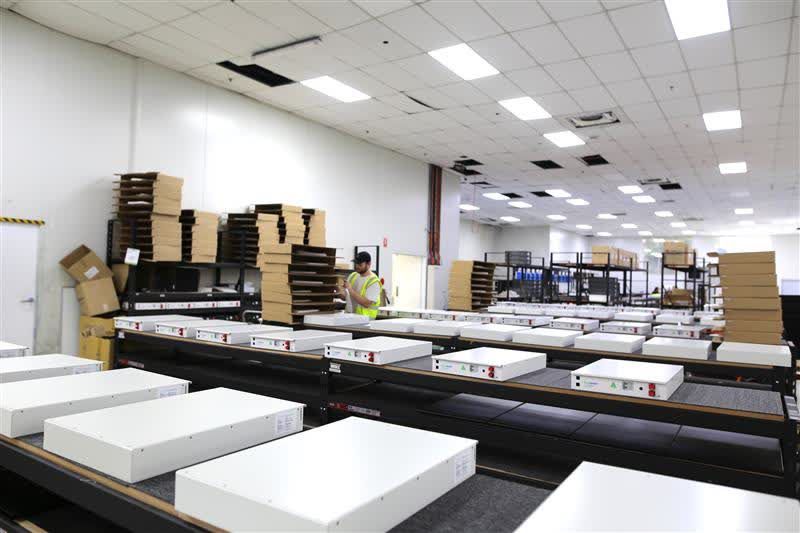
Australia’s annual government revenue, spending, and outlook paper, known as the Federal Budget, has for 2025-2026 revealed large-scale cuts of $1.3 billion (USD 940 million) to renewable programs, including the Battery Breakthrough Initiative, Solar Sunshot and Hydrogen Headstart programs. More than $600 million of additional cuts fall on various other clean energy and climate solutions programs.
In handing down the latest Budget, federal Treasurer Jim Chalmers confirmed the government is pulling millions out of the Solar Sunshot policy that was first announced in March 2024, promising $1 billion in production subsidies and grants to build a solar supply chain on Australian soil.
Unallocated funding will also be withdrawn from the Battery Breakthrough Initiative (BBI), launched in August 2025 with $500 million in capital grants and production incentives designed to boost domestic manufacturing capacity.
Budget papers also show that the Hydrogen Headstart program is facing changes as well.
Government forecasts show that the changes will save $1.3 billion across the three renewable energy programs over the next 10 years.
There are also savings from uncommitted funding in other grants schemes, including $93.8 million over two years from reducing uncommitted funding under the Powering the Regions Fund and $78.6 million over four years from reprioritising uncontracted funding under the Regional Hydrogen Hubs program.
The cuts have been tempered by support for other renewable energy initiatives, including the Cheaper Home Batteries program, with funding of $7.2 billion over the forward estimates. The program has already helped more than 390,000 households install battery energy storage and added more than 10 GW of renewable energy capacity to the grid in just 11 months.
The government has also allocated $97.2 million over five years to continue implementing the National Consumer Energy Resources Roadmap, including $71.8 million in this budget to establish a National Technical Regulator. The new regulator will be responsible for setting technical standards to support the integration of consumer energy resources including solar, batteries and electric vehicles (EVs) into the National Electricity Market, helping ensure these technologies can connect, interact and operate reliably across the system.
The Smart Energy Council (SEC) described the 2025-26 Federal Budget as “cautiously positive for renewables,” adding that cuts to the Battery Breakthrough and Solar Sunshot programs are a “disappointing signal for investments in local manufacturing and critical energy infrastructure.”
The Investor Group on Climate Change (IGCC), which represents local and global superannuation and retail investment funds with more than $4.5 trillion under local management, said the Budget is full of mixed messages.
“The Budget misses the moment to send clear policy signals to supercharge clean energy and industry, risking the flight of investment elsewhere,” it said, adding that “overall, this budget is a big step backwards for clean energy, climate solutions, energy security and Australia’s readiness for a changing climate.”
“There are some minor measures to boost investment in early-stage climate tech and the home battery program has survived, but overall the budget puts the brakes on new clean energy supply and will therefore harm Australian households and businesses.”
Battery Breakthrough Initiative ends
The BBI program, delivered by the Australian Renewable Energy Agency (ARENA), had aims for boosting Australia’s competitiveness in global battery manufacturing by providing funding for domestic production, including gaps in capability.
The initiative targeted the battery value chain, including advanced materials processing, battery cell production for finished cells, and battery pack assembly, providing local manufacturing of complete systems for domestic and overseas use.
Initially set up to be active until funds were used or the fund was closed, some of the $500 million in funding was allocated to recipients, including AU$2.3 million for Victorian manufacturer PowerPlus Energy, to support its plans to triple annual battery module production capacity to 150 MWh over 2026-2027.
Firebird Metals also received AU$2 million to support the development of a demonstration-scale facility in Perth that processes manganese concentrate into cathode materials for batteries.
Written by


Comments




Popular Posts