Top German court rules costruction cost fees for battery storage projects are permissible

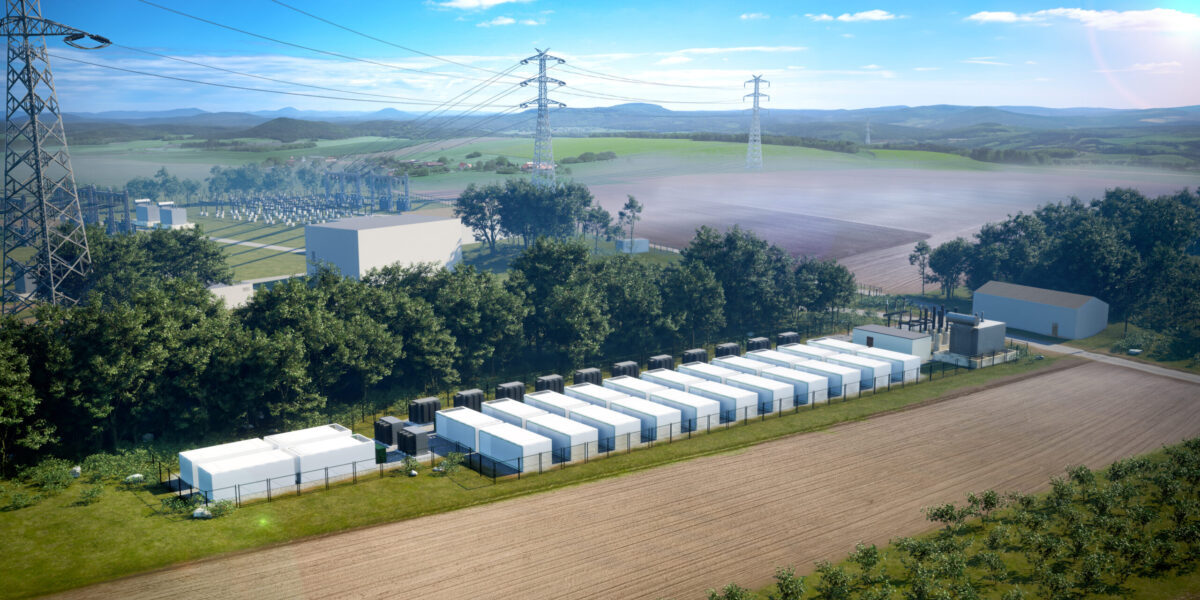
Germany’s Federal Court of Justice (BGH) in Karlsruhe has upheld the legality of grid connection payments for battery storage systems. This decision by the Cartel Senate had already been anticipated following oral arguments heard several weeks ago.
The Karlsruhe judges ruled that the Federal Network Agency is not required to stop local distribution network operators from charging grid connection payments based on the capacity pricing model when connecting battery storage systems to the grid. As a result, the BGH overturned the earlier decision of a lower court, and rejected the appeal filed by the applicant.
In this case, the previous case was held in the Higher Regional Court of Düsseldorf and the applicant was Kyon Energy. The company develops and operates large-scale battery storage systems. In May 2021, it submitted a grid connection request to a distribution network operator for a battery with a maximum charge and discharge capacity of 1,725 kilowatts and a storage capacity of 3,450 kilowatt-hours. The system was purely grid-connected.
After assigning a grid connection point, the operator demanded a grid connection payments or Baukostenzuschuss in German. The amount was calculated based on a position paper from the Federal Network Agency and followed the capacity pricing model.
In June 2022, Kyon Energy asked the Federal Network Agency to prohibit the network operator from charging the fee, either entirely or at the calculated amount, under Section 31 of the Energy Industry Act (EnWG). The agency rejected the request in December 2022, which led Kyon Energy to appeal. In December 2023, the Higher Regional Court of Düsseldorf overturned the agency’s decision. The Federal Network Agency then appealed the ruling, and the case reached the Federal Court of Justice.
The ruling
The BGH has now ruled that the lower court was incorrect to find the grid connection payments discriminatory. The judges acknowledged that battery storage systems are different from other end users because they do not consume electricity but instead store it and feed it back into the grid at a later time. This means the fee, which is based on local capacity demand, has a stronger influence on location decisions for battery projects compared to other users. The judges also noted that battery systems can have a positive effect on the grid by storing or releasing electricity during times of congestion.
However, they concluded that treating grid-connected battery storage systems the same as other end users is justified, given the goals of the grid connection payments. Distribution network operators therefore have some discretion when applying the fees.
The court found that the agency was entitled to assume the capacity-based fee is proportionate to its intended goals, despite the differences between battery storage and other types of users. The fee is intended to guide planning and behavior, since a higher power requirement results in a higher connection fee. This encourages applicants to request only the grid capacity they actually need, which helps prevent overbuilding the grid and the resulting expansion costs that would be shared by all users. The fee also contributes to funding the distribution network.
According to the BGH, both purposes apply to grid-connected battery storage systems, as long as they draw electricity from the grid. The connection must be built to match the requested withdrawal capacity, and the system’s ability to feed energy back into the grid does not affect that.
The judges also stressed that installing a battery that could help the overall electricity grid does not necessarily benefit the local distribution grid where it is connected and where the fee is applied. The fact that Kyon Energy was willing to operate the system in a way that supported the grid does not matter in this case. Only the local grid operator is in a position to assess whether and under what conditions a battery could help avoid the need for network expansion. It is therefore up to the operator to decide whether general, transparent and non-discriminatory incentives should be introduced for battery storage projects through the use of construction cost fees.
The BGH also rejected the view of the Düsseldorf court that European energy storage rules prohibit such fees.
Further, the court also pointed out that battery storage systems already enjoy several advantages under current law in Germany. These include exemptions from network charges and favourable tax treatment. If construction cost fees were reduced or eliminated entirely, the cost would shift to the general pool of grid users through increased network charges. At the same time, the economic gains from operating battery storage, such as using market price fluctuations, would benefit only the operator of the system.
Catch previous coverage of the legal wranglings via pv magazine Germany and ESS News:
- German battery industry awaits May 27 decision on grid connection payments
- Germany’s Federal Court postpones verdict on battery grid charges
From pv magazine Germany.

Written by





Popular Posts