PowerBank begins battery storage rollout in Ontario with first 4.99 MW project

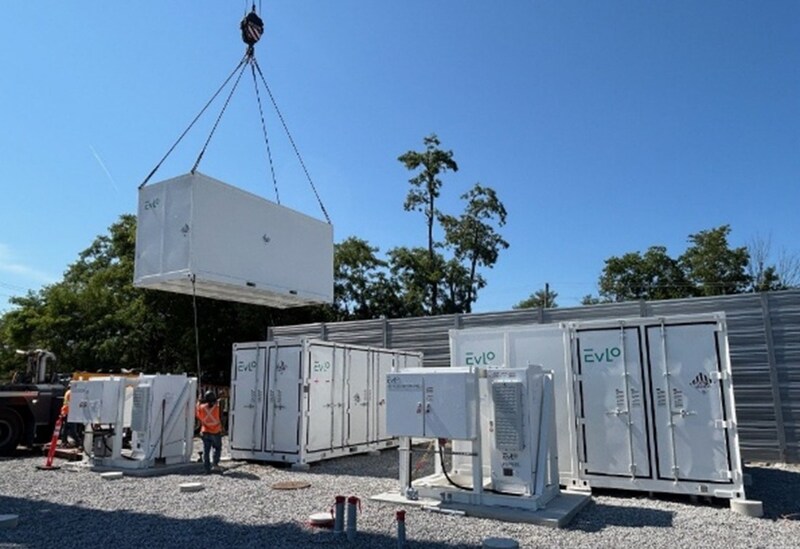
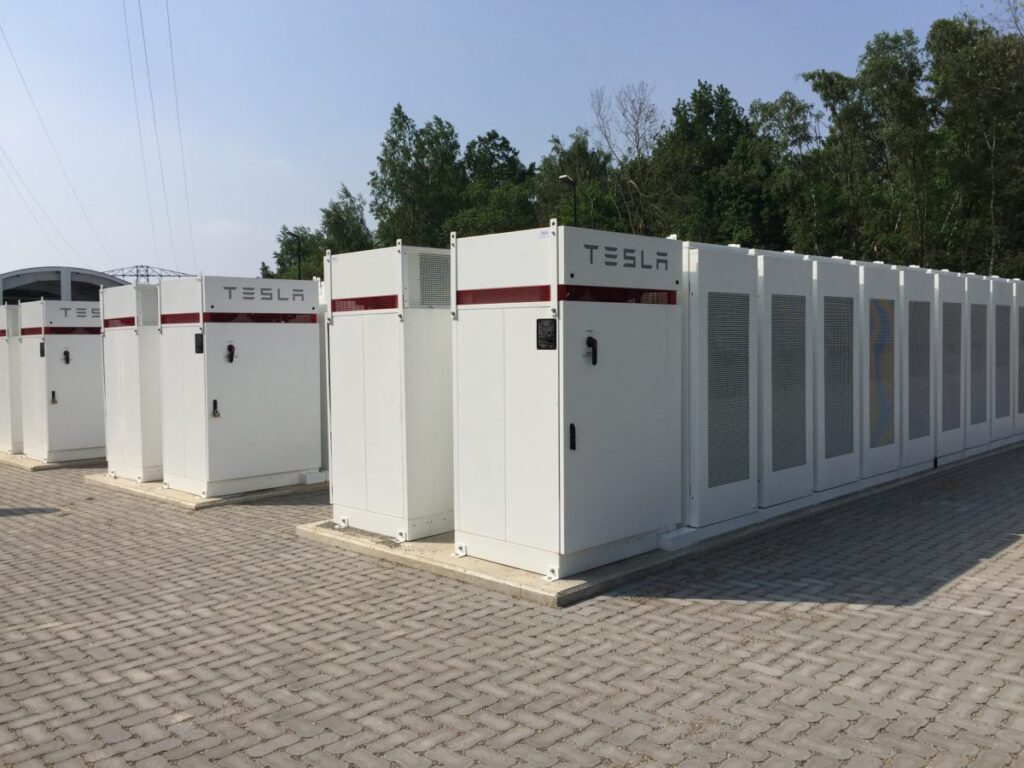
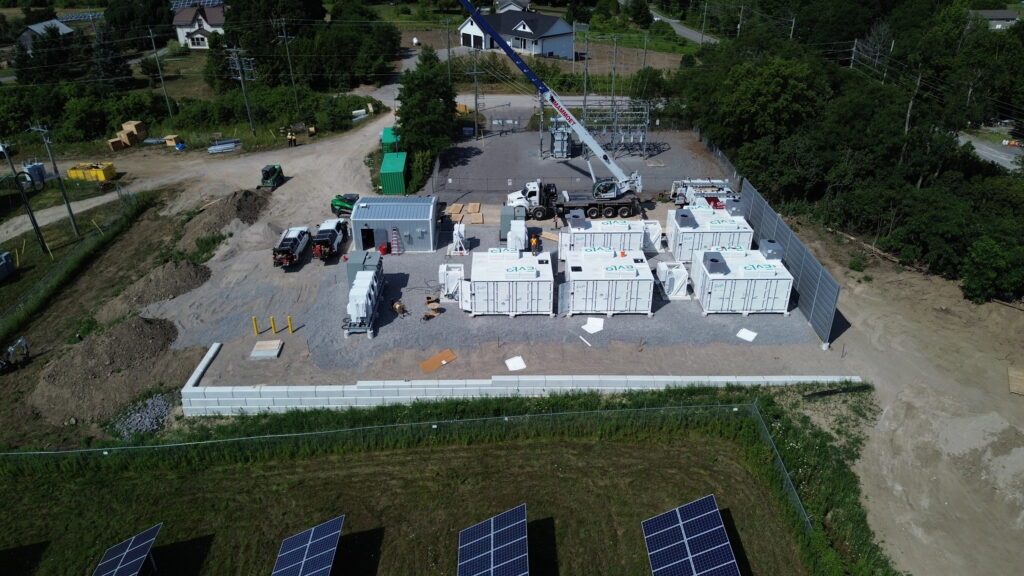
PowerBank Corporation (previously known as SolarBank Corporation) has begun installing its first battery energy storage system (BESS) in Ontario, marking the company’s entry into Canada’s grid-scale storage market. The 4.99 MW project, located in Cramahe, will provide 4.74 MW of daily capacity for 251 business days a year under a long-term contract with Ontario’s Independent Electricity System Operator (IESO).
“This milestone marks PowerBank’s bold entry into the rapidly growing battery storage market,” the company said. The first five of nine EVLO battery containers have been delivered to site. Due to PowerBank being a listed company, an unusual amount of financial details are available.
The project is co-owned by PowerBank and a partnership of First Nations communities. It was acquired as part of PowerBank’s 2024 purchase of Canadian developer Solar Flow-Through Funds Ltd., and is one of several battery storage projects expected from that acquisition.
Construction work is being handled by Anvil Crawler Development Corp. under a $1.85 million contract. Financing is supported by a $25.8 million loan from RBC, which is also acting as Green Loan Structuring Agent.
The project has a 22-year IESO contract with a fixed capacity payment of $1,221/MW per business day, notably higher than the $876/MW average for storage projects in the same tender. It also qualifies for the 2024 Clean Technology Investment Tax Credit, covering up to 30% of eligible capital costs.
At 4.99 MW, the project sits just under the 5 MW regulatory threshold that can trigger more complex grid connection and permitting rules in Ontario.
PowerBank noted that a second Ontario battery project, part of the same development pipeline, remains delayed due to unresolved zoning and permitting approvals. The company has notified IESO of a potential force majeure event, and is in discussions with battery supplier EVLO over rescheduling payments linked to that project.
PowerBank says its development pipeline now exceeds 1 GW across North America, with over 100 MW already built.
Written by