Record year in prospect with 18 GW of battery capacity expected in the US

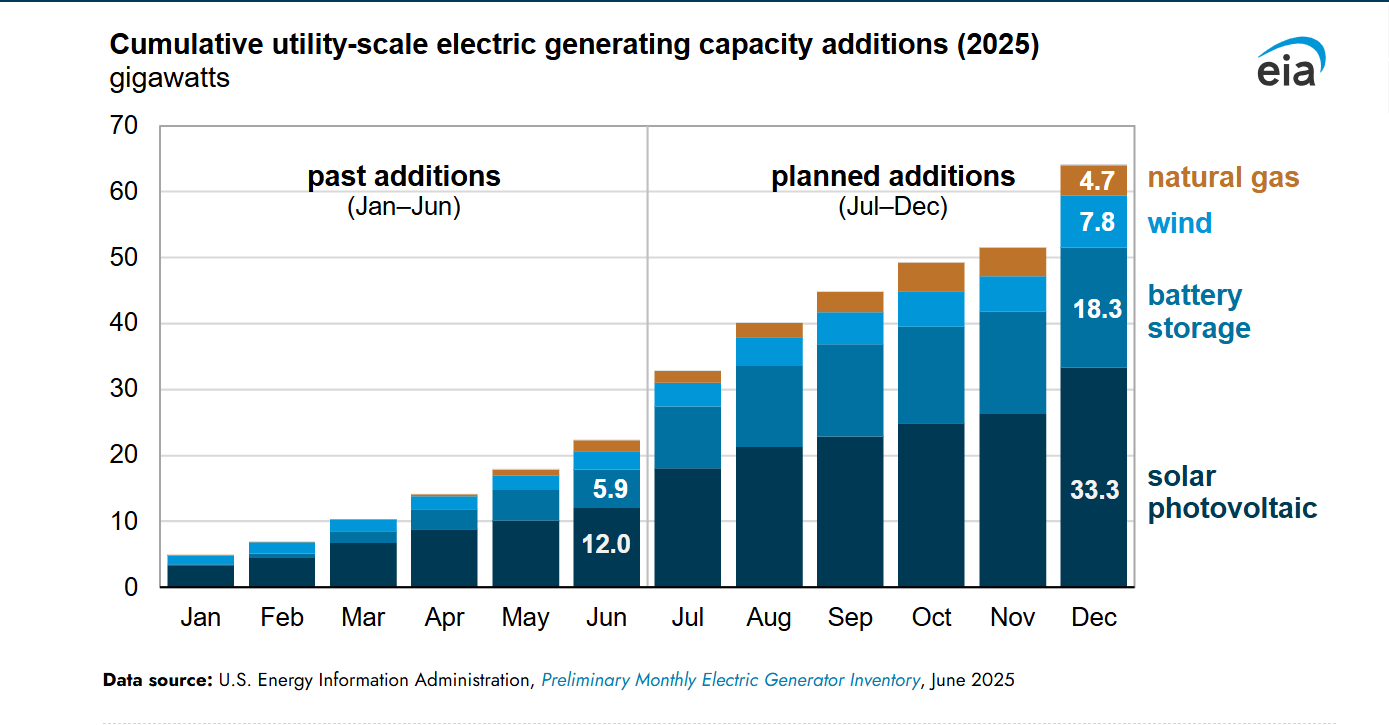
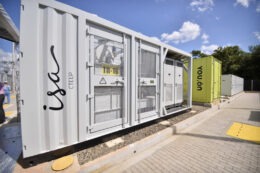
The US Energy Information Administration (EIA) has predicted battery energy storage could account for 18.3 GW of a potentially record-breaking 64 GW of new electricity capacity planned in the United States this year.
Despite ongoing challenges, battery energy storage systems supplied around 5.9 GW – 26% – of the new capacity added in the first half of the year, according to the EIA, with around half of those facilities in Arizona and California. Battery projects in Texas could add 7 GW of this year’s new electric capacity, according to the EIA, with most of the Texan sites due in the second half of the year.
If all of the planned 18.3 GW of battery capacity take shape, that would mark a record year for the energy storage technology in the United States.
The previous new-electric-capacity record for the United States was set in 2002, when developers added 58 GW of capacity, 57 GW of which was natural gas.
But this time, the record year for installations will be led by renewable energy instead. Solar is expected to account for 33.3 GW of the planned 64 GW this year. That is set to be followed by battery energy storage, 7.8 GW of wind, and 4.7 GW of natural gas, said the EIA.
Solar deployment is heating up as the year goes on. About 12 GW were added in the first half but over 21 GW is expected to be deployed in the second half of 2025. This is likely due to a mix of seasonality of installations and due to a shifting policy landscape. Now that the uncertainty of the One Big Beautiful Bill Act has subsided, project timelines are being accelerated to meet the tightened deadlines for federal clean energy tax credits.
About 27% (3.2 GW) of the solar capacity added so far in 2025 is in Texas, said the EIA, and developers plan to bring another 9.7 GW of solar online in Texas in the second half of this year. Last year, Texas surpassed California as the state with the most utility-scale solar capacity.
The EIA noted, in early 2025, that about 8.7 GW of fossil fuel capacity was expected to be retired this year, led by the shutdown of coal plants. However, 3.6 GW of planned retirements have been delayed or cancelled. This includes cancelled or delayed plans to retire the coal-fired Units 1 and 2 of Brandon Shores (1.3 GW), and oil-fired Units 3 and 4 of Herbert A Wagner (700 MW), in Maryland, as well as the natural gas-fired Units 1, 2, and 3 of the V H Braunig plant (900 MW) in Texas. The EIA said coal will account for 71% of retired capacity this year, followed by natural gas, at 19%.
(Read: “Fossil retirements continue, but pace slows and may reverse”).
From pv magazine USA.
Written by




Popular Posts