How batteries can change a data center application from a “no” to a “yes”

While the AI-fueled rise in energy demand has stolen the media spotlight, another just-as-critical but less discussed piece of the data center puzzle is waiting in the wings for its time in the limelight: utility approval.
Yes, demand is surging, but without an “okay” from the local utility, a freshly built data center could end up with its computers sitting cold if the utility isn’t prepared to approve a long-term large load request.
“Data centers and large industrial users have told us that they have a hard time getting megawatts at all, let alone getting them fast,” Matt Barnes, the chief commercial officer at Calibrant Energy, told ESS News. Calibrant provides large energy users with onsite energy solutions. “If you go about it a certain way, you can turn the ‘No, you can’t have power’ into a ‘Yes, you can have power, under these conditions.’”
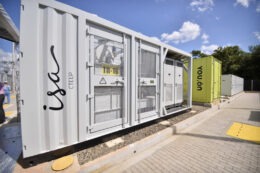
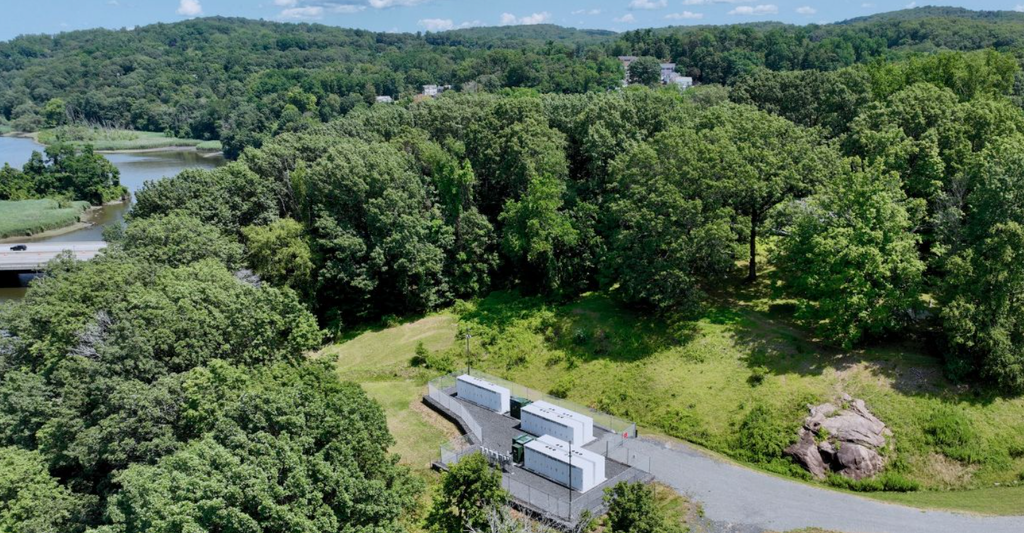
One of the best ways to sweeten the deal and streamline the path to power? Onsite energy storage and power generation.
Barnes explained that the inclusion of a battery can allow data centers to synthetically reduce their apparent load during peak hours, which may be enough to change the calculus and flip that rejection into an approval.
Here’s what it could look like in practice. A data center wants 100 MW; let’s say the utility reviewed their request, compared that with future coverage projections and found that during the hottest summer hour, there’s only enough capacity to give the data center 50 MW.
“In a lot of cases, the utility would either say ‘No’ to taking on the project entirely or would only accept it if the data center agreed to build a 50 MW facility instead of a 100 MW one,” he said. That cuts the data center’s growth in half. But, with on-site storage, data centers can come back with a counteroffer. “We’re now able to say that in those hottest hours, we can use our battery to reduce the data center’s net load such that it stays below the 50 MW level you can give us at that time.”
“By solving that ‘problematic 50 MW’ for the utility, it becomes much easier for the utility to say ‘Yes’ to a 100 MW load,” he added.
Barnes also noted that sometimes, the answer isn’t “no” forever, but a “no” for the next few years until the next transmission line is built. But many customers don’t want to wait years to bring their projects online; batteries enable enough flexibility to help them glide through common pain points in the process and to serve as an attractive grid asset for the utility.
“There’s a misconception in the market that data center flexibility means turning off servers, but it doesn’t have to work that way,” he said. “A flexible on-site asset lets you appear to the grid as if you’d turned off servers without doing it [by switching your energy usage from the grid to the battery system].”
That’s the crux of some of the confusion, he explained, adding that “we’re not actually asking you to shut down your power, just making it look like you did.”
It’s also a smart business decision from the data center owner’s point of view. Utilities don’t need the batteries every hour of the year, Barnes explained, though each utility does have its own unique “flavor” of challenges that can require a collaborative approach to solve.
When the battery isn’t in use, data centers can be “good grid citizens and help reduce overall costs during peak times,” which helps their primary business drivers function more effectively.
“The forward thinkers in the industry view data centers not just as static loads, but as grid-interactive systems,” Barnes added.

Written by




Popular Posts