Peak Energy to supply up to 4.75 GWh of sodium-ion batteries to Jupiter Power

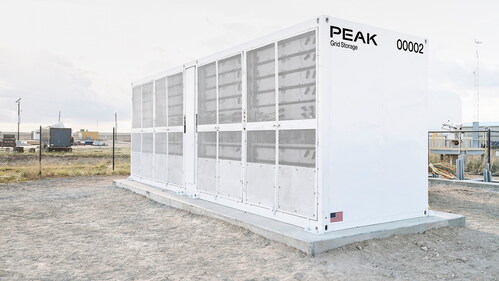
Denver-based Peak Energy has announced a multi-year phased agreement with Jupiter Power, a US grid-scale battery storage developer and operator Jupiter Power. Under the deal, Peak Energy will supply up to 4.75 GWh of its sodium-ion battery energy storage systems for deployment between 2027 and 2030.
The first phase will see Peak deliver approximately 720 MWh of storage capacity in 2027- marking the largest announced single deployment of sodium-ion batteries to date. The agreement also includes an option for an additional 4 GWh through a capacity reservation covering 2028–2030. In total, the contract’s value could exceed $500 million, representing a major milestone both for Peak and for the broader stationary energy storage sector.
While sodium-ion technology is widely viewed as a more sustainable and lower-cost alternative to lithium-based chemistries – thanks to sodium’s abundance and low extraction cost – it still lags lithium iron phosphate (LFP) in cost-efficiency and performance, particularly as LFP prices continue to fall.
Peak Energy, however, claims its technology delivers the lowest operating cost of any energy storage technology on the market today. In an interview with ESS News earlier this year, Cameron Dales, the president and CCO at Peak Energy said: “If you look at the total cost of ownership over 20 years, these passive system innovations… allow us to deliver savings of up to $75/kWh on a net present value basis. That’s more than the cost of the cells themselves.”
Peak’s sodium-ion systems are designed for minimal degradation and lower maintenance, reducing the need for augmentation over a project’s lifetime. The company’s fully passive cooling architecture eliminates active thermal management and other components that require frequent servicing, enabling safer operation and contributing to what Peak calls a market-leading total cost of ownership.
“From day one, we have believed that sodium-ion will be the winning technology for grid-scale storage, which is absolutely essential to meet increasing demand from hyperscalers and AI. Deploying the world’s largest sodium-ion energy storage system with one of the nation’s top independent power producers proves that sodium is ready for today and will dominate the future,” said Landon Mossburg, CEO and co-founder at Peak Energy.
The announcement follows Peak’s recent milestone: the commissioning of the first large-scale sodium-ion battery system in the US. Unveiled in July, the 3.5 MWh installation is now operating at the SolarTAC renewable energy test facility in Watkins, Colorado, and is run in collaboration with nine utilities and independent power producers.
Peak’s proprietary sodium–iron–phosphate–pyrophosphate (NFPP) chemistry underpins its technology. The fully passive system design eliminates active cooling and cuts auxiliary power use by up to 97%, which the company says translates to a 20% reduction in lifetime cost and 33% lower cell degradation over 20 years – yielding potential project savings exceeding $100 million.
Founded in 2023, Peak Energy emerged from stealth with a $10 million seed round, followed by a $55 million Series A in 2024 to scale production of its grid-scale sodium-ion systems. The company plans to break ground on its first US giga-scale manufacturing facility in 2027.
Peak’s ambitions echo those of Natron Energy, a California-based sodium-ion pioneer that had announced a $1.4 billion gigafactory project in North Carolina before ultimately ceasing operations in September.
Written by




Popular Posts