From 314Ah to 500Ah-plus: Chinese battery majors race into bigger LFP cells

China’s top stationary storage cell makers have accelerated the rollout of 500Ah-plus lithium iron phosphate (LFP) formats since 2025, positioning “big cells” as a near-term pathway to reduce balance-of-system complexity and lift container-level energy density.
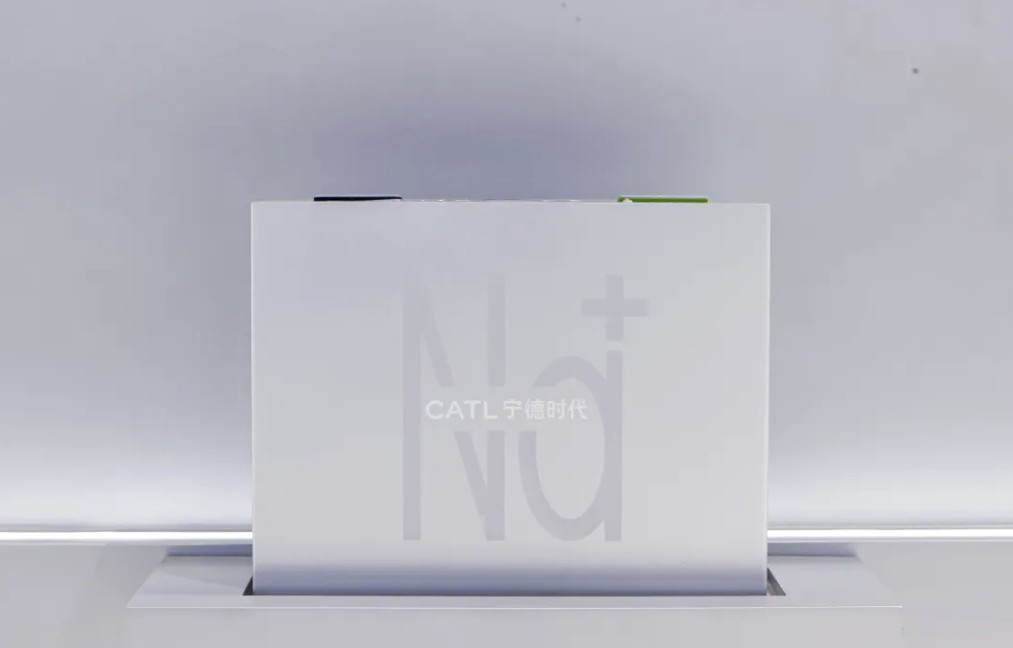
CATL is promoting a 587Ah energy storage cell as part of its large-format roadmap. The company cites a volumetric energy density of 434 Wh/L and a cycle life exceeding 10,000 cycles. CATL said it made its first deliveries in June 2025 and has installed four production lines at its Jining facility in Shandong province, with total annual capacity of 60 GWh. It also reported cumulative shipments of more than 2 GWh by December 2025.
EVE Energy is pushing its Mr. Big 628Ah product line into the market, positioning the cells around higher integration efficiency for long-duration storage systems. The company said it reached mass production and shipment milestones in December 2024 at its main manufacturing base in Jingmen, Hubei province, and continued ramping capacity through 2025 to support deliveries of its Mr. Giant system.
HiTHIUM is taking a two-track approach, scaling a 587Ah-class ∞Cell and a larger 1,175Ah ∞Cell that it says has entered production and application development for higher-capacity systems. The company reported first deliveries of its 587Ah product in August 2025 and said the 1,175Ah cell moved into mass production in June 2025. A People’s Daily report cited the 1,175Ah format as part of HiTHIUM’s push toward storage systems designed for eight hours or longer.
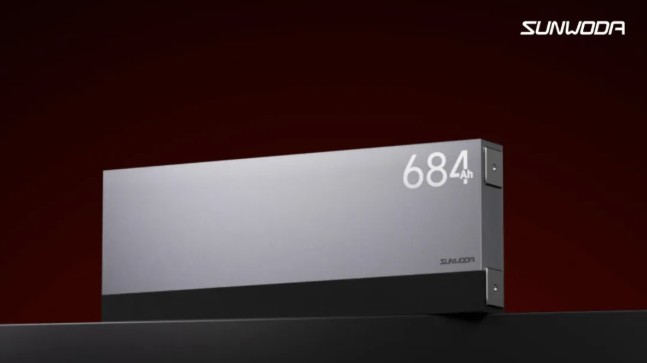
Sunwoda Energy has also entered the segment with a 684Ah storage cell and has highlighted rapid ramp-up milestones since launch. The company said it started mass production in September 2025 and marked its one-millionth cell off the line on Dec. 23. Sunwoda said the cell delivers 440 Wh/L or higher volumetric energy density and targets commercial and industrial installations as well as utility-scale storage.
Beyond the top tier, several Chinese suppliers have outlined 500Ah-plus plans or early rollouts. Envision AESC launched a 530Ah-class cell in April and has linked it to containerized BESS designs at 6 MWh or above. Cornex has released specifications for a 588Ah LFP storage cell and signaled a phased production ramp tied to new capacity additions. CALB has included 588Ah and larger formats in its ZHIJIU (Ultralife) storage roadmap, with shipments targeted for early 2026. REPT BATTERO is marketing its 587Ah Wending® cell, citing 430 Wh/L volumetric energy density and positioning it for higher integration in next-generation container systems.
The business logic is straightforward: moving from 280Ah–314Ah class cells to 500Ah-plus reduces the number of cells needed per container, cutting interconnects, weld points, sensing channels, and assembly steps. In theory, fewer components can translate into lower bill-of-materials cost, faster assembly, and higher usable energy density at the system level—provided thermal uniformity, consistency, and safety performance are maintained at scale.
The near-term market environment is supportive. BloombergNEF expects storage system costs to keep falling in 2026 (in part as supply chains mature and competition intensifies), while policy and market-design changes in large markets continue to reshape procurement and bankability requirements. Against that backdrop, 500Ah-plus formats are likely to expand from “flagship deployments” into broader tender qualification – particularly in projects seeking higher container capacities.
However, the technical and commercial barriers remain significant.
First, thermal management and safety become more stringent as cell capacity rises: more energy is concentrated in a single unit, so a single-cell fault can release more heat and increase the likelihood and impact of thermal propagation, which in turn raises requirements for heat extraction, temperature uniformity, and system-level mitigation.
Second, manufacturing yield and consistency are harder to maintain at larger formats. Longer or wider electrodes make coating uniformity, drying control, and defect suppression more challenging, while tighter cell-to-cell dispersion becomes critical because any outlier cell can have an amplified effect on performance and risk in highly integrated, megawatt-scale container systems.
Third, the market remains fragmented across multiple large-cell formats – such as 530Ah, 587Ah, 588Ah, 628Ah, 684Ah and 1,175Ah – complicating standardization for enclosures, liquid-cooling architectures, and qualification processes for integrators that want multi-vendor sourcing.
For developers and integrators, the practical question for 2026–2027 will be less about headline amp-hours and more about repeatable field performance: validated safety behavior, bankable warranties, stable supply, and multi-site manufacturing consistency. For cell makers, success will hinge on proving that “big-cell” economics survive the realities of mass production, shipping, and long-duration cycling in diverse climates.
Written by