High temperature sodium-zinc batteries: Researchers use X-rays to find reasons for capacity loss

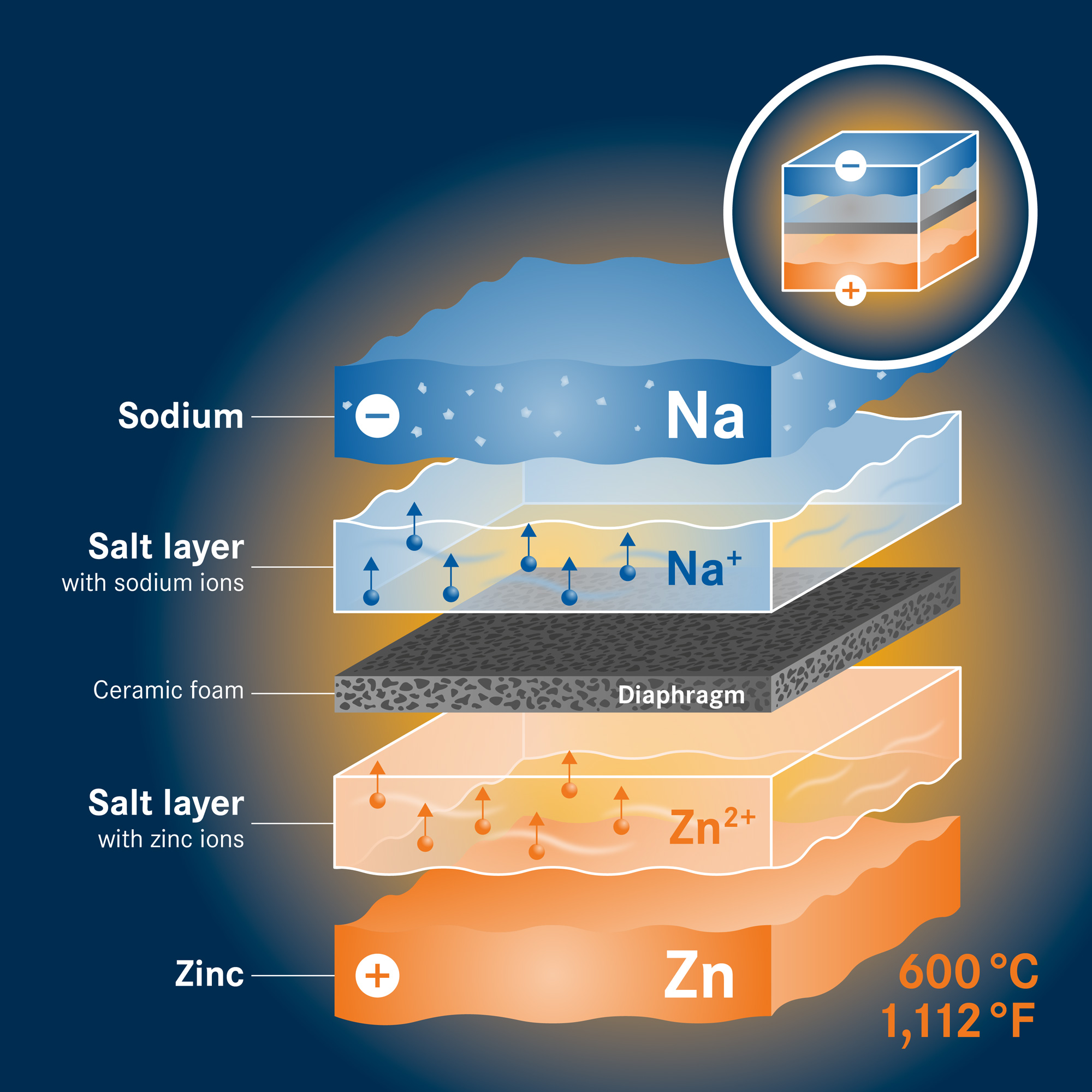
A research team at the Helmholtz-Zentrum Dresden-Rossendorf (HZDR) in Germany has directly observed, for the first time, previously hidden ageing processes inside sodium-zinc molten-salt batteries — using operando X-ray radiography to image the cells while actively operating at around 600 degrees Celsius. The technology has long been regarded as highly promising for stationary energy storage, given the low cost and availability of its raw materials, but it has so far failed to achieve the stability needed for real-world deployment.
The extreme operating temperature is, in one sense, an asset: the metals are liquid at those temperatures and can be transported exceptionally quickly within the cell. But that same dynamism makes the systems difficult to control, and until now there has been “no clear understanding of why the cells lose so much of their performance during operation,” according to HZDR researcher Norbert Weber, who coordinates the EU project SOLSTICE, under which various sodium-zinc storage concepts are being systematically investigated.
That loss of efficiency and service life had previously only been possible to infer indirectly. Conventional electrochemical measurements capture current and voltage, but they cannot produce a complete picture of what is happening inside a cell. The problem is compounded by the nature of the technology itself.
“Our battery is entirely liquid. What takes place inside it is highly dynamic,” explains Martins Sarma, the study’s lead author. A cell cannot simply be opened mid-operation — and if it is allowed to cool down, “the structures change fundamentally,” meaning any post-mortem analysis misses the point.
X-ray imaging at 600 degrees Celsius
Operando X-ray radiography sidesteps that problem entirely, allowing the team to follow the charging and discharging process in real time, at full operating temperature. The researchers hope the results will point the way toward new, simplified cell designs suitable for large-scale storage.
The imaging made the movements of sodium, zinc, and electrolyte directly visible — and delivered “an unexpectedly clear view” of one component in particular: the separator. This porous barrier between the electrodes is designed to prevent sodium and zinc from coming into direct contact and triggering unwanted side reactions. But the X-ray images revealed that under operating conditions, zinc progressively accumulates in the separator region, where it loses electrical contact with the electrode.
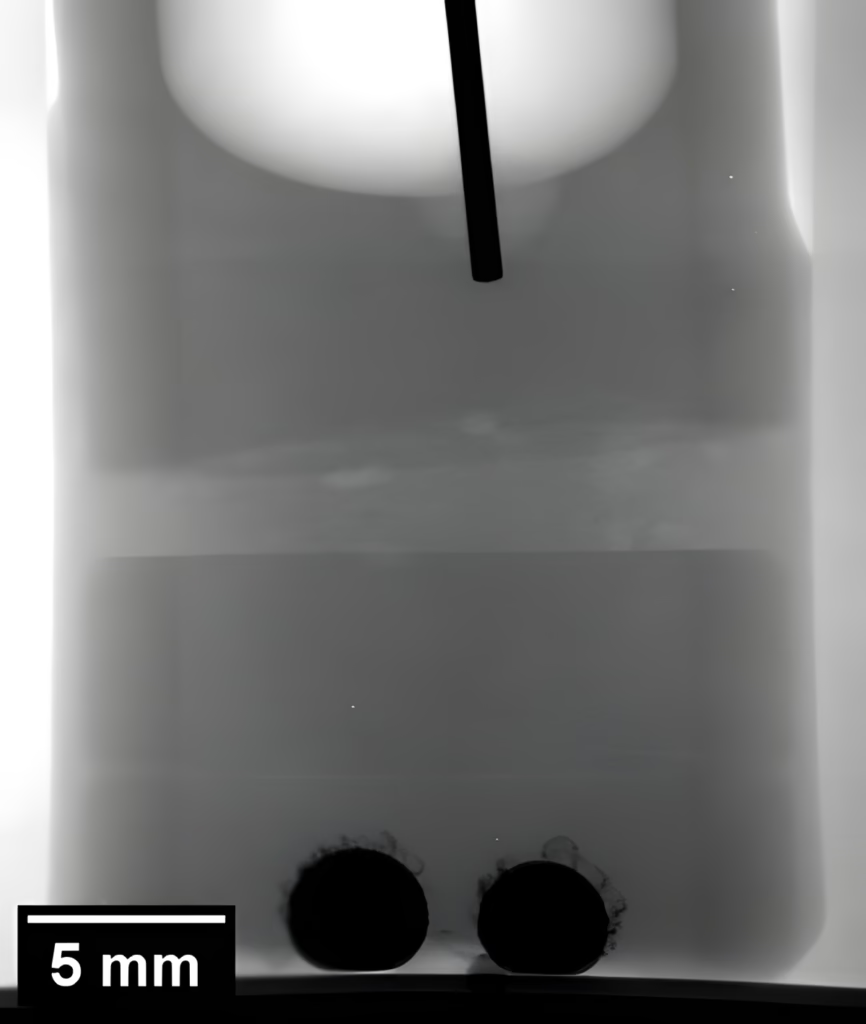
X-ray radiography of a sodium-zinc cell with sodium anode (upper part of cell, bright area around black wire), diaphragm (bright stripe in center of cell) and zinc cathode (black circles at base). Source: Martins Sarma, Natalia Shevchenko
“You can think of it like a sieve in which material gets trapped,” says Natalia Shevchenko, who works on electrochemical energy storage and its analysis at HZDR. “Over time, more and more active zinc is lost.” It is a mechanism that, for the first time, gives a clear physical explanation for why these cells age as fast as they do.
A straightforward fix, however, remains elusive. Removing the separator does stop the zinc from becoming trapped — but without it, sodium and zinc interact far more freely, accelerating the battery’s self-discharge. The team is now focused on improving the cell design to better control the transport of substances between the liquid phases, without introducing components that are complex or expensive to produce. The aim, ultimately, is what Weber describes as “robust, simple, and economical solutions” — the combination that would finally make large-scale deployment of the technology viable.
From pv magazine Germany.
Written by




Popular Posts