Financial sponsor capital increasingly complements utility investment in battery storage

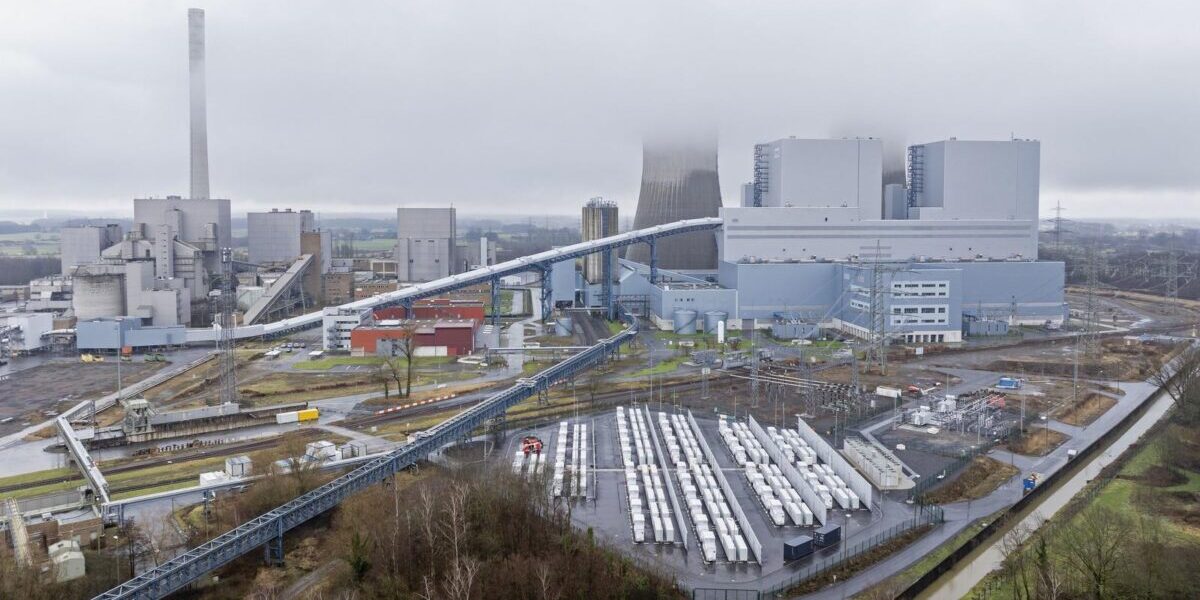
Large utilities including Enel, RWE and Iberdrola were the first movers in European BESS more than a decade ago for strategic and technical reasons, not commercial ones. These companies utilized their significant corporate balance sheets and existing in-house capabilities across engineering and project construction, power market trading and asset management to develop and operate the first generation of battery storage projects. This has allowed utility storage to become an established investible asset class suitable for private institutional capital. Consequently, infrastructure funds are now acquiring and/or establishing scalable BESS developer platforms with advanced route-to-market capabilities. By backing nimble, optimization-focused operators, these sponsors enable institutionalization and faster scale-up across fragmented markets.
Sponsors often acquire stakes in developer platforms to gain access to project pipelines and then provide construction or brown-to-green financing to build out assets. Macquarie Asset Management’s May 2025 acquisition of Island Green Power, a UK-based solar and BESS developer, is a pertinent example of this trend in action. Similarly, Generali’s Sosteneo platform’s €1.1 billion acquisition of a 49% stake in Enel Libra Flexsys in 2024 – covering approximately 1.7 GW of operational and pipeline projects – demonstrates the appeal of strategic minority partnerships with utility-backed platforms.
These investments often shift the business model of BESS companies from pure development toward integrated developer–owner–operator structures, as sponsors favor steady, long-term cash flows from operating assets. Developers, in turn, are increasingly considering partnership models that balance control and capital access, such as selling a minority stake while preserving upside through earn-outs or carried interest. One recent example is Infranity and Omnes’ acquisition of a minority stake in Power Capital Renewable Energy’s ~5 GW pipeline of solar PV and BESS in Ireland. This type of approach allows developers to leverage a sponsor’s balance sheet to progress projects to collect on delivery while maintaining alignment on pipeline delivery, a capability sponsors typically seek to preserve post-transaction.
Over the past 24 months, financial sponsors have significantly increased acquisitions and investments in European battery storage developers and portfolios, ranging from strategic minority stakes in large utility platforms to full takeovers of developer businesses and multi-gigawatt project pipelines. This surge reflects a broader shift among institutional investors toward owning flexible, revenue-generating energy assets that combine operational stability with exposure to future growth. Although the revenue stack and contracting structures in BESS differ from other energy-transition assets, major sponsors are actively raising dedicated investment vehicles to provide suitable capital pools for this emerging asset class.
Multi-gigawatt platforms and consolidation are underway
The European battery energy storage market remains highly fragmented in 2026, with numerous smaller players and siloed systems operating alongside a few larger platforms. This fragmentation creates challenges for developers seeking economies of scale and for investors aiming to expand projects across borders.
To drive cost efficiencies, investors increasingly favor multi-gigawatt platforms with centralized, scalable portfolios of multiple assets. Integrated trading, development and grid access are particularly attractive, as they allow for further operational optimization. Consequently, buy-and-build strategies are proliferating, with platforms combining capabilities and exercising greater control over asset performance to create more exit opportunities for management teams and acquirers. Smart platforms with proven execution are commanding a premium in the M&A market, as investors seek turnkey projects that are ready to operate and scale efficiently. In July 2025, Harmony Energy Income Trust was acquired by Foresight for £209.9 million, or 92.4 pence per share, a 42% premium to its share price before Foresight’s initial offer. Harmony’s platform offered operational, grid-connected assets that can be optimized and scaled by the incoming investor.
Several high-profile European projects illustrate the rise of multi-gigawatt platforms. In Scotland, Copenhagen Infrastructure Partners (CIP) is developing the Coalburn and Devilla projects, which together will offer 1.5 GW of power and 3 GWh of storage, enough to power 4.5 million homes for two hours. In France, Harmony Energy recently commissioned a 100 MW/200 MWh battery at the Nantes-Saint-Nazaire port, the largest in the country, demonstrating the integration of large-scale storage into existing infrastructure. Moreover, large multi-project BESS financings are becoming increasingly prevalent. NW Group secured a €430 million financing package from Santander CIB and Rabobank in October 2024 for its storage projects in France and Finland, and in March 2025 Constantine Energy Storage raised £180 million from a pool of lenders led by German bank Nord/LB for a 612 MW/1.652 GWh battery storage portfolio. These larger financings allow assets to be built and consolidated into large portfolios backed by institutional capital such as the sponsors behind Constantine Energy Storage; AIMCo and Railpen.
Valuation uplift through operational optimization
Battery storage in European markets is entering a new phase in which returns are increasingly determined by sophisticated optimization rather than simple market participation. The MACSE scheme in Italy, the country’s first storage auction mechanism, awards a simple fixed annual premium per installed MWh. In its inaugural September 2025 auction round, the scheme was 4x oversubscribed, compressing the weighted average closing price well below the ceiling price and curtailing the project returns for those assets. The majority of the capacity awarded went to strategic participants Enel and ENI Plenitude, rather than return-driven financial sponsors.
MACSE Round 1: weighted average closing price: €/MWh-year
As capacity auctions like MACSE become saturated, the financial performance of BESS investments in Europe will thus hinge on active management and technological agility: the ability to forecast and monetize intraday power market volatility, to preserve asset health and to operate flexibly within evolving market structures.
Outlook
As Europe accelerates toward net-zero target dates, improving overall grid reliability is crucial. Battery storage is emerging not merely as a complementary technology but as a cornerstone of the overall energy transition. Regulatory reforms, market maturation and private capital engagement are transforming BESS from a nascent opportunity into a scalable, investable asset class.
Ultimately, battery storage represents a dual opportunity: a reliable source of revenue in an evolving energy market and a critical enabler of Europe’s broader climate and energy goals, offering investors a front-row seat in shaping the continent’s clean energy future.
Lincoln is proud to serve as an active advisor for companies and sponsors navigating the exciting energy transition, and our team has completed more than 60 energy transition, power and infrastructure transactions in the last three years- including 24 in 2025 alone. Lincoln International’s deep sector knowledge and global reach enable energy clients to achieve their business positioning goals while receiving optimal transaction outcomes. As energy systems evolve toward volatility and decentralization, storage is no longer a complementary asset – it is becoming foundational.
About the authors:
Carlos Candil is a managing director at Lincoln International in London.
Carlo de Haas is a director at Lincoln International in Amsterdam.
Written by


Comments



Popular Posts