Conductive smart hydrogels as battery electrolytes: Promising for lithium, sodium, and zinc-ion chemistries

Battery research in industry and acadaemia continues to advance ideas in electrodes and electrolytes, covering materials, designs, safety, efficacy, and green credentials. In most cases for lithium-ion batteries used in stationary storage, the use of potentially flammable organic electrolytes has been a persistent safety liability and one the industry is constantly countering through often complex mitigation efforts, and expensive and destructive testing.
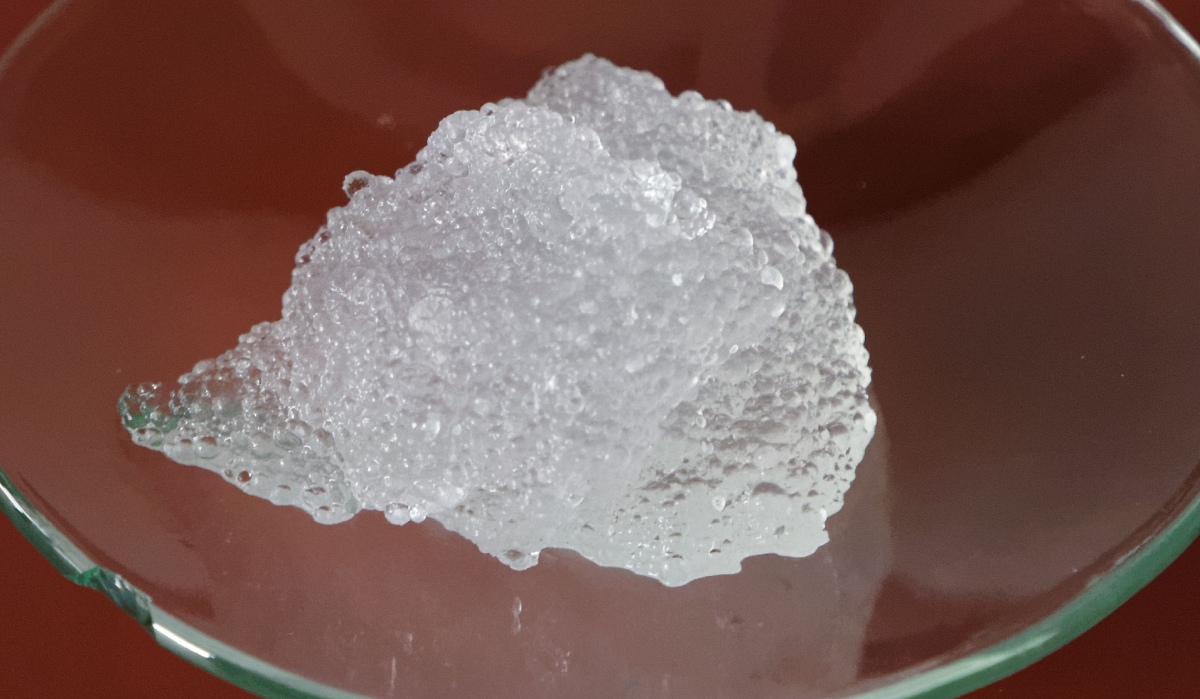
A new review paper taking a systematic review of hydrogel research from 2008 to 2025, including 186 published studies over 17 years, makes the case that conductive hydrogels are a credible electrolyte candidate. The paper notes this is the case particularly for flexible and wearable applications, however, stationary storage and lithium and sodium are potential winners. The paper was published this week in the Journal of Electroanalytical Chemistry by researchers at the University of Limpopo in South Africa.
The safety argument is perhaps the most straightforward, hydrogel electrolytes are water-based, which removes the thermal runaway contribution of conventional organic electrolytes, and their structure means they also do not leak and can self-repair.
While at this stage the commercial aspects are not clear, the performance picture is promising though it varies significantly by chemistry. For lithium-ion, a silicon nanoparticle-polyaniline composite electrode using an in-situ polymerised hydrogel achieved 1,600 mAh/g over 1,000 deep cycles, with 99.8% average coulombic efficiency from the second cycle onward. First-cycle efficiency sat around 70%, a known issue for silicon anodes.
For zinc-ion systems, where hydrogels suppress dendrite formation, a PAM/SA hydrogel achieved 85% capacity retention after 1,000 cycles at 3 A/g, and maintained stable capacity after 10,000 cycles at 10 A/g.
For sodium-ion, it becomes a problem of the periodic table: Na+ ions are larger than Li+, which makes them both slower and potentially more structurally damaging to electrodes. Hydrogel electrolytes partially compensate by providing hydrated pathways that reduce that diffusion barrier, though the review offers fewer headline numbers here than for the other two chemistries. The paper does add weight to the potential impact on zinc-ion batteries, already identified in markets as the being promising for safety through its aqueous chemistry and low toxicity.
The limitations are acknowledged in the review paper as well. Electronic conductivity remains below metal-based and conventional carbon-based electrodes, constraining rate performance and power density. Hydrogels dry out when exposed to air, degrading ionic conductivity, though this can be mitigated. Long-term cycling causes network fatigue and loss of conductive pathways, while adding conductive fillers, like high-performance fillers like graphene and MXenes are expensive, with uniform large-scale production unsolved. (The material MXenes, known for 2D properties, are discussed here in solar cell research)
Bringing it back to residential, commercial/industrial, and grid-scale BESS, hydrogel electrolytes won’t be a near-term option but remain important in developments that could emerge from labs into prototypes.
Written by



Popular Posts