SolarEdge targets C&I anew with CSS-OD 197 commercial all-in-one battery

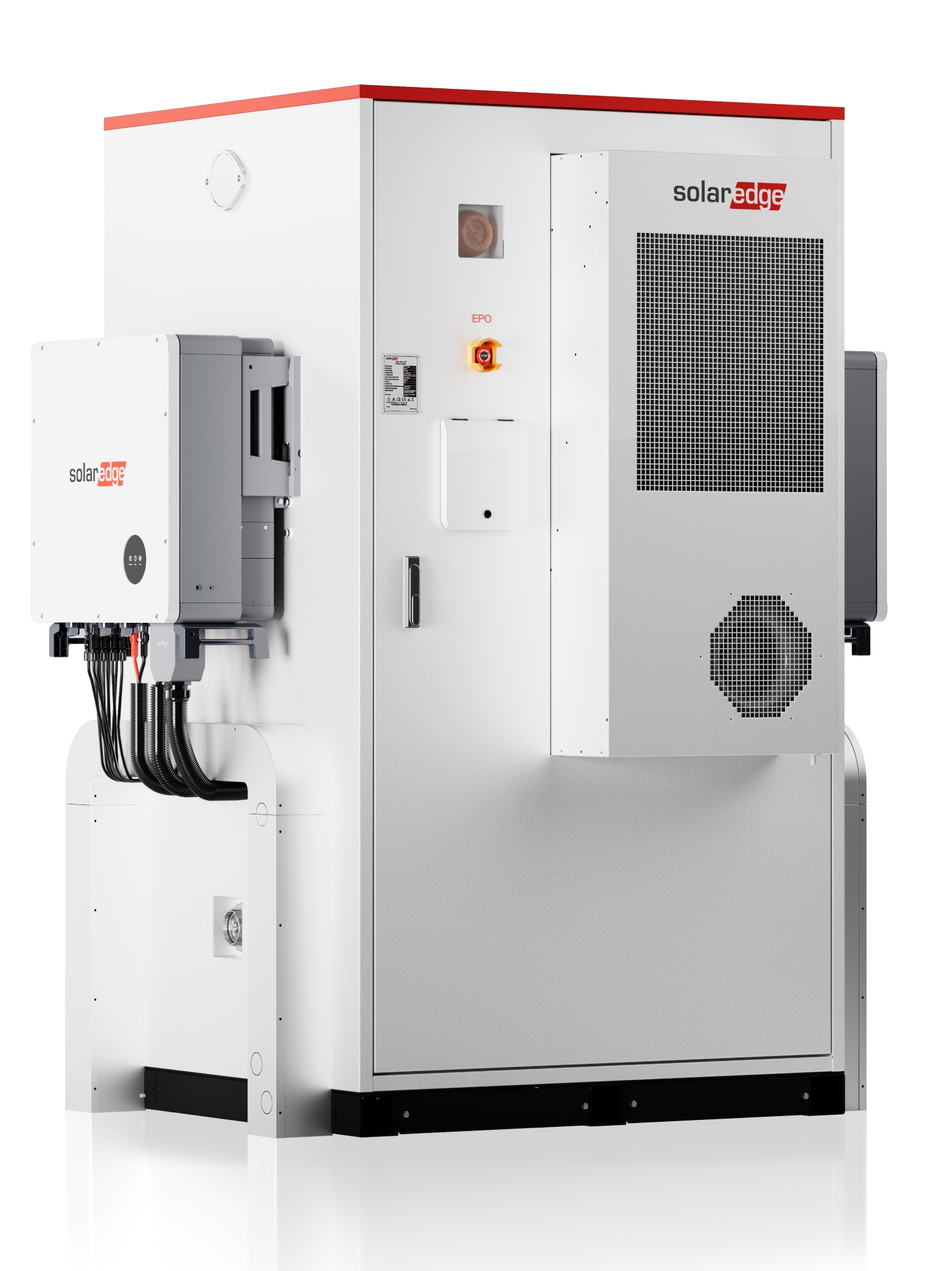
SolarEdge is stepping up its commercial and industrial batteries, with a new 197 kWh battery, the CSS-OD 197, featuring a 50 kW or 100 kW battery inverter output.
Jacques van der Bijl, Director of C&I products in Europe for SolarEdge, told ESS News that “We are currently represented and installing batteries across most relevant regions in Europe, which includes Germany, Austria, Switzerland, the Netherlands, Poland, and France.”
Previously, the company had initially targeted the Italian market and its subsidy schemes starting in 2024, with its CSS-OD 102, a 102 kWh battery in the same kind of product.
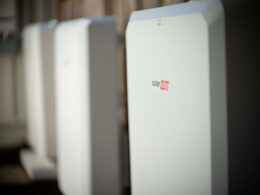
In 2026, the CSS-OD 197 core unit is a pre-assembled battery cabinet with a total capacity of 197.12 kWh and 187.15 kWh usable, based on lithium iron phosphate (LFP) chemistry. Each cabinet contains 11 battery modules, with a maximum charge and discharge rate of 0.5C.
The system scales to 1 MW / 2 MWh or 1 MW / 4 MWh, depending on the configuration of the C-rating of the battery or the discharge speed, and is therefore modular at the site level, and van der Bijl said SolarEdge had already received demands at the top-end of the 1 MW / 4 MWh options, which include a full 20 inverters.
Explaining why the 197 is now on the market while the 102 remains as well, van der Bijl said, “We realized that we had quite a significant amount of sites that were going into multiples of the 102, and of course when you go into multiples of the 102 you end up in a discussion around what is the best cost-effective solution. Bringing in a bigger basis of a solution with 200 kWh is a more cost-effective solution, especially in the larger applications.”
That said, the 102 edition remains, as it continues to serve smaller commercial sites. Explaining the 50 kW or 100 kW power options, van der Bilk said, “Before, we were actually limited to 50 kW per battery cabinet. Right now we have the choice between 0.5 C or 0.25 C — customers that are interested in higher power can choose for it and go to 100 kW,” which happens via the option of two 50 kW inverters per cabinet.
The system doesn’t act as back-up power, offered only as an on-grid solution, as was the 102, though van der Bilj says SolarEdge is “definitely aware” of this trend and “definitely planning” to offer a solution in this market.
The C&I market opportunity in Europe: Grid limitations, end of FIT
It’s no secret that the C&I market in solar and storage hasn’t come on as strongly as the lower-end residential market, and the utility-scale market. But van der Bijl is expecting that to change due to market dynamics, grid congestion, and flexibility.
Many cases will apply to those PV installations in various European countries that have previously had access to feed-in tariff schemes that are moving to self-consumption as the financial benefits and subsidies end.
“Many businesses are exporting a significant amount of energy and consuming a significant amount of energy outside of the production hours. Our investment right now brings [the CSS-OD 197] to market this quarter, to be able to apply Time Of Use tariffs to those sites so that the EMS can adjust to the need of that customer,” he said, explaining the SolarEdge ONE for C&I energy management platform, which optimizes for on-site generation, self-consumption, peak shaving, and tariffs.
“Peak shaving can help businesses expand their businesses, knowing that in the coming five to ten years, their grid connection will not be expanded as they need it. That’s why we also have the option of peak shaving within our solution, which is a very relevant function for many of those customers when they make this decision.”
In addition, businesses are meeting the demands of clients and customers.
“One of the first things that comes up, especially for companies that don’t have PV deployed or cannot have PV deployed, is the grid limitations — you go to your grid supplier and tell them you need an expansion on your grid connection because you’re expanding, and you get an answer like: fine, but not in the coming few years. So for example, you’re deploying EV chargers and then you suddenly realize: it’s nice that I have 10 chargers on my parking spot, but if I want to actually use them actively during the day, I don’t have a grid connection that actually supports that.”
Further tech specs, pricing
The inverter on the CSS-OD 197 itself is three-phase rated at 50 kW, with up to 97.5% efficiency. The system doesn’t support UPS-level switchovers but has a system response time specified at around 1.2 to 1.5 seconds.
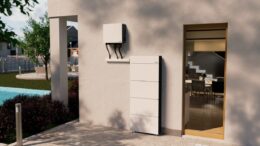
The cabinet measures 2360x1300x1200mm and weighs 2,360 kg. It is rated IP54 and can be installed indoors or outdoors, with integrated HVAC cooling and noise levels below 70 dBA.
Safety is handled through a layered approach across cell, module, and cabinet levels, including integrated fire detection and suppression, thermal runaway mitigation, and multi-sensor monitoring for heat, smoke, gas, humidity and flooding.
The system carries a 10-year product warranty, with performance guaranteed for 8,000 cycles or 10 years to 70% state of health.
As mentioned by van der Bilk, the system is integrated with the SolarEdge ONE for C&I energy management platform, which is designed to optimise on-site generation, storage and consumption, including use cases such as self-consumption, peak shaving and tariff optimisation.
In terms of pricing, the wholesaler Midsummer in the UK lists the CSS-OD 197 for £48,809.6 on its public website, with a note that additional trade discounts may apply.
Written by
Comments