ESS Tech to add 8.5 GWh of US-made sodium‑ion batteries to its portfolio

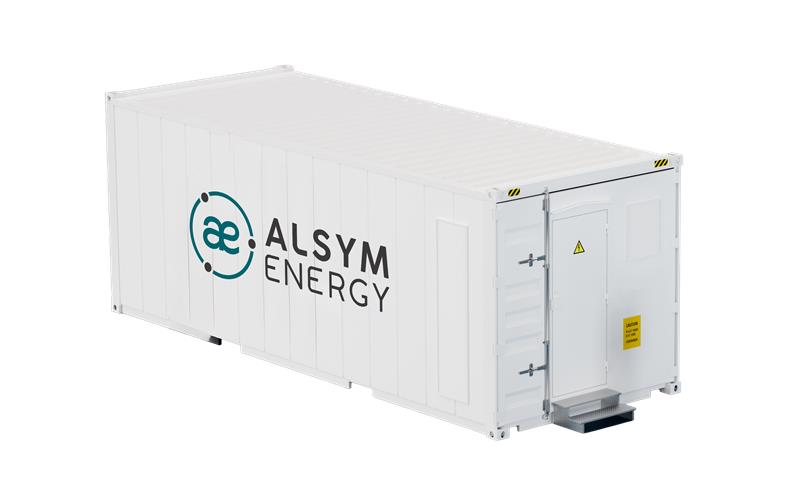
US-based ESS Tech is targeting entry into the short- and medium-duration storage segments with non-lithium-ion storage solutions. Under a letter of intent for a strategic partnership with Alsym Energy, the long-duration storage specialist plans to add 8.5 GWh of sodium-ion cells and modules to its portfolio.
Through this initiative, ESS Tech aims to expand its presence in a market segment historically dominated by lithium-ion technologies and to develop a broader non-lithium storage offering across multiple duration ranges, with an emphasis on alternative chemistries designed to balance performance, safety, and cost.
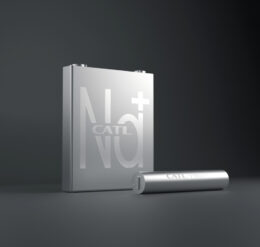
Massachusetts-based Alsym Energy officially introduced its Na-Series in October 2025, describing it as non-flammable and non-toxic. The products use materials not sourced from foreign entities of concern (FEOC) and are positioned to support a lower levelized cost of storage (LCOS).
Alsym has published specifications for its Na-Series NFPP+ cells, including an energy density of 135 Wh/kg and 250 Wh/L – which is well below the latest lithium iron phosphate systems – and an operating temperature range of -40°C to 60°C, which is wider than most lithium-based alternatives. The cells are reported to deliver over 10,000 cycles (or approximately a 20-year service life), charge/discharge rates of 2C to 4C, and round-trip efficiency above 95%.
“Alsym’s sodium-ion Na-Series is an ideal solution for ESS’s short- and medium-duration applications where high power, fast cycling, and rapid response are paramount” said Randall Selesky, Chief Commercial Officer at ESS Tech. He added that ESS Tech’s existing Energy Base® iron flow platform is optimized for 8–24 hour long-duration use cases, where deep daily cycling, 25-year asset life, and minimal capacity degradation contribute to low lifetime storage costs.
Selesky also noted that, unlike lithium-ion batteries and many other sodium-ion systems, Alsym’s Na-Series is non-combustible and thermally stable, which can reduce system complexity and lower total cost of ownership by minimizing requirements for fire suppression and HVAC infrastructure.
Alsym reports that its chemistry has undergone rigorous safety validation. In accelerated rate calorimetry testing, Na-Series cells were heated from room temperature to 400°C without entering thermal runaway. In nail penetration tests on fully charged cells, no rupture, fire, or flame was observed.
The Na-Series was developed using a proprietary physics-informed AI platform designed to accelerate materials discovery and battery development. The company states that this approach enabled identification, testing, and development of its sodium-ion chemistry in under one year. The platform combines physics-guided AI, machine learning, and automated closed-loop experimentation to rapidly evaluate battery chemistries and optimize materials, cell design, and operating conditions beyond traditional trial-and-error methods.
According to Alsym, continuous electrochemical and materials diagnostics support deeper understanding of performance and underlying mechanisms, enabling more targeted optimization and smoother scaling from lab to commercial production. The system also enables end-to-end AI-driven co-design of materials, cell architecture, and manufacturing processes to jointly optimize performance, safety, cost, and manufacturability.
As a result, Alsym’s Na-Series is intended for a broad range of applications, including utilities, microgrids, data centers, commercial real estate, industrial facilities, maritime uses, defense systems, and residential storage. The company is advancing its commercialization roadmap and plans to begin shipping cells and modules to strategic partners starting in Q3 2026.
Written by

Popular Posts