Residential storage shipments hit 35 GWh in 2025 in global boom

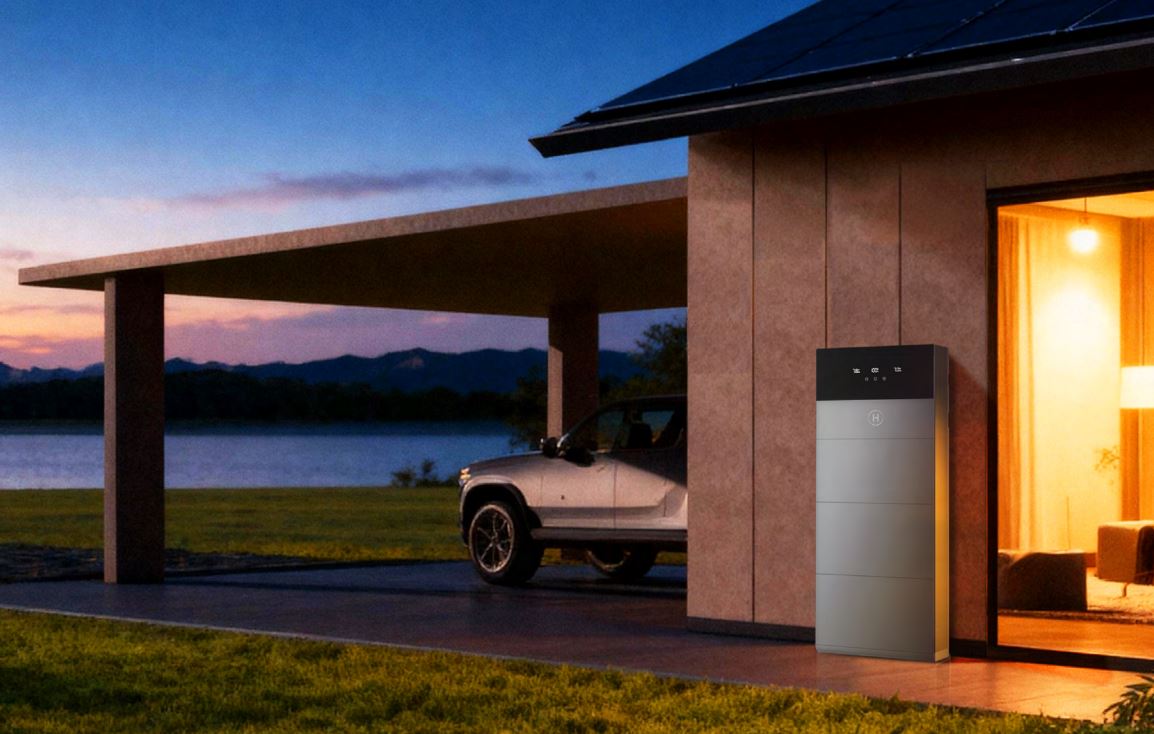
Hoymiles and TÜV SÜD have released a white paper on the global residential energy storage market, using the launch of Hoymiles’ new HiOne all-in-one system as a case study. The white paper presents market data drank from Wood Mackenzie, BloombergNEF, InfoLink Consulting, and EUPD Research, among others, and correlates with existing reoprts. TÜV SÜD contributed the certification and standards sections of the document.
Growth in residential storage
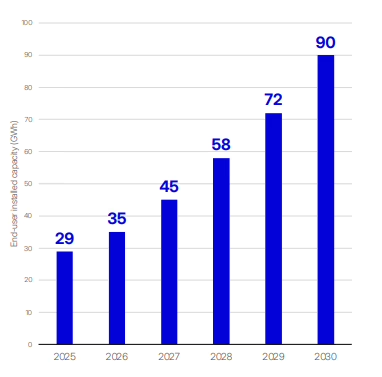
Global residential storage shipments reached 35 GWh in 2025, up nearly 50% year-on-year, with cumulative installed capacity now above 187 GWh. On an installed basis, residential storage came in at 29 GWh — the gap reflecting channel inventory and slower destocking.
The biggest story is Australia, as has been closely covered on ESS News and pv magazine Australia. The country recorded 6.5 GWh of residential installations in 2025, a 261% year-on-year increase, making it the world’s largest single residential storage market ahead of any individual European country. Federal subsidies of up to AUD 300/kWh, stacked with state-level incentives, have driven the surge, with a rush expected ahead of subsidy phaseout in May 2026.
South Africa came in third globally at 2.1 GWh, up 110% — driven entirely by grid instability rather than subsidies, which remain absent.
Europe added 9.8 GWh of residential storage in 2025, down 6% year-on-year, though Italy’s 40% collapse following the Superbonus phaseout is doing most of the damage. Strip Italy out and the rest of Europe grew 18%.
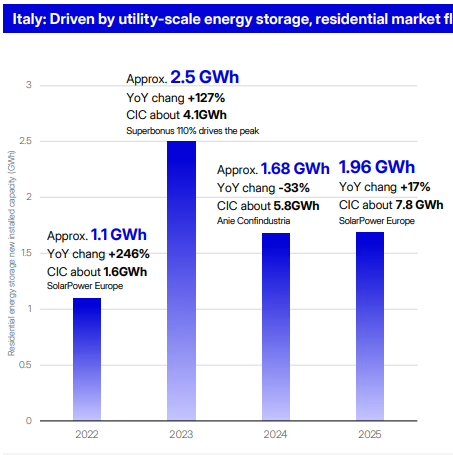
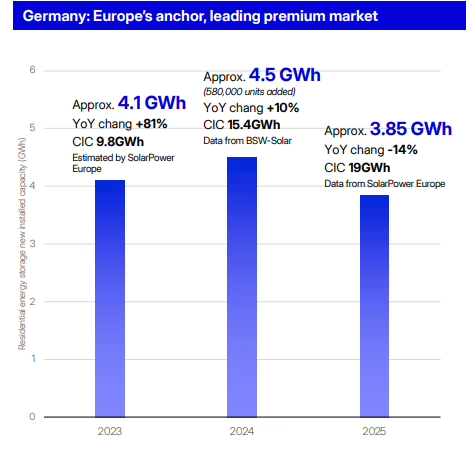
Germany held at 3.85 GWh with residential storage penetration now above 15%. Average system size in Germany grew from 8.6 kWh to 9.3 kWh, with households increasingly sizing for 5–10 years of anticipated demand including EV charging. Around 40% of new German users are opting for VPP-compatible products.
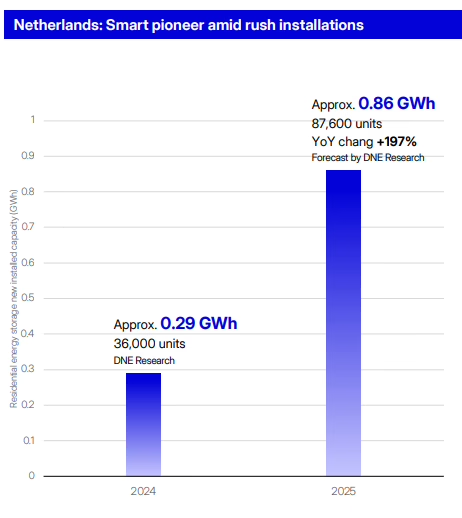
The Netherlands nearly tripled to 0.86 GWh ahead of full net metering elimination in 2027. The UK more than doubled in the first half of 2025 alone.
The white paper’s broader finding is that software is now the primary battleground in residential storage, not hardware. Dynamic tariff optimisation and VPP integration are increasingly baseline requirements in mid-to-high-end European products. AI energy management is being treated as a core differentiator rather than a feature.
On the product side, Hoymiles launched the HiOne in previous announcements. In the white paper, details of safety and design choices are deleved into, for the third-generation all-in-one system combining hybrid inverter, battery packs, BMS, and EMS in a single unit. It uses 314 Ah LFP cells, scales from 8 kWh to 64 kWh across eight parallel modules, carries IP66 rating and a 15-year warranty, and claims a 15-minute installation time via stackable modular design and spring-terminal wiring. Grid-tied to off-grid transition is claimed at 0 ms.
The global residential battery market is projected to reach USD 19.3 billion by 2030 from USD 10.9 billion in 2025, at a CAGR of 12%, with peak growth of around 20% forecast for 2025–26 driven by subsidy-front-running in Australia and the Netherlands.
Written by
Comments





Popular Posts