US national lab commissions first prismatic battery cell line in DoE complex

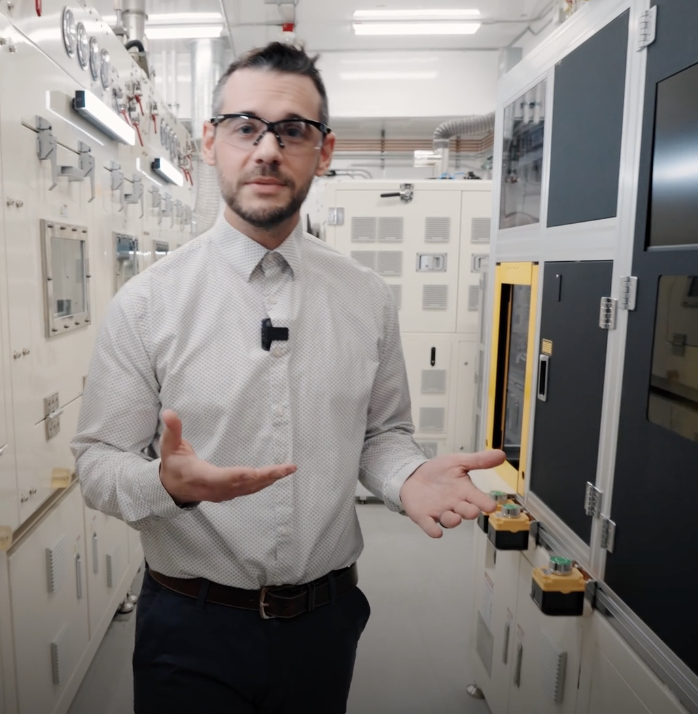
The Pacific Northwest National Laboratory (PNNL) has commissioned what it says is the only prismatic battery cell production line operated by a US Department of Energy (DoE) national laboratory, adding a pilot-scale prismatic manufacturing capability within the complex.
The line is located at the DoE’s Grid Storage Launchpad (GSL) in Richland, Washington, funded by the DoE Office of Electricity as a national user facility. It occupies a 1,400-square-foot ultra-low-humidity dry room and comprises 16 pieces of integrated manufacturing equipment.
The manufacturing sequence moves from slurry coating onto copper and aluminum foils through calendaring, slitting, notching, Z-stacking, tab welding, cell enclosure sealing, electrolyte filling, and formation cycling.
“Once we seal that filling port, the cell’s assembled, and we can go take it, do testing, and start our research,” said Mark Weller, a materials scientist at PNNL and principal investigator on the project, who described the electrode coater as “the heart and soul of our prismatic line.”
The line completed testing in February and researchers are finalizing operating procedures ahead of a major validation project intended to demonstrate consistent high-quality cell production across chemistries.
“With the new prismatic line, we can create, test and demonstrate real-world prismatic cells at an industrially relevant scale,” said Adam Jivelekas, GSL operations manager. “We can help external researchers or industry partners test and validate their prismatic cell designs.”
Access is available through structured programs at the facility, and PNNL said it is seeking private battery companies that want to test their own chemistries in the prismatic format.
Prismatic cells are built with a heavier metal casing than cylindrical or pouch formats.
“If you have better heat transport, if the cells are more mechanically uniform, if they’re packed more efficiently, all those things can translate to not just higher safety, but lower cost,” Weller said.
The format’s stacking efficiency can deliver higher energy density at the pack level compared with cylindrical cells, making prismatic cells increasingly attractive for grid applications, though cylindrical and pouch formats retain a presence in large-scale systems depending on supplier and application.
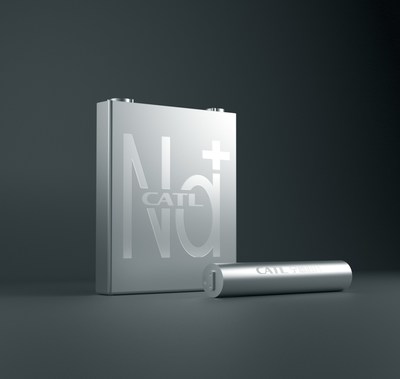
To validate the line’s capabilities, PNNL researchers selected two chemistries for initial prismatic cell production: sodium-ion and lithium iron phosphate. Sodium is seen as a potential alternative to lithium-based chemistries in grid storage applications because of its greater abundance. LFP relies on iron rather than the nickel and cobalt used in conventional lithium-ion chemistries and tends to be safer.
“Making a coin cell takes a few milligrams of material; making a prismatic cell takes at least a kilogram,” Weller said. “When you scale up like that, you can’t assume that a chemistry that worked well in a coin cell will work just as well in a prismatic cell.”
The validation results will form a baseline for prospective industry collaborations.
“Here are our results for these chemistries, here’s our process, and here’s what we can do for your chemistry,” Weller said. “Because of the benefits of the prismatic cell design and the categorically larger scale of cell fabrication and testing, we see PNNL’s prismatic line as a unique way to connect early-stage battery concepts with industry validation and help facilitate a smoother handoff to get advanced battery concepts to market.”
More about
Written by



Popular Posts