Gridmatic study shows big gap in grid-scale battery performance in California

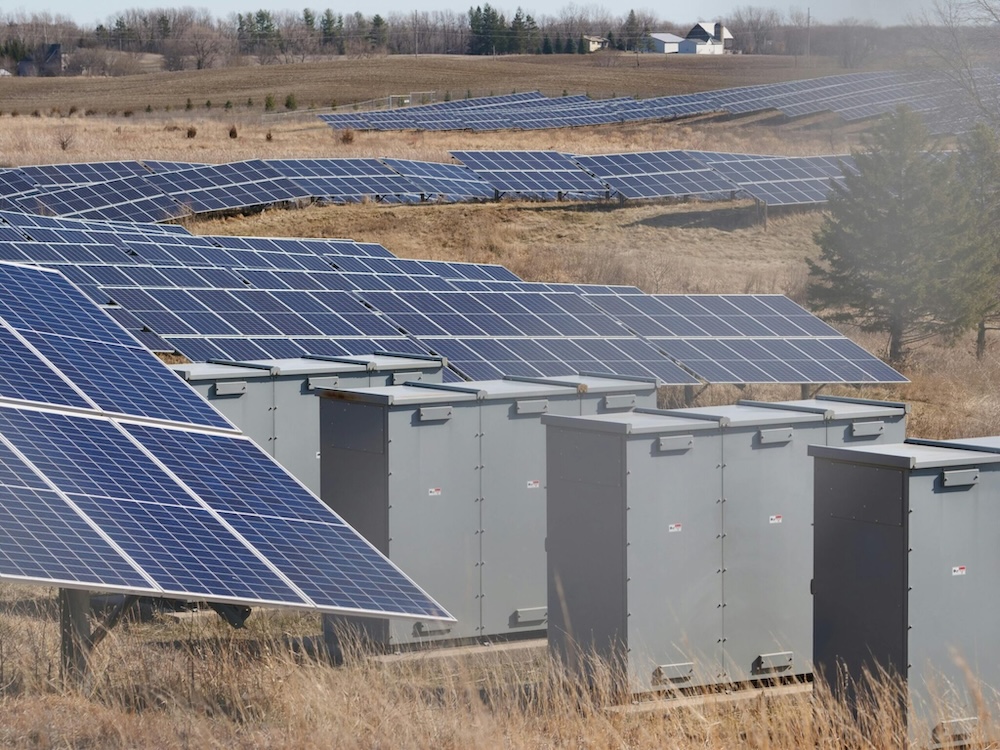
California’s battery storage capacity has expanded to 17.4 GW over the past six years, yet tracking the financial performance of individual assets remains difficult. Unlike ERCOT, CAISO anonymizes public market data, masking resource identities and obscuring asset-level activity. To close this visibility gap, power optimization firm Gridmatic published its CAISO Storage Report 2024-2025 in June 2026.

The study uses public market inputs, regulatory filings, and a proprietary shadow-clearing engine to unmask and reconstruct the performance of 30 battery energy storage systems (BESS) representing 2.3 GW of capacity.
The findings show that location and market pricing are only partial drivers of battery revenue. Instead, operational execution and bidding strategies create a wide performance gap between top- and bottom-performing assets.
Net revenue from energy and ancillary services (E&AS), which excludes Resource Adequacy (RA) capacity payments, varied significantly across the 30 studied batteries.
To normalize financial tracking across assets of different sizes, the industry measures performance in dollars per kilowatt-month ($ per kW-month), representing the merchant revenue generated relative to a battery’s total instantaneous discharge capacity. To calculate this metric, an asset’s total monthly merchant earnings are divided by its nameplate power capacity in kilowatts. For example, a 100 MW (100,000 kW) battery that brings in $300,000 in monthly market revenue equates to $3 per kW-month, allowing developers to directly evaluate operational efficiency regardless of project size.
Revenues across the studied sample ranged from less than $1 per kW-month to over $6 per kW-month, against a fleetwide median of $2.67 per kW-month.
According to the report, 19 of the 30 studied batteries earned less than $4 per kW-month, and 16 earned less than $3 per kW-month. This revenue dispersion persists even among batteries operating within the same pricing zone and facing identical market exposures.
To evaluate operational efficiency, Gridmatic benchmarked asset performance against “TBx,” a standard lossless model that assumes a battery buys the lowest-priced hours and sells the highest-priced hours in the Day-Ahead Market based on its duration. Only five of the 30 studied assets exceeded their corresponding TBx benchmark, while the median capture rate sat at 82.3%.
Why the spread?
The report attributes this widespread underperformance to rigid bidding strategies. In CAISO, market participants frequently rely on static bid curves submitted once per day.
The analysis found that 20 out of 30 assets used a static Regulation Down bid curve in 75% or more of active months, and 12 of those assets maintained a completely static curve 100% of the time. Additionally, 13 out of 30 assets used static energy bid curves for at least half of the study period. These static curves prevent batteries from adjusting to real-time price volatility and shifting conditions across CAISO’s Day-Ahead, Fifteen-Minute, and Real-Time Dispatch markets.
Physical asset availability remains a challenge for revenue generation. The fleetwide average availability across the sample was 79.7%. Prolonged downtime was heavily driven by hardware failures and safety incidents.
For example, the Millikan Avenue asset experienced roughly 56% total downtime during the study period. Fire events significantly sidelined multiple assets, including the Gateway project, which was offline for 24% of the period, and Vistar’s units at Moss Landing, which have remained offline since a fire incident in January 2025. Outside of lost merchant revenue, these low availability levels expose asset owners to strict financial penalties under CAISO’s Resource Adequacy Availability Incentive Mechanism (RAIIM).
The gap between passive bidding and active optimization represents a material loss in project returns and grid utilization. The top-performing asset in the dataset was the 100 MW / 400 MWh Caballero battery in Nipomo, California. Owned by Alpha Omega Power and optimized by Gridmatic, the asset achieved a 141% TBx capture rate and earned 2.45x the median asset’s revenue per kW-month. The project utilized automated machine learning forecasts to adjust optimization parameters continuously across market horizons.
Gridmatic calculated that if all 30 batteries in the study sample had matched Caballero’s 141% capture rate, the fleet would have generated an additional $98 million in collective E&AS revenue over the two-year period.
As the CAISO grid scales, narrowing this execution gap will be critical to both the economics of storage investments and the reliability of the California grid.
From pv magazine USA
More about
Written by




Popular Posts