Switzerland adds 1.33 GW of solar in 2025 as battery storage demand jumps 70%

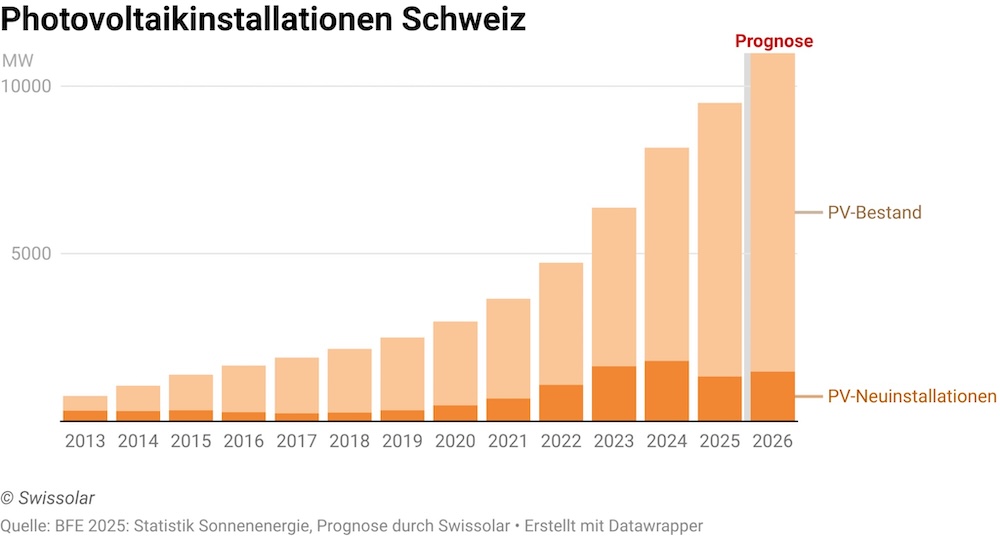
Switzerland installed 1.33 GW of new solar capacity in 2025, down from 1.8 GW in 2024, while demand for lithium-ion battery storage rose 70% year on year, according to Swissolar’s latest “Solar Energy Statistics 2025” report.
The country ended 2025 with 338,270 photovoltaic systems totaling 9.5 GW of installed capacity. Solar generation reached nearly 8 TWh, up 33.3% from the previous year, supplying 13.71% of Switzerland’s electricity consumption.
Single-family homes accounted for the largest number of new PV installations, with 25,562 systems totaling 342.9 MW. Commercial and industrial projects contributed the largest share of new capacity at 547 MW, followed by multifamily buildings with 204.4 MW. Agricultural buildings added about 110 MW, public buildings 65.6 MW and ground-mounted projects 33.3 MW.
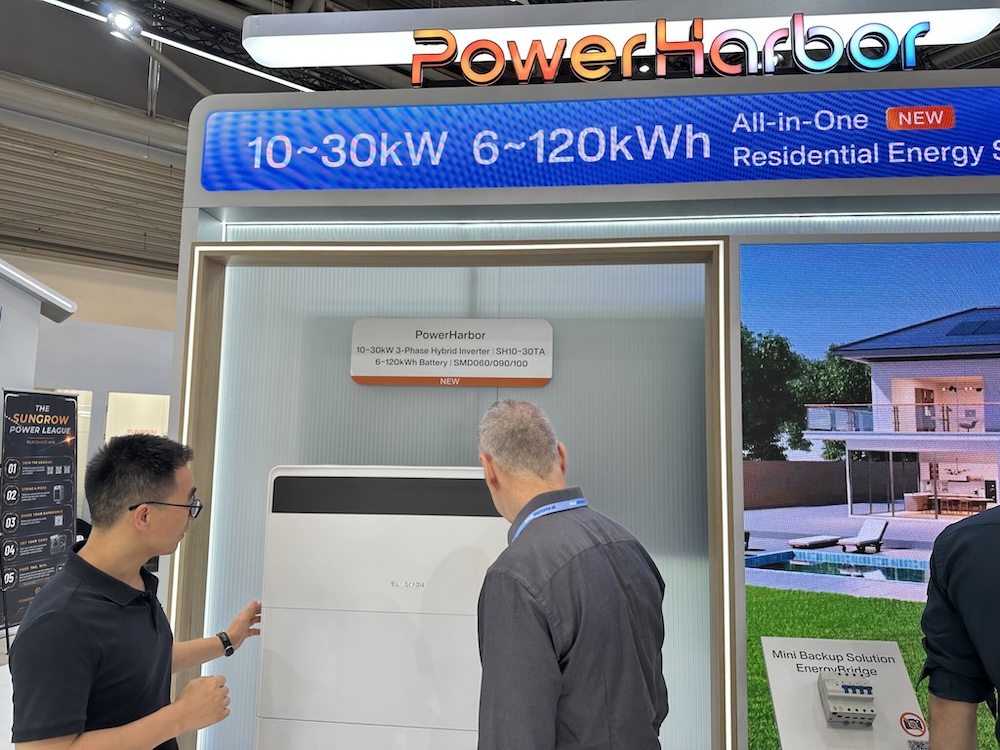
Battery storage installations grew much more rapidly than solar. Sold lithium-ion storage capacity increased from 287.4 MWh in 2024 to 490.1 MWh in 2025. About 27,775 new battery systems with a combined capacity of roughly 485 MWh were installed during the year, bringing Switzerland’s cumulative installed lithium-ion storage capacity to 1.38 GWh across nearly 93,500 systems.
Single-family homes also dominated the storage market, accounting for 24,345 of the new battery systems and 309.6 MWh of added capacity, with an average system size of 12.7 kWh.
Swissolar said the slowdown in photovoltaic installations reflects uncertainty surrounding Switzerland’s energy and electricity policies and marks the first annual decline in new PV installations since 2017.
The industry association called for changes to the country’s electricity legislation to encourage additional solar deployment, including stronger incentives for self-consumption, local electricity communities and battery storage. It also urged policymakers to increase subsidies for new PV systems and improve rules governing local electricity trading.
Written by